conversations between living & ghost gardens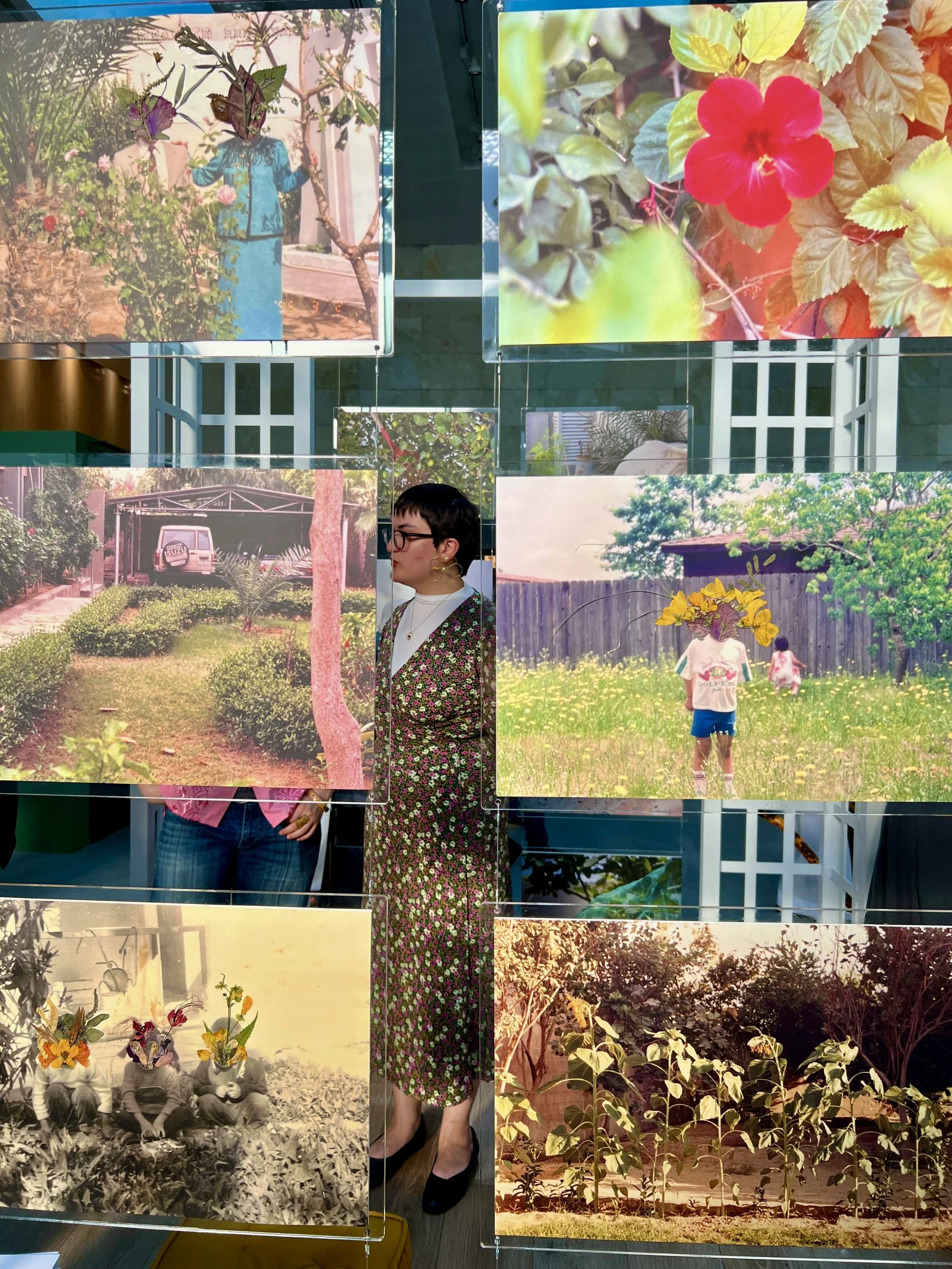
Multimedia installation, including soundscape, collage with tatreez and pressed botanicals, poem, and postcard illustrations, 2024
Exhibited @ Manarat Al Saadiyat as part of the Spectrum Residency Group Show, “In Context,” curated by Nasser Abdullah, 2024.
conversations between living & ghost gardens explores my relationship with my mother’s and grandmothers’ gardens, both present and past, and their role in discovering my sense of self. This self-assuredness of belonging to the Palestinian diaspora was stemmed from my grandmothers’ and mother’s gardens, who had expressed their connection to their heritage through their gardenscapes. Their stubborn green thumbs planted their roots across Kuwait, Saudi Arabia, Jordan, and finally the UAE. These gardens became gateways to Palestine. The artwork raises the question, how can gardens communicate to one another across time? Can ghost gardens commune with the living greenery, passing on their experiences and wisdom? Can the living gardens assure the ghosts that we have not forgotten? Stitched into the living is the Tatreez passed down the generations. Woven into the past are the marks of a growing future. These conversations take place within the sanctuary of the garden gazebo, inviting you in to rest and take in their voices.
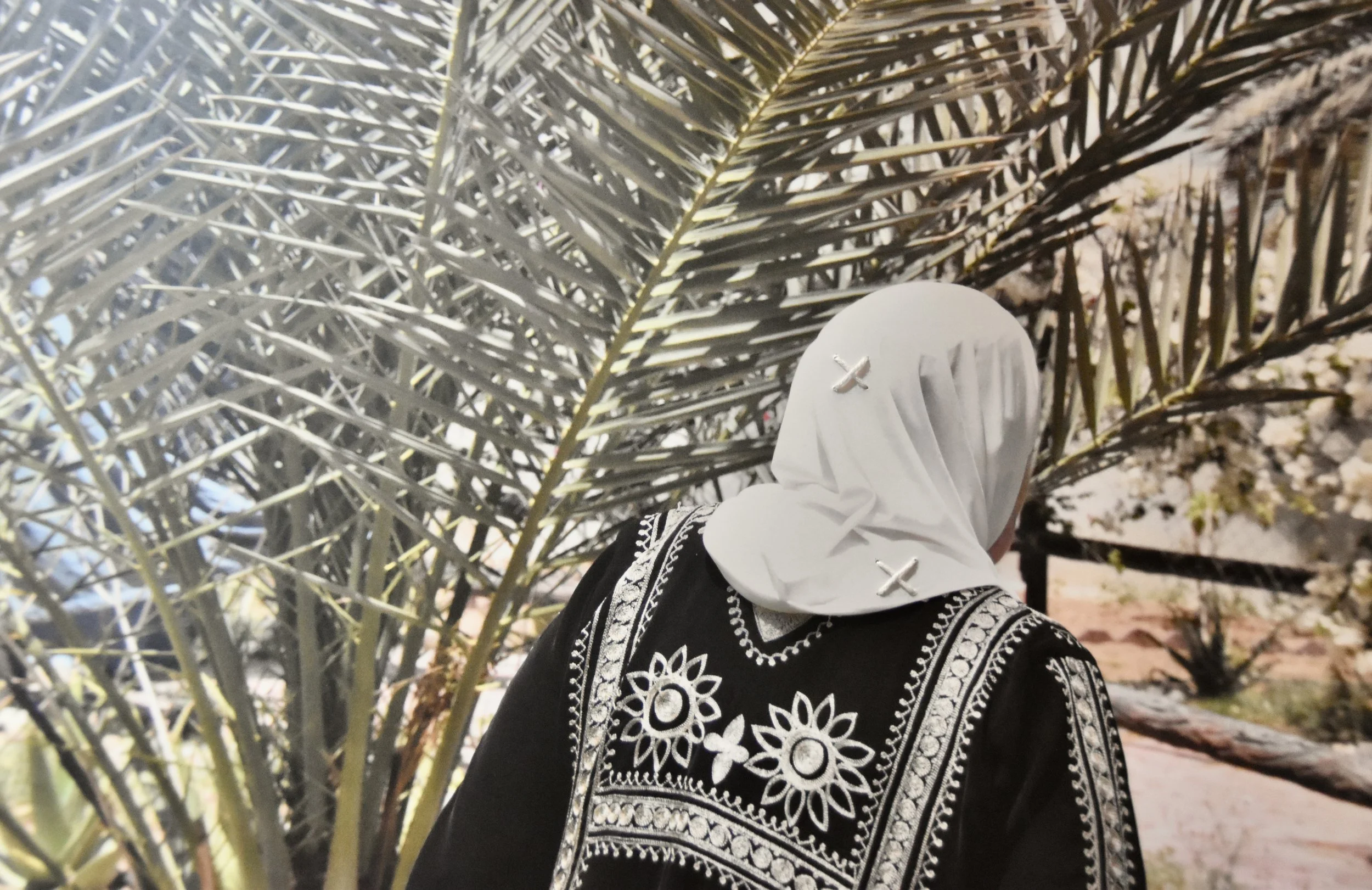
The exhibited work is comprised of photographs with interventions of embroidery and collaged pressed botanicals, as well as a soundscape of found sounds from the garden in Sharjah, and interview snippets with my grandmothers and mother. Additionally there are illustrated postcards inviting visitors to color them in, and finally a writing station inviting visitors to write down memories of their own gardens.
Image on the left courtesy of Tala Husseino
Play the soundscape below while scrolling through the page.
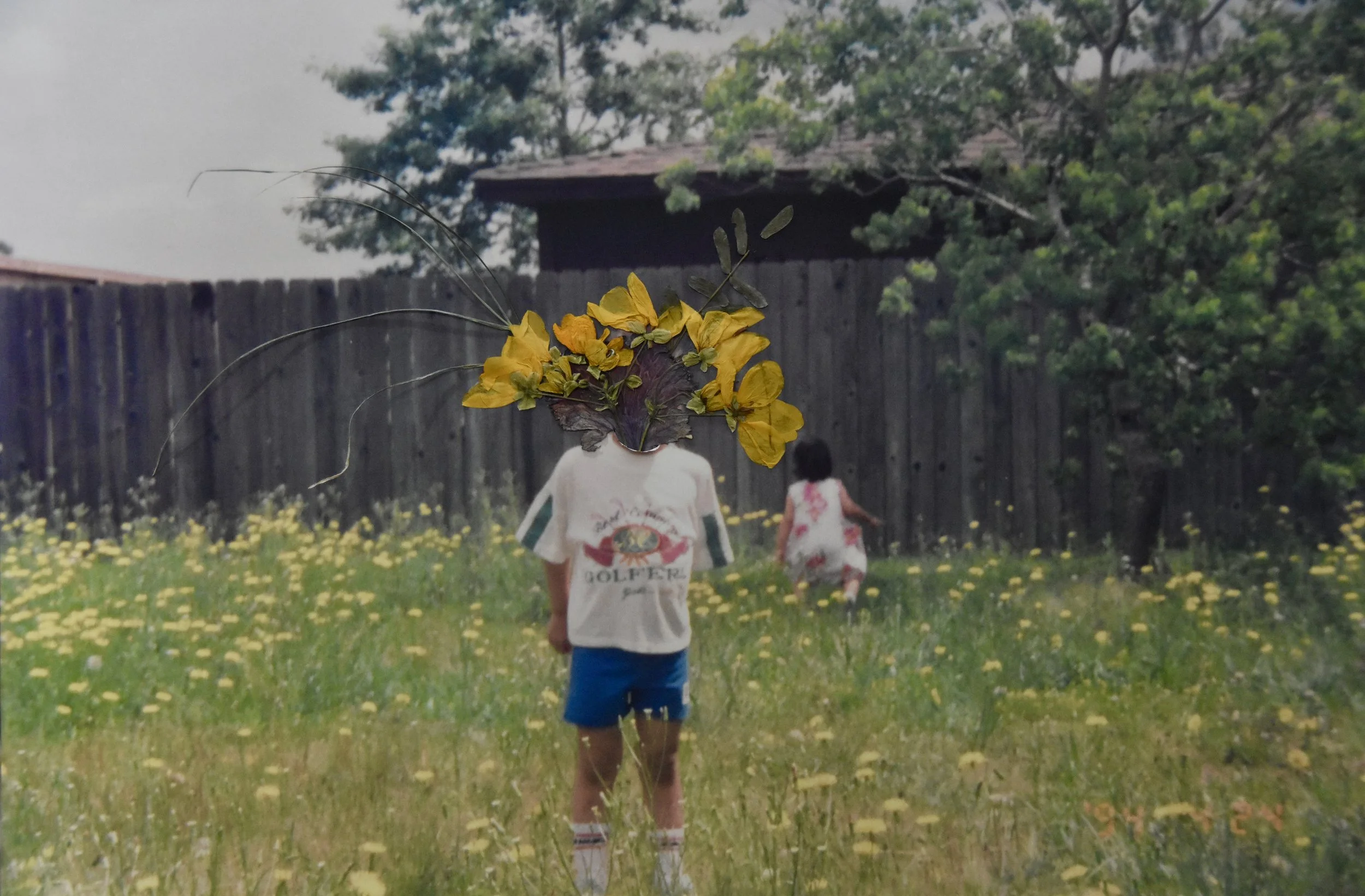
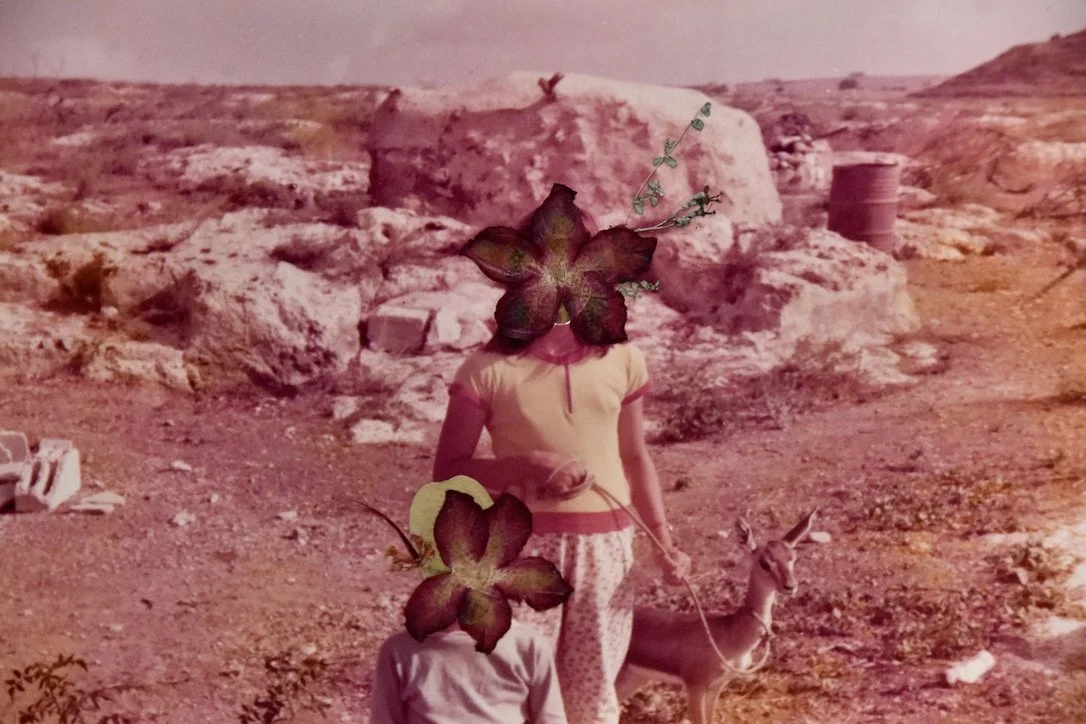
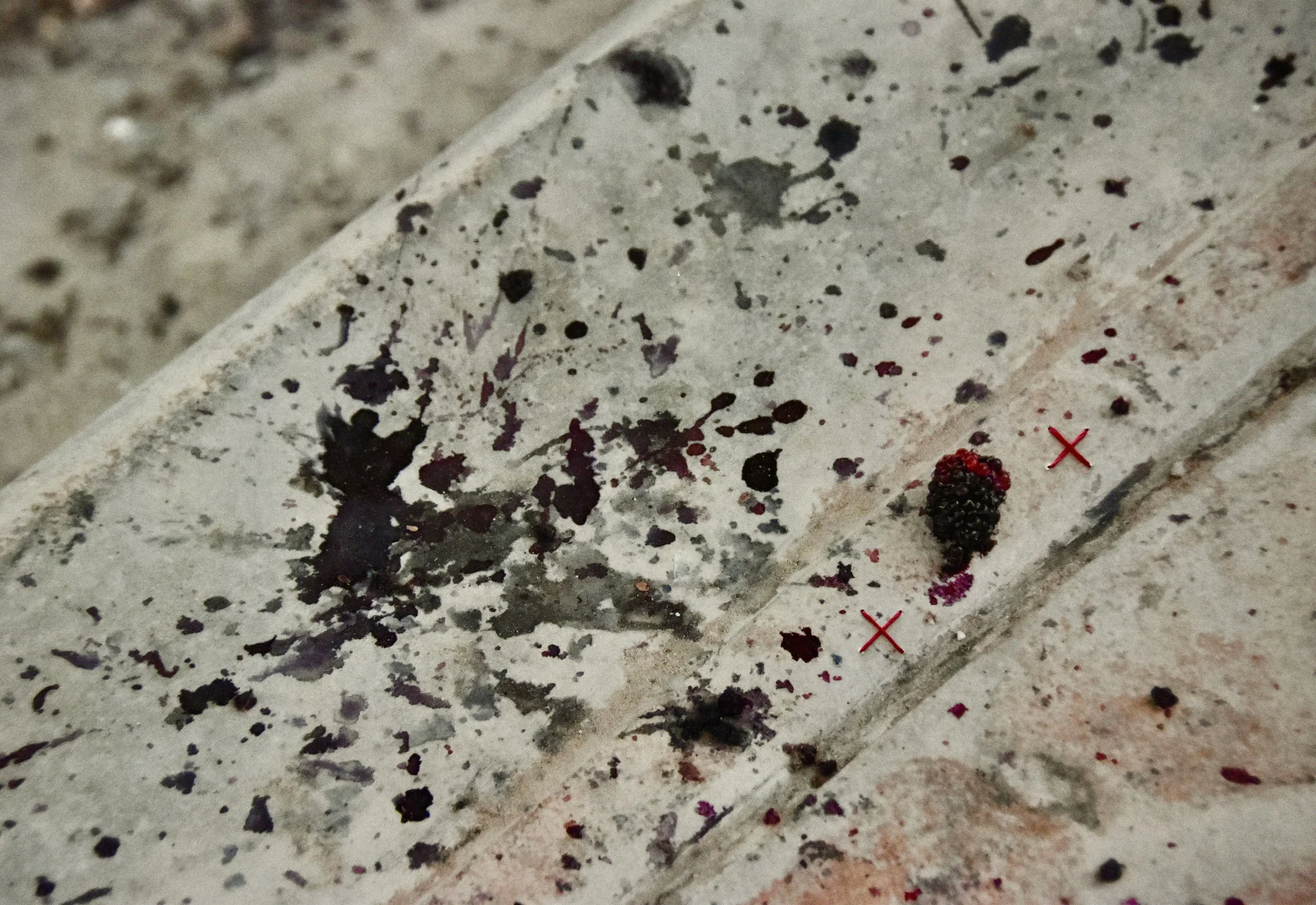
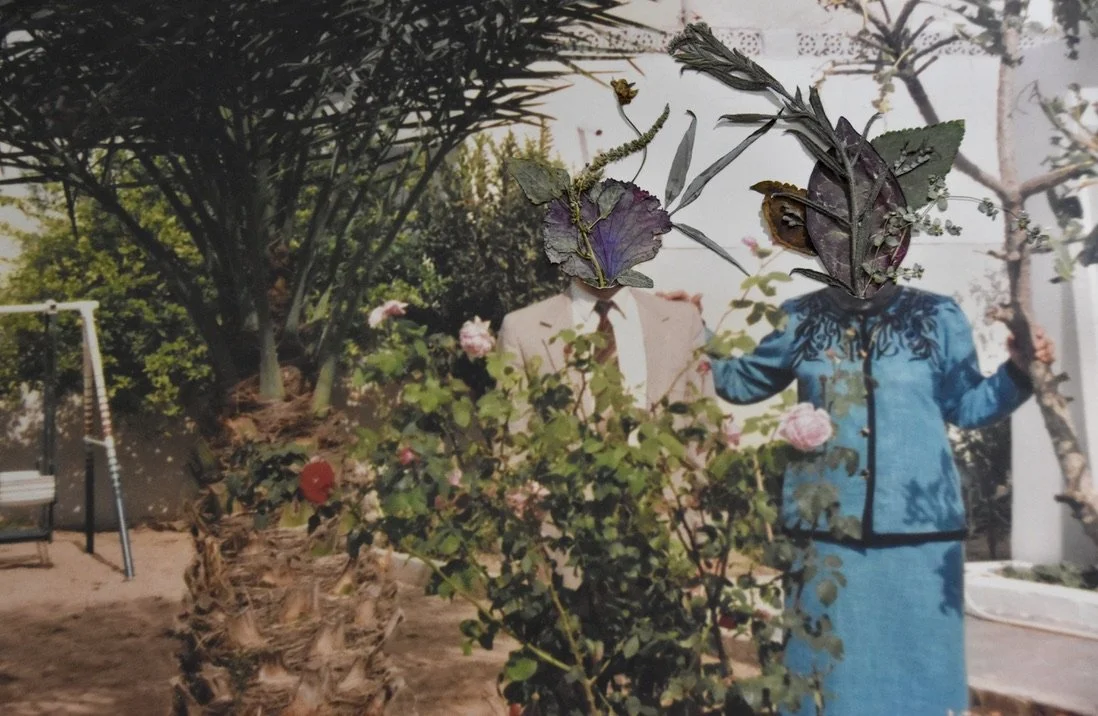
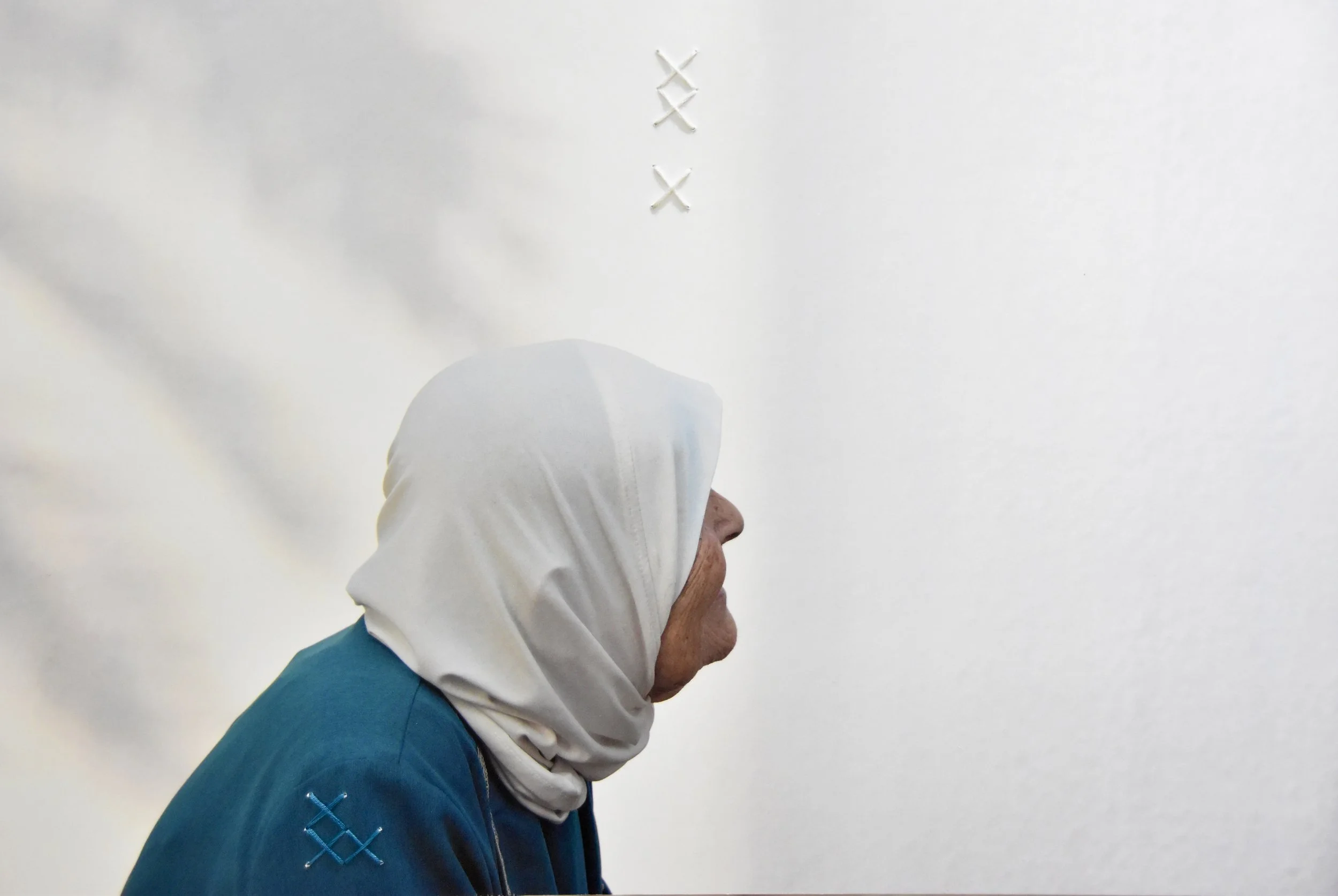
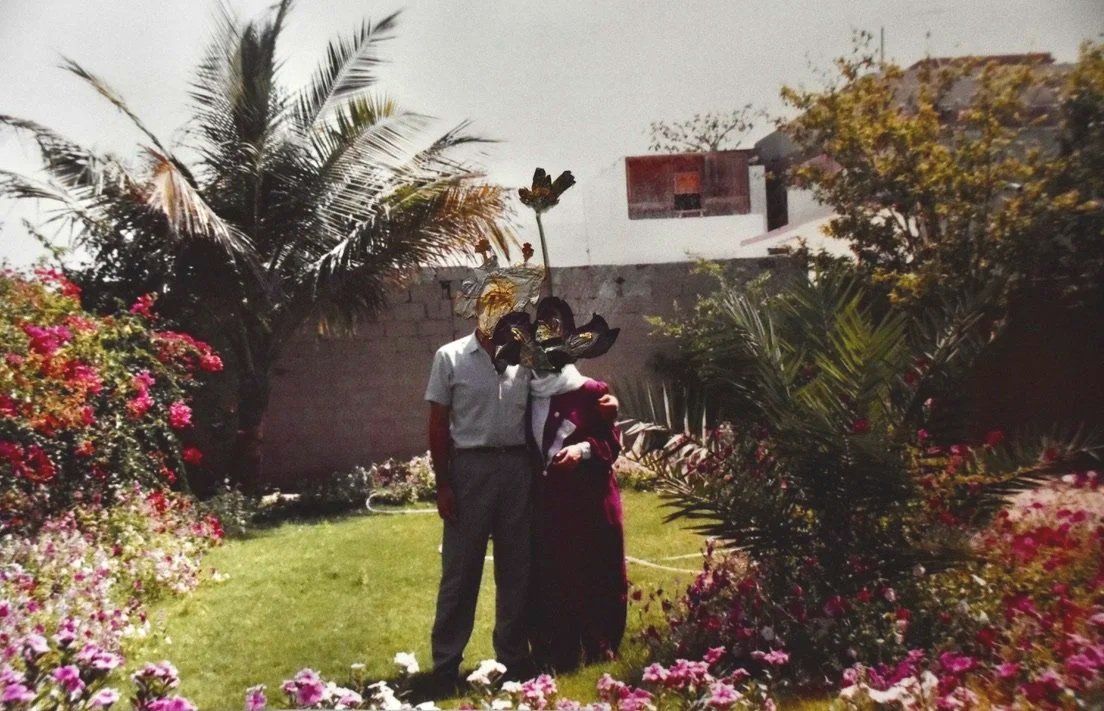
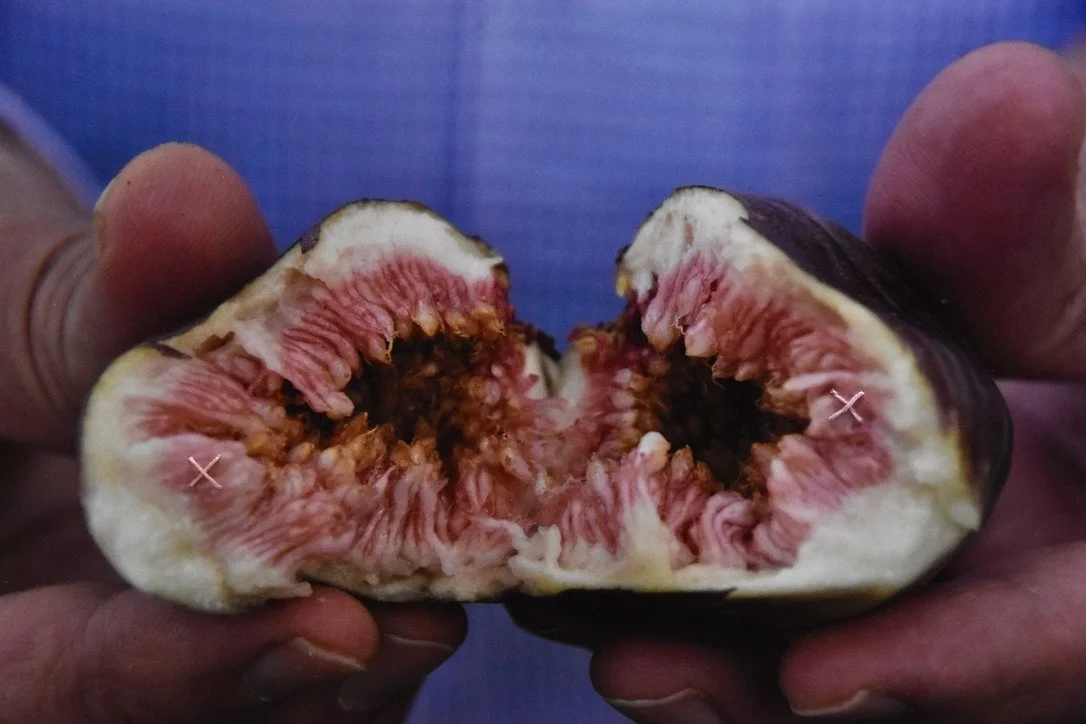
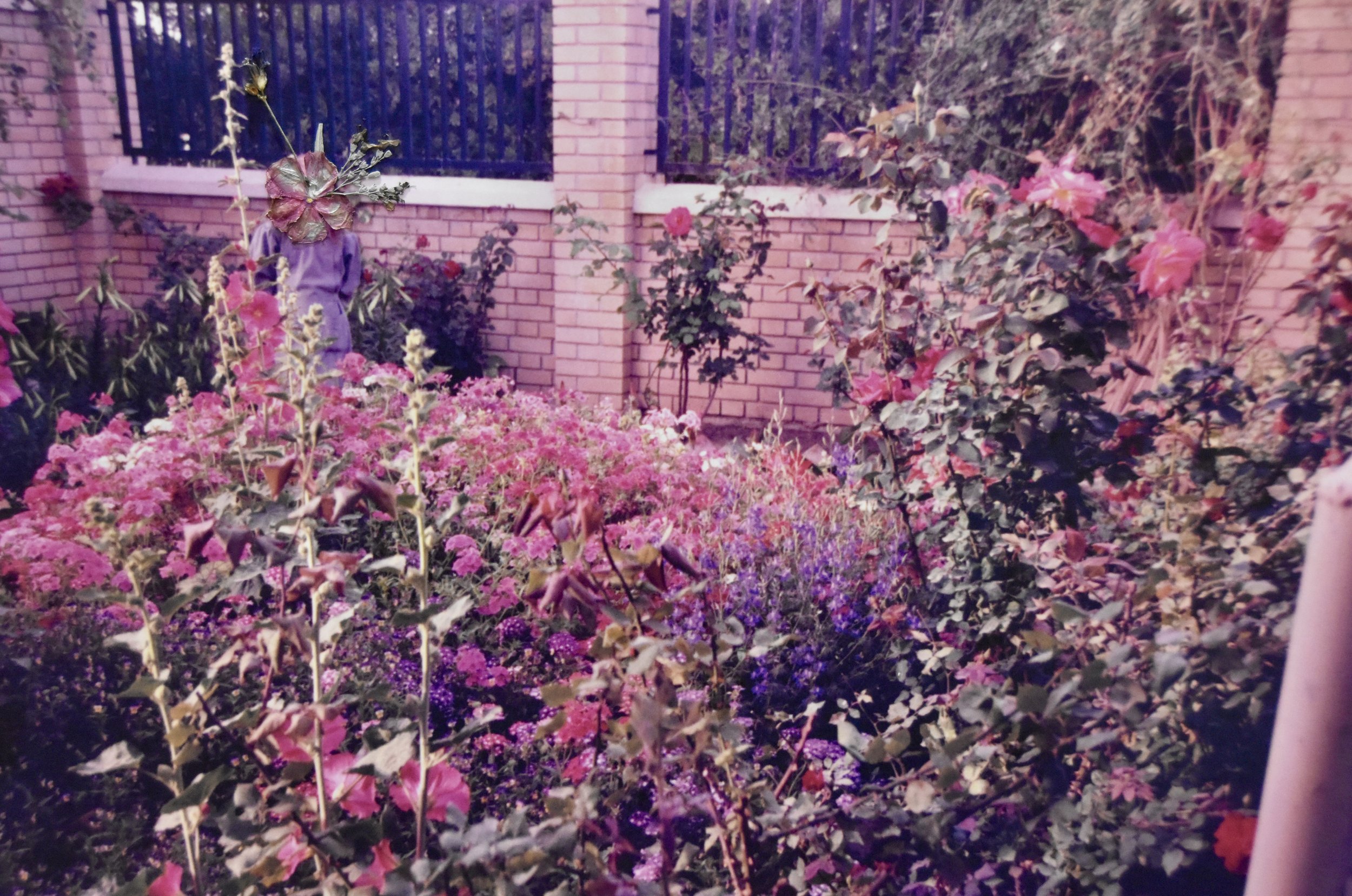
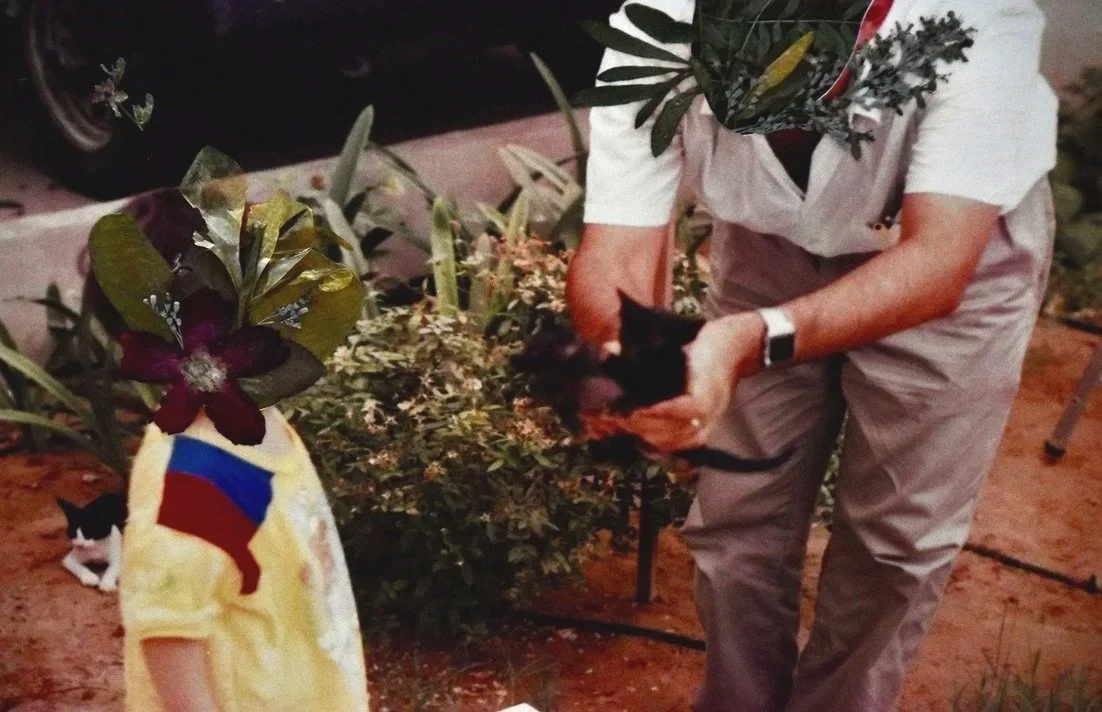
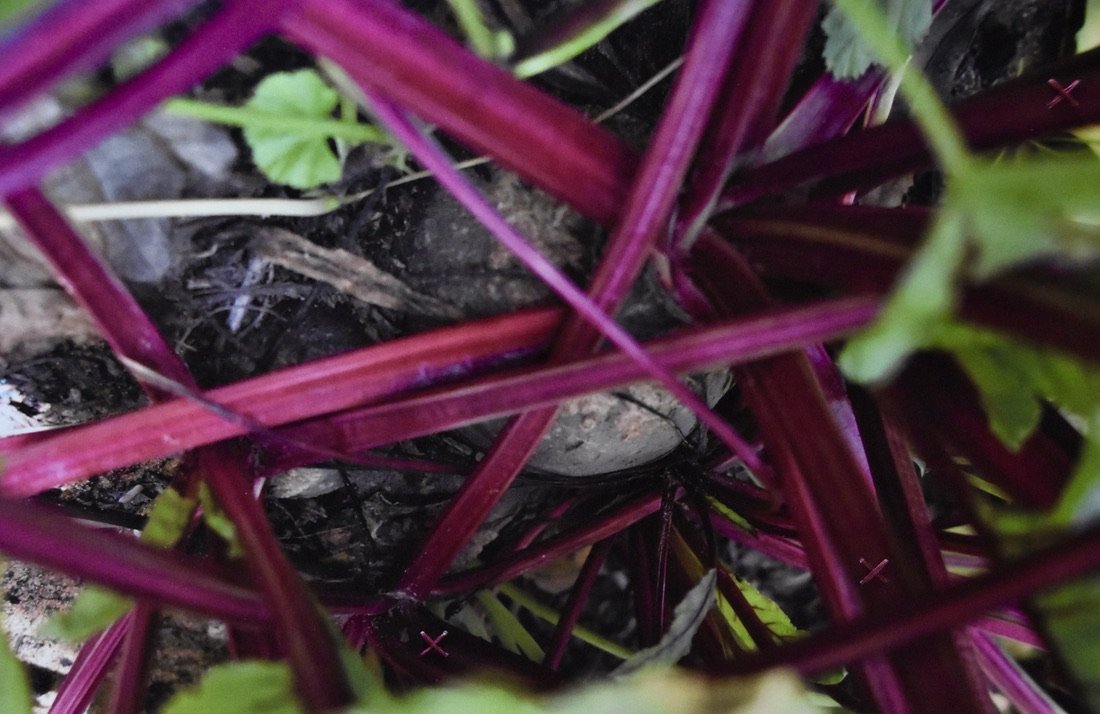
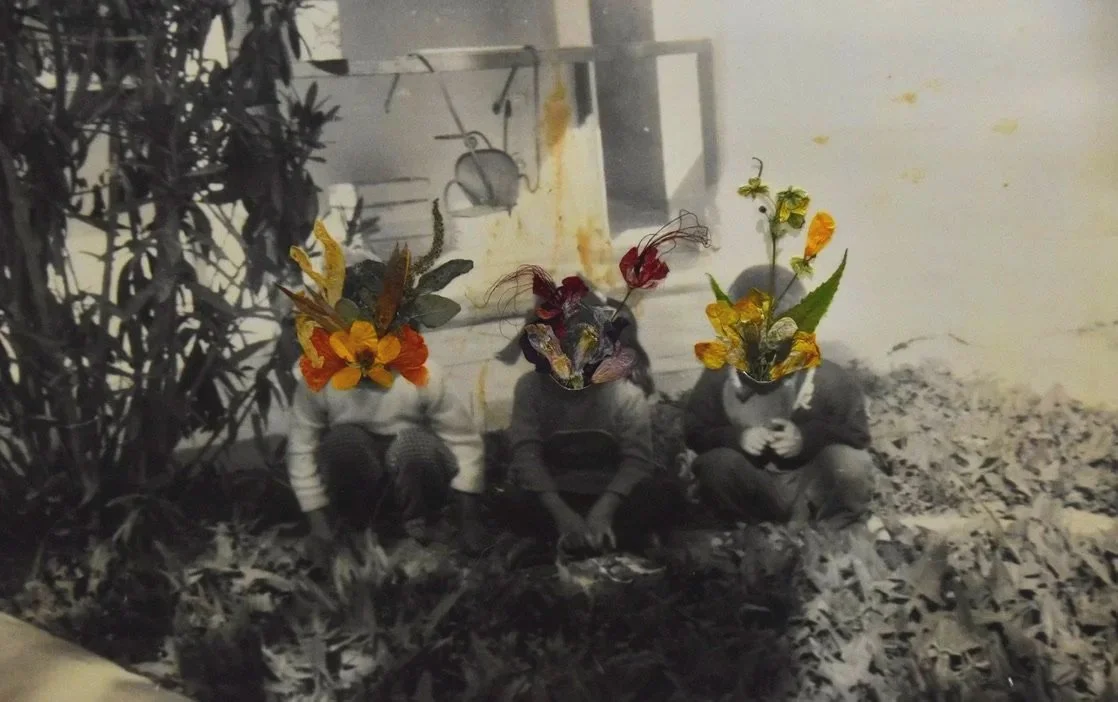
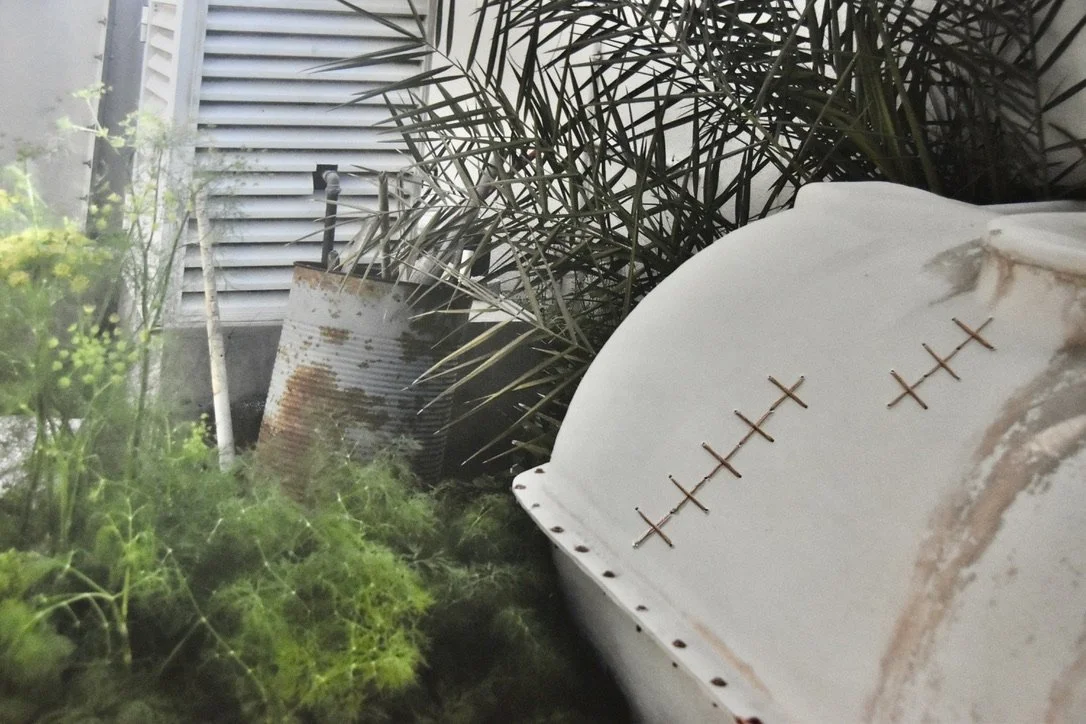
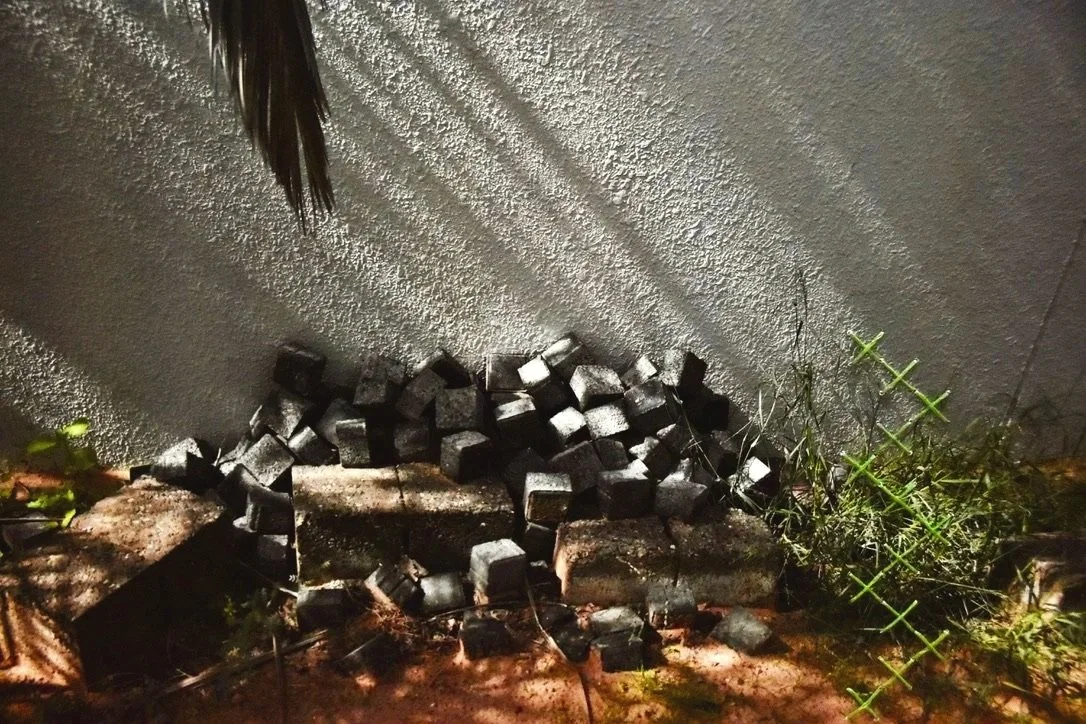
I scanned and archived photographs in browning photo albums, searching for the ghosts of gardens past, and wove into them the pressed botanicals from the living gardens in Sharjah, trying to push the past and present to speak to one another.
I wondered, what would the lost gardens say to the plants living now in Sharjah? What messages, wisdom, memories would they impart?
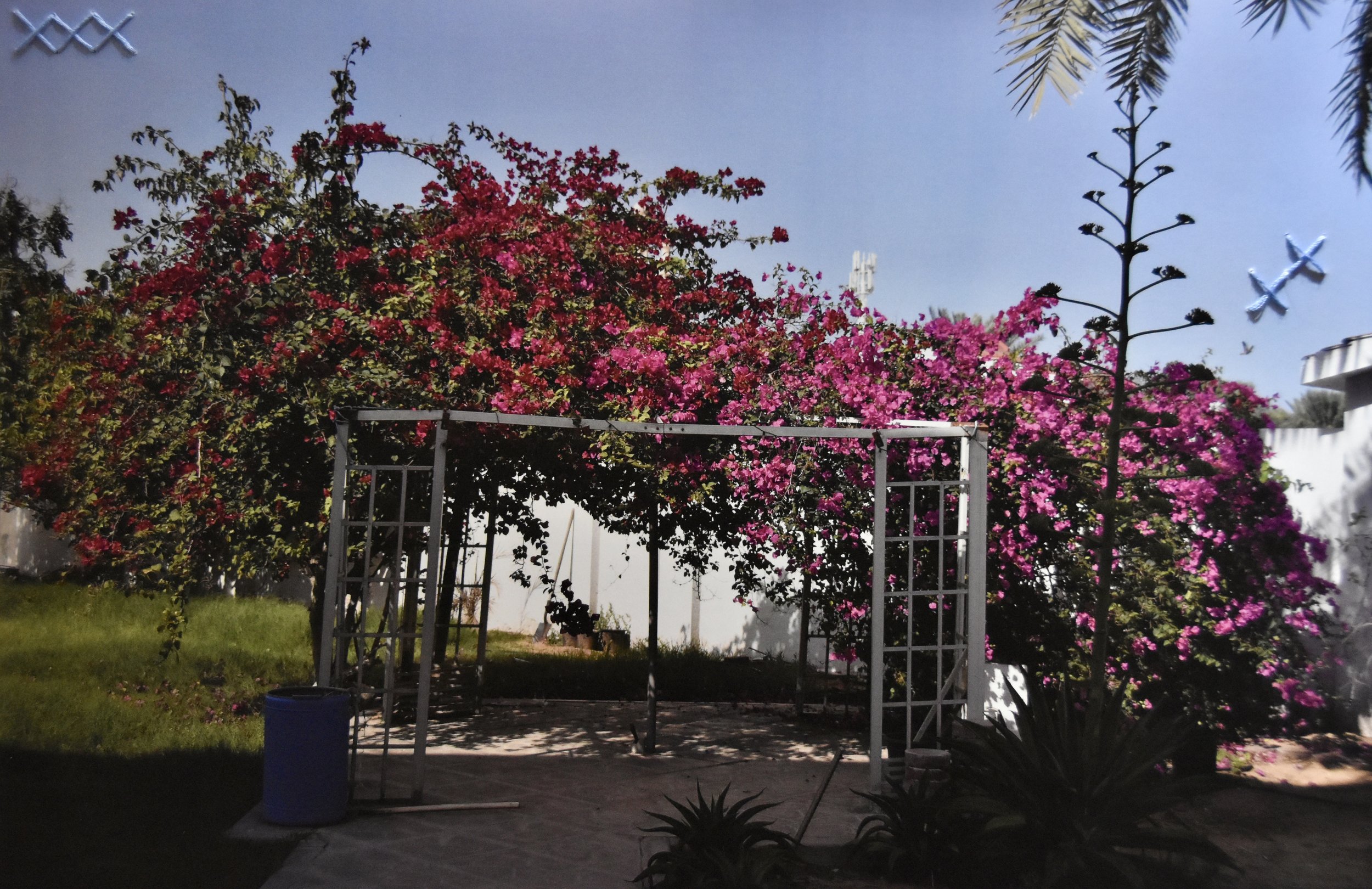
I cross-stitched into the “living” garden, the photographs I had taken in Sharjah, to further embed the traditions of the past into the present, not finding the words to tie these histories together.
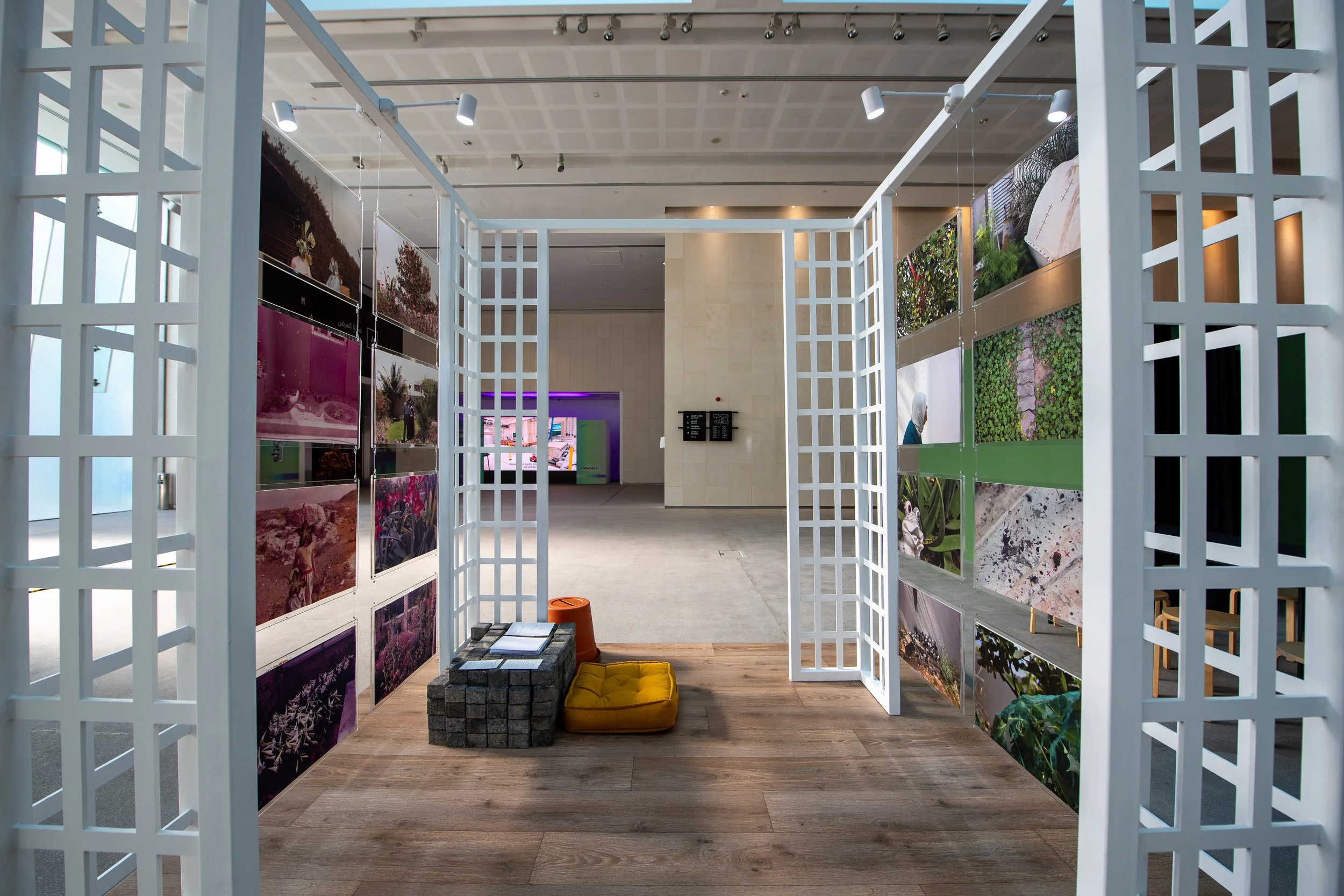
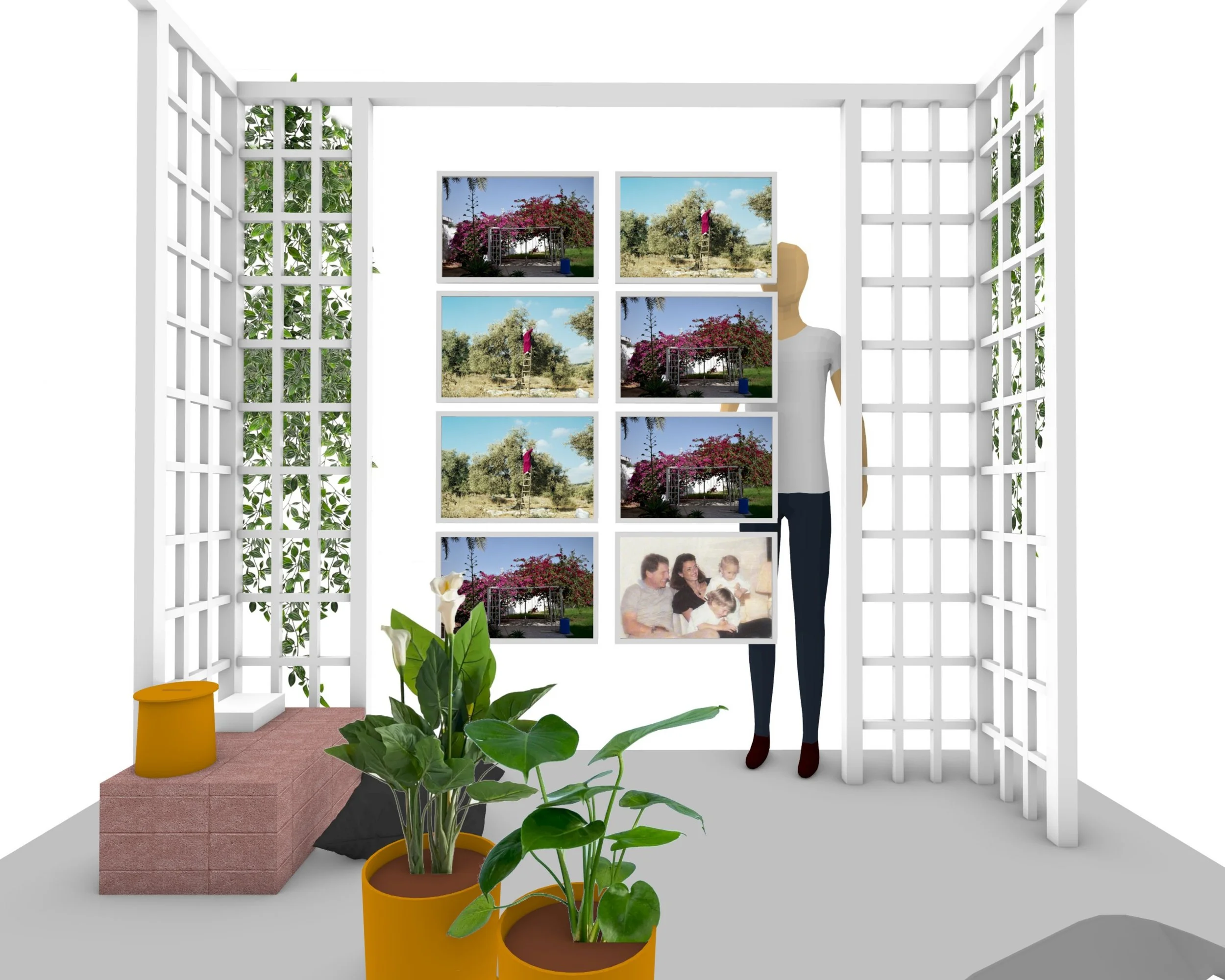
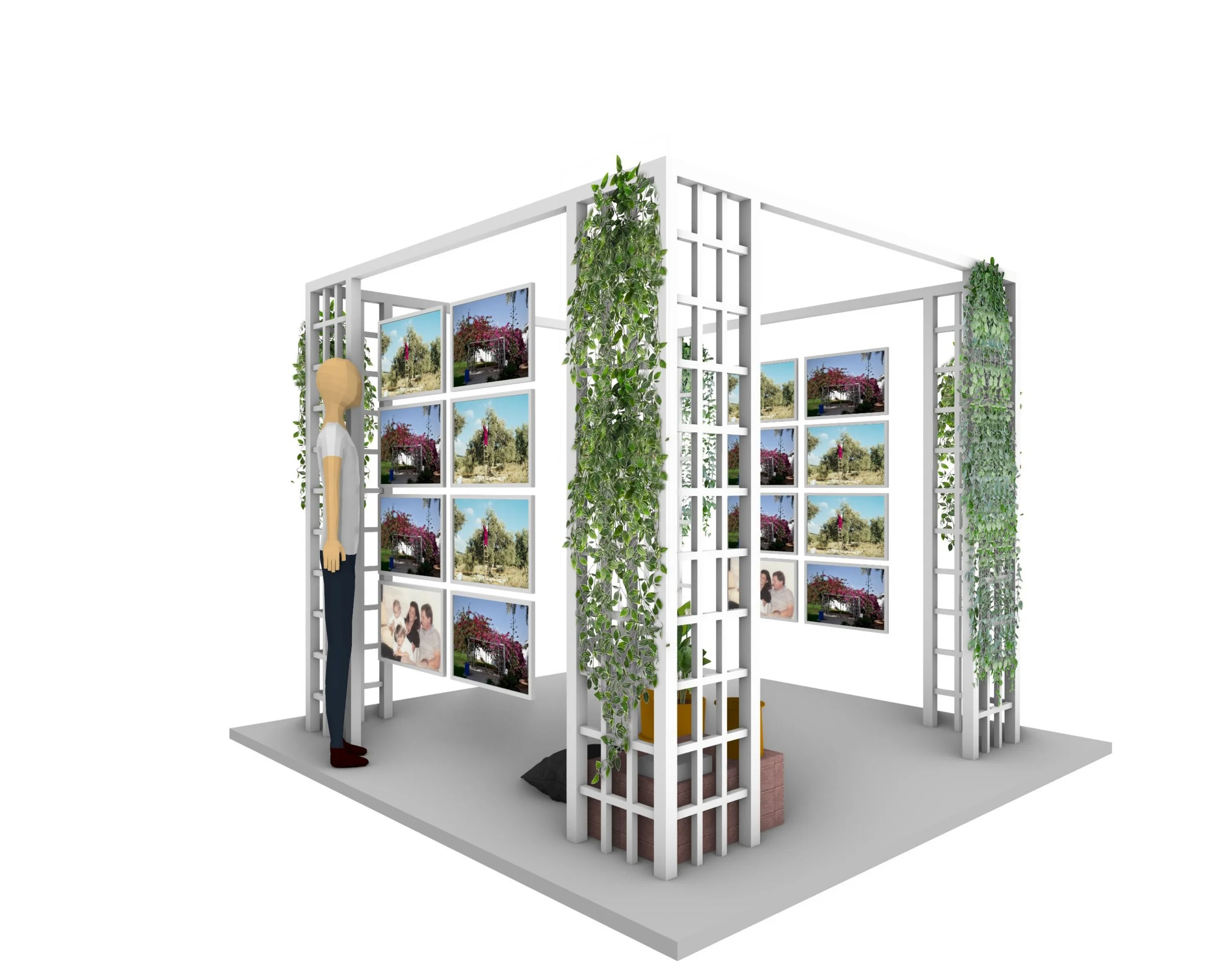
I hung the ghost and living gardens in parallel to one another in a gazebo reminiscent of the one my grandmother has in Sharjah, laying out the living and the dead, so that they may see each other.
The gazebo was surrounded by sounds of the birds that made home in the palm and neem trees in Sharjah. You can hear the voices of my mother, and my maternal and paternal grandmothers speaking of their own memories and daily rituals tied to the garden.
Image above courtesy of the Frei Photography Studio
Illustrated postcards & poem-prompt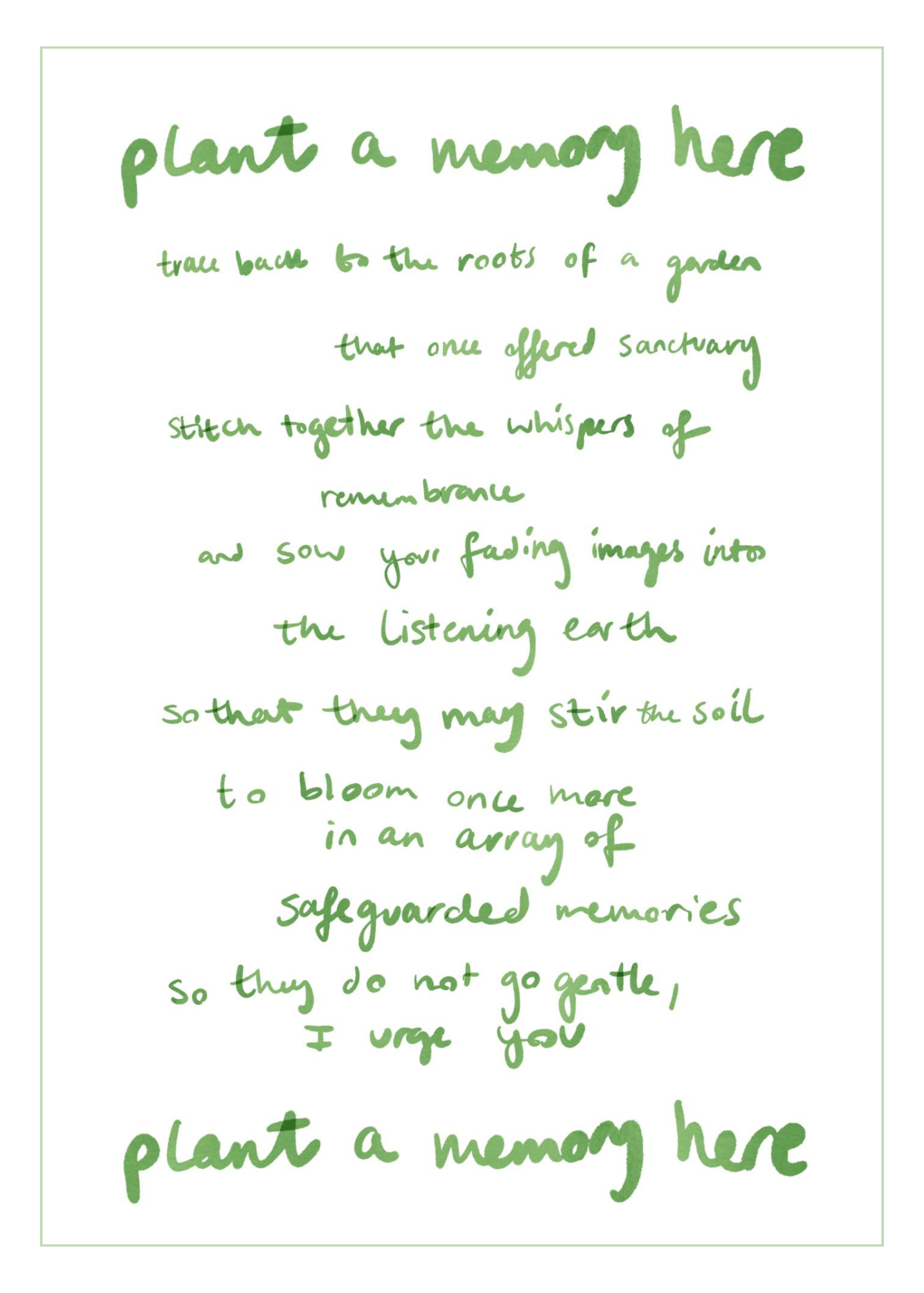
plant a memory here
trace back to the roots of a garden
that once offered sanctuary
stitch together the whispers of remembrance
and sow your fading images
into the listening earth
so that they may stir the soil
to bloom once more
in an array of
safeguarded memories
so that they do not go gentle
I urge you
plant a memory here
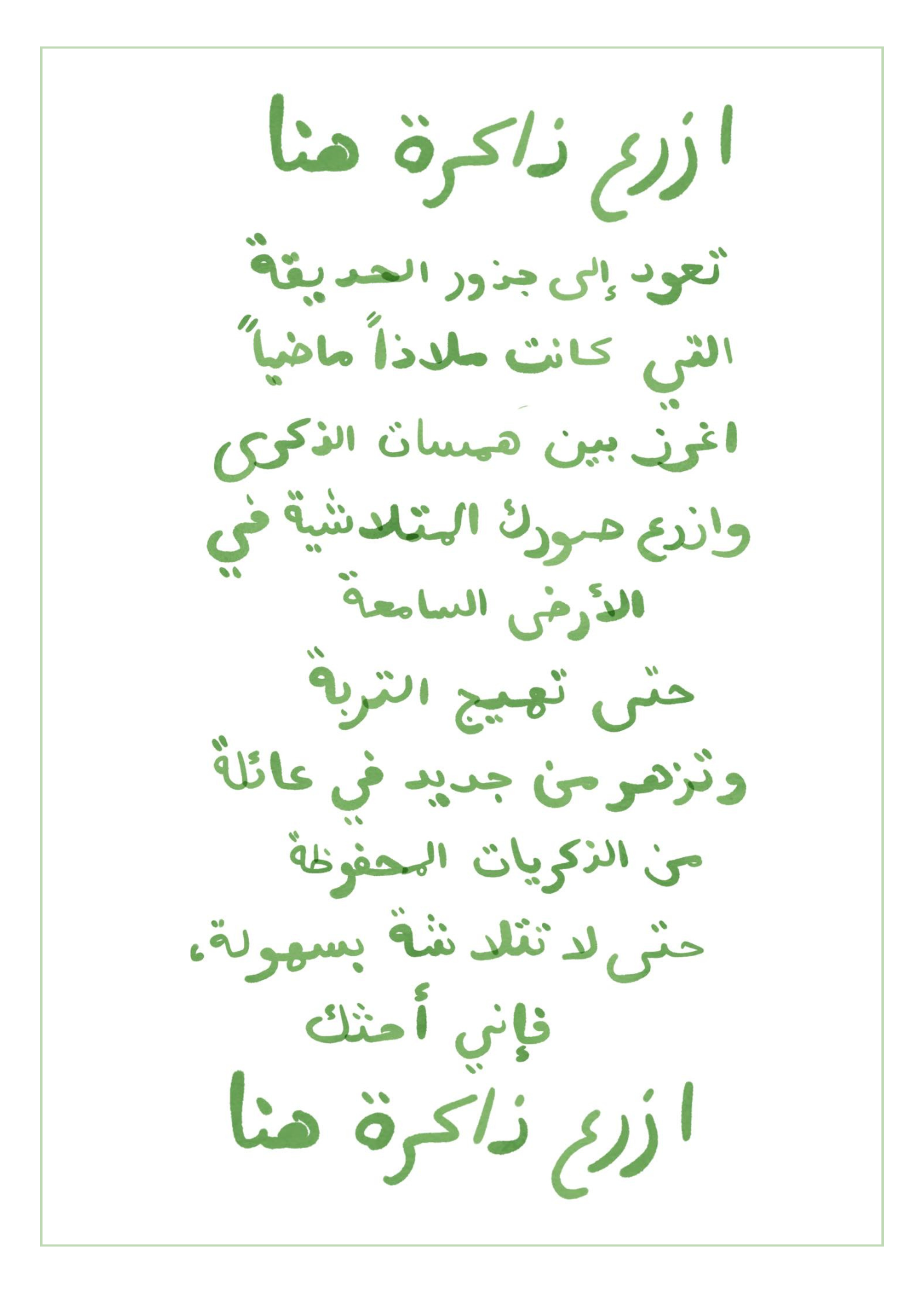
ازرع ذاكرة هنا
تعود إلى جذور الحديقة
التي كانت ملاذاً ماضياً
اغزر بين همسات الذكرى
وزرع صورك المتلاشية في
الأرض السامعة
حتى تهيج التربة
وتزهر من جديد في عائلة
من الذكريات المحفوظة
حتى لا تتلاشى بسهولة،
فإني أحثك
ازرع ذاكرة هنا
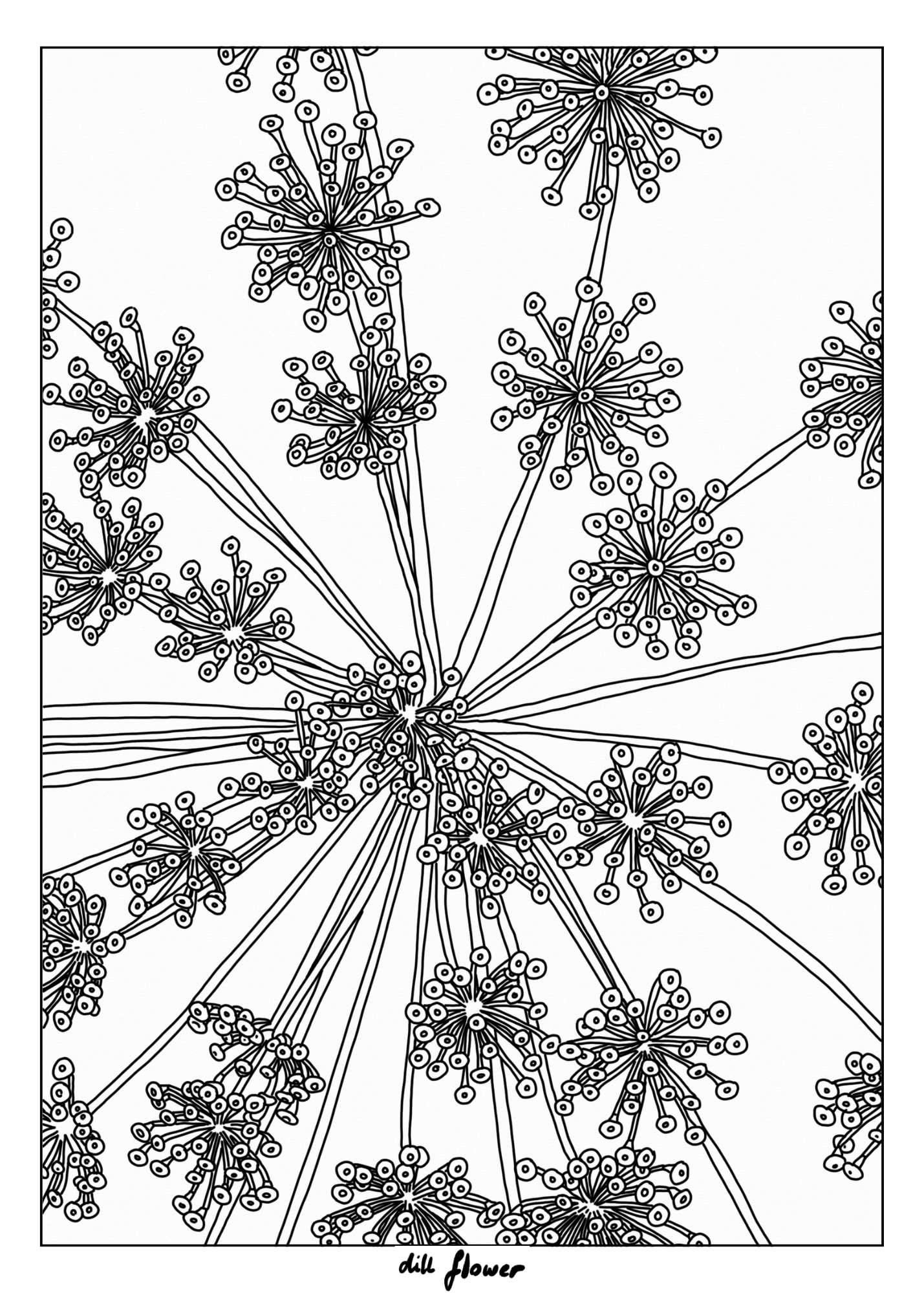
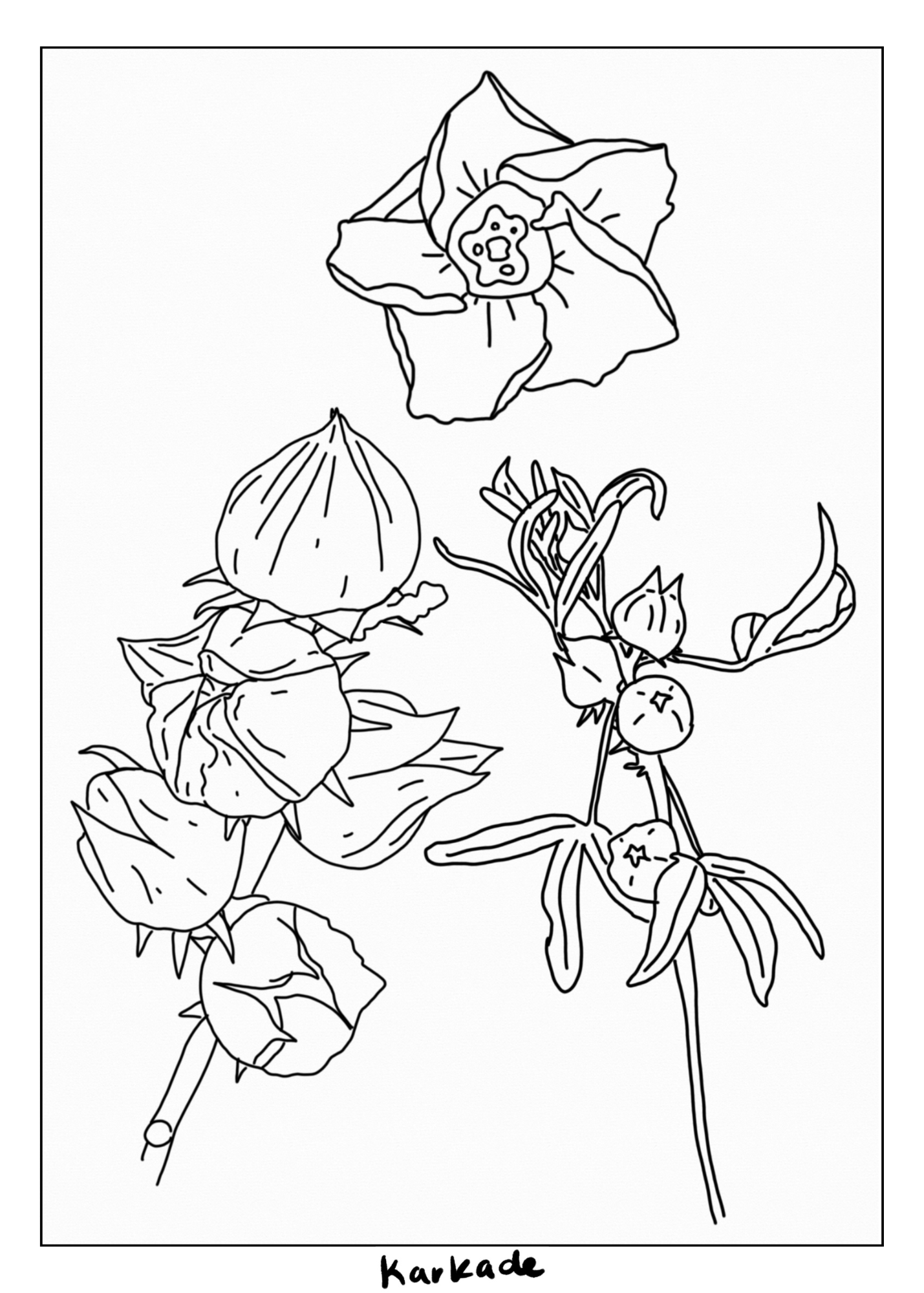
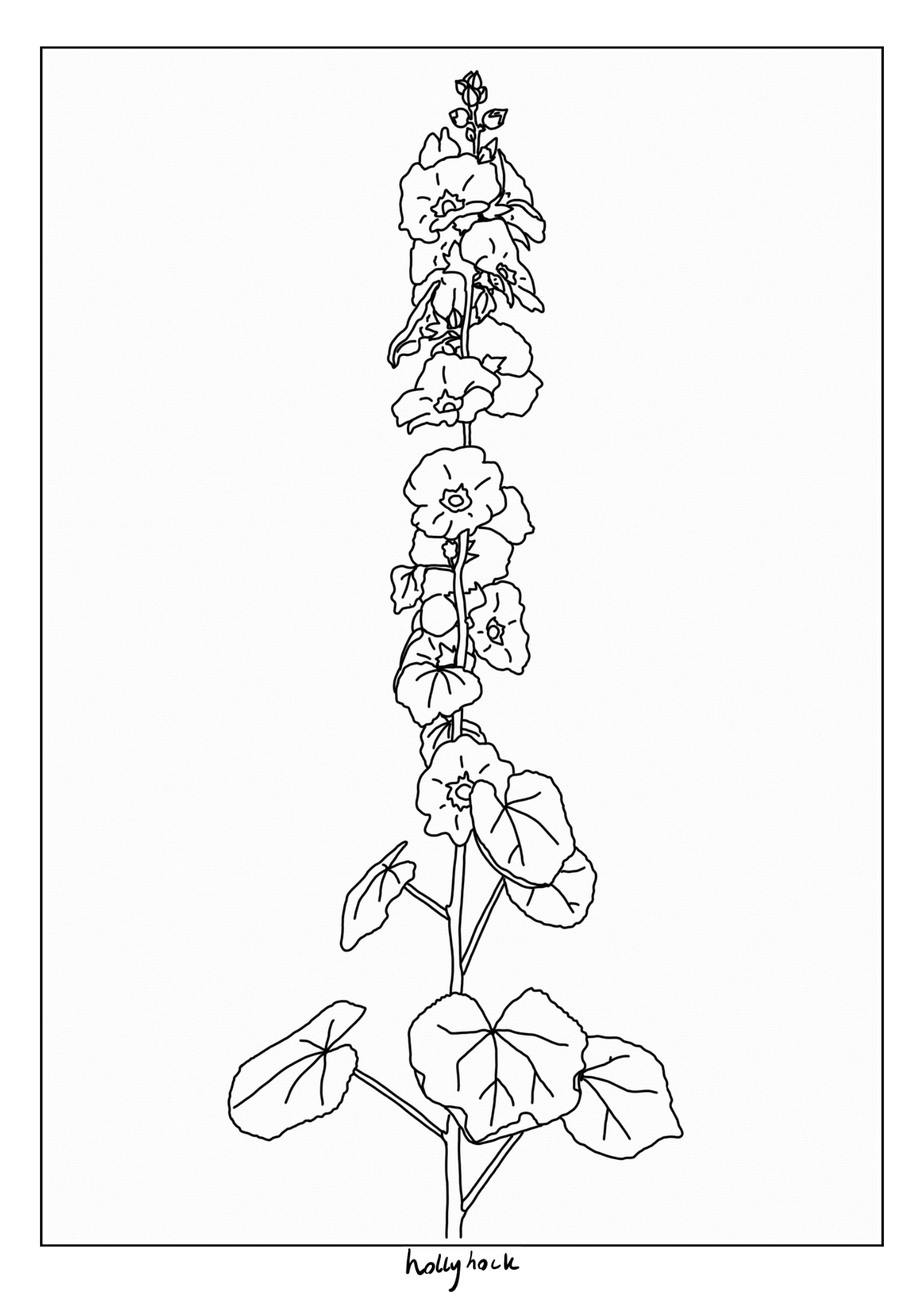
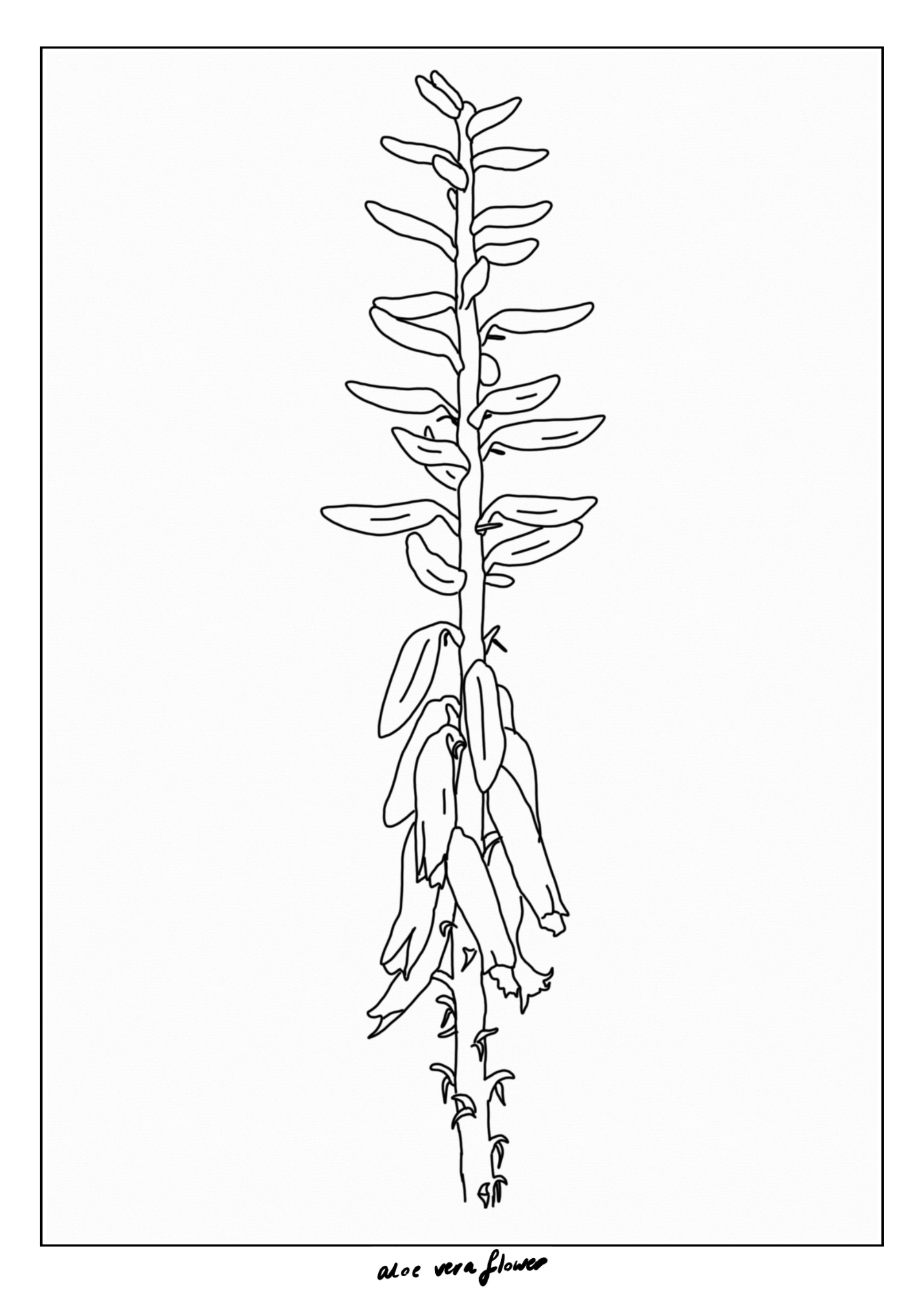
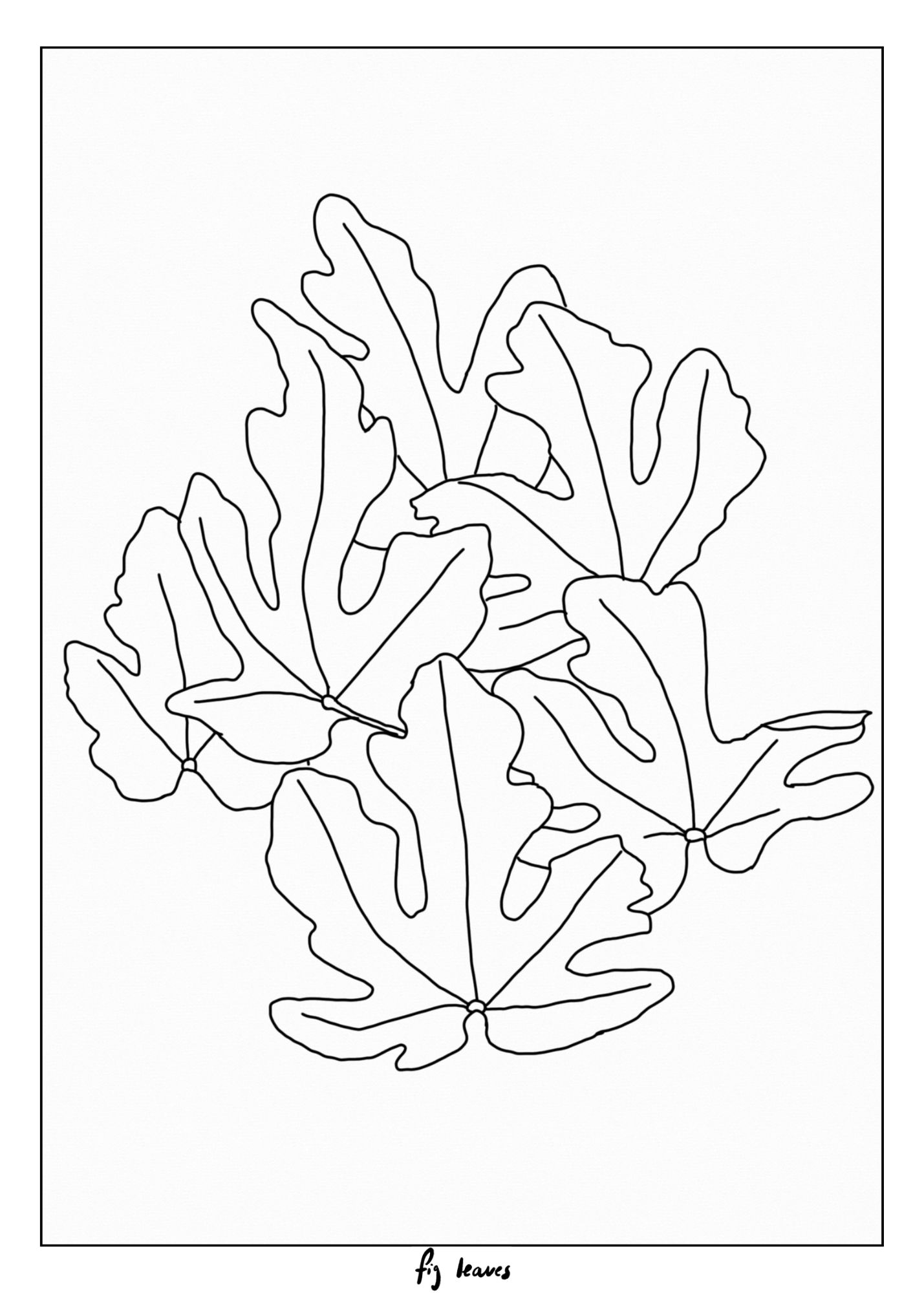
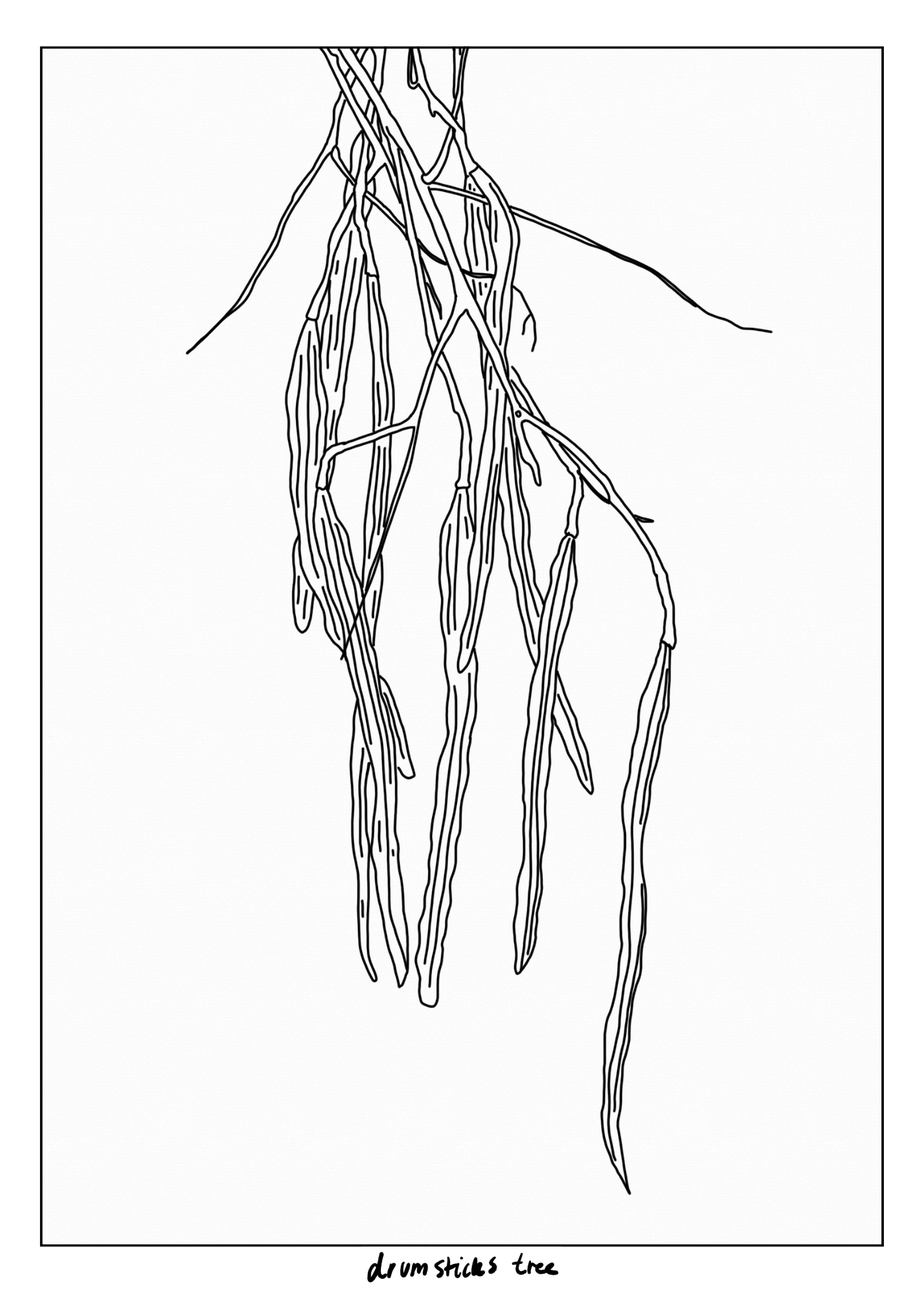
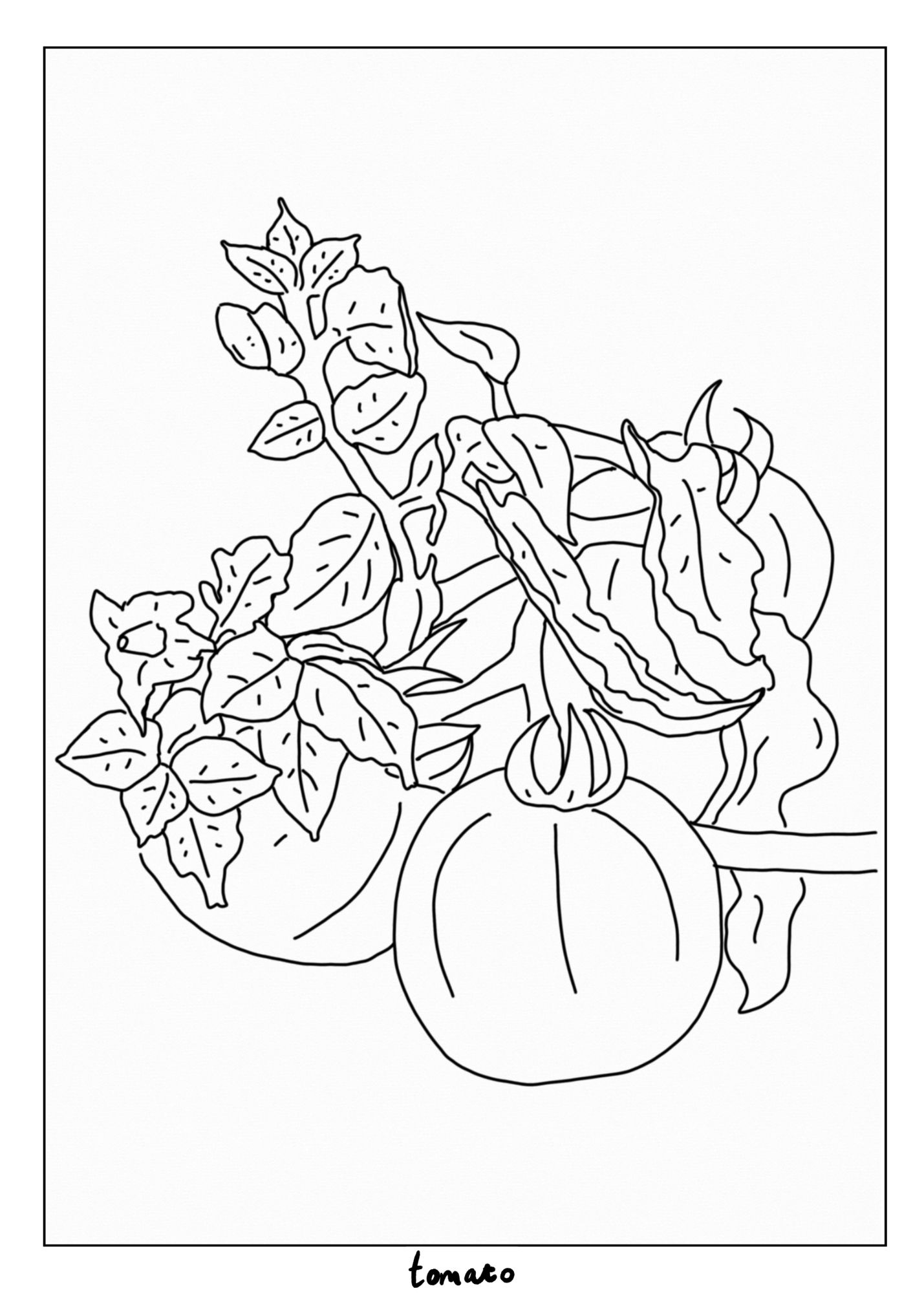
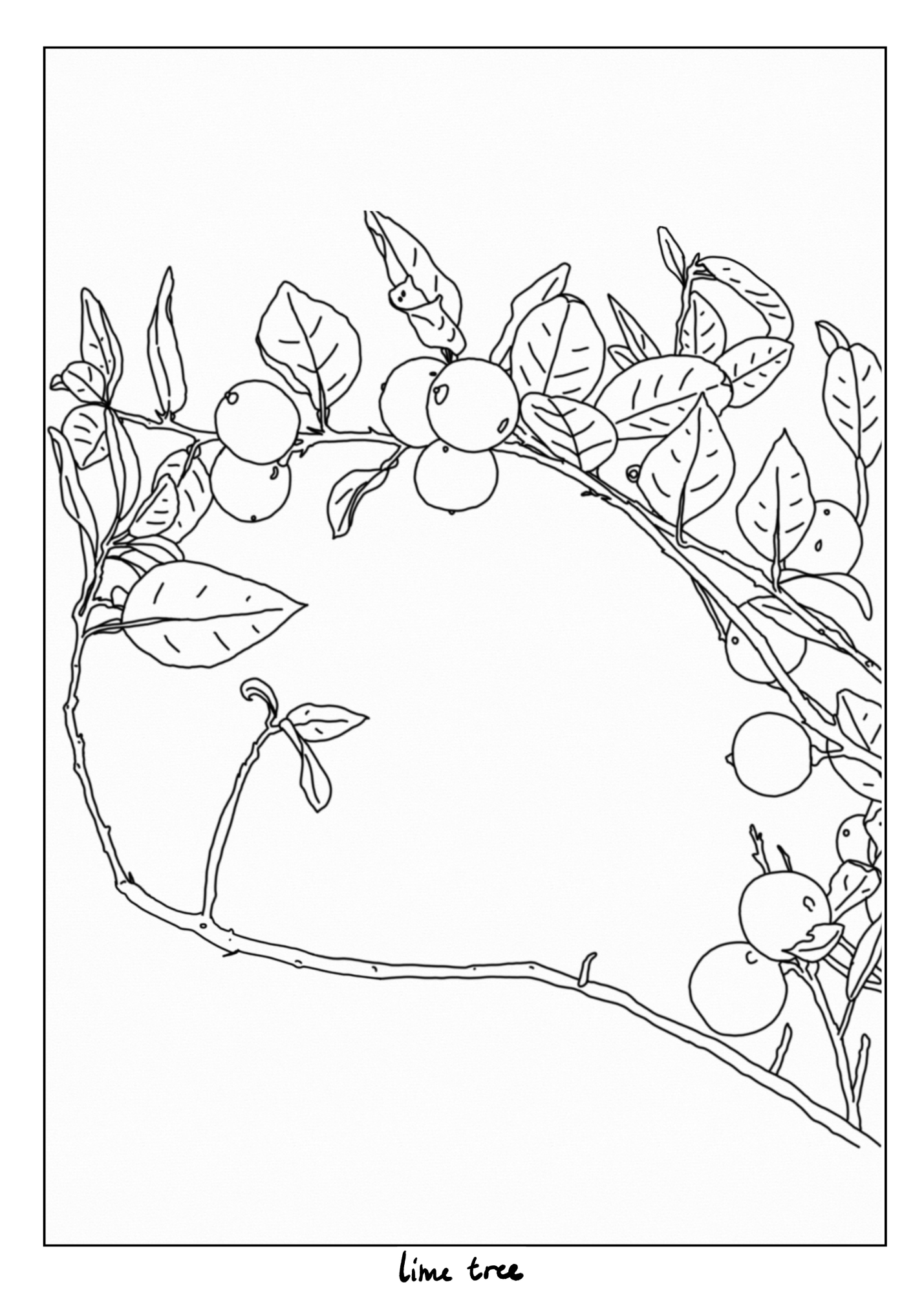
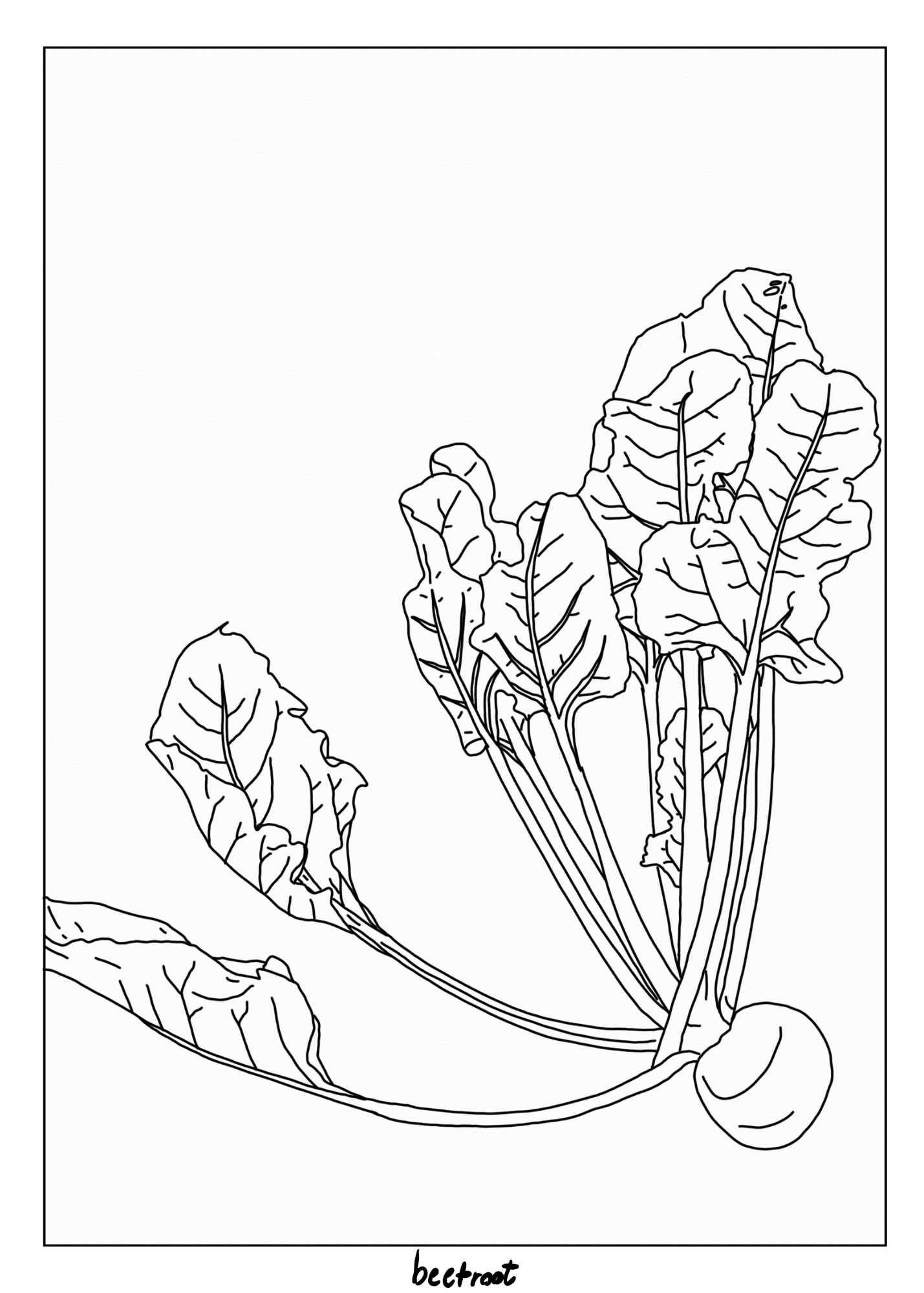
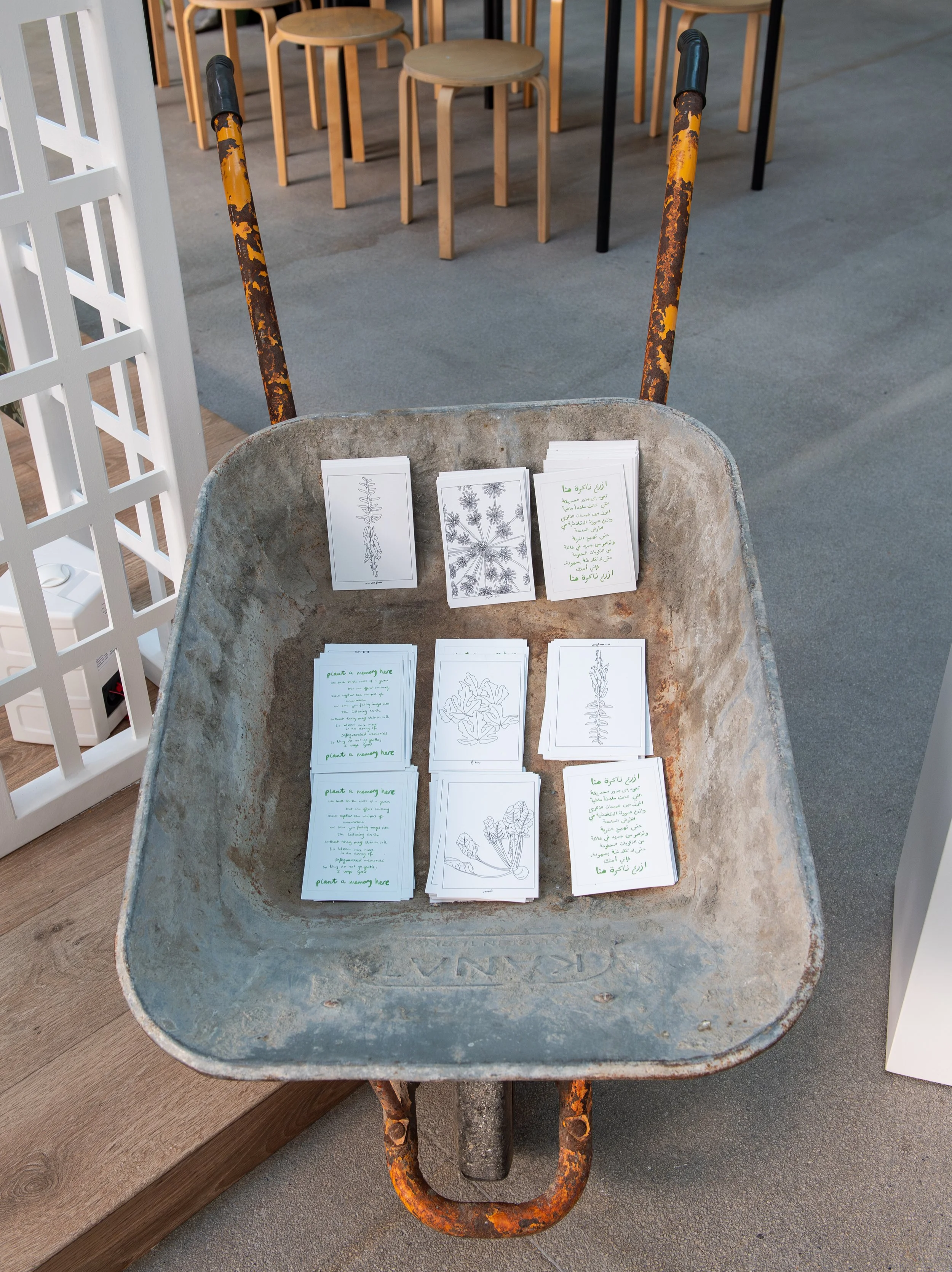
I invited the visitors of my exhibit, through a poem-prompt on the postcards, to accept an exchange: to write down memories of their own gardens, to plant them in a pot on the ground of the gazebo. In return, they could collect postcards of illustrated plants from the gardens that they could color in. A low table composed of bricks from my family’s grounds invited them to sit and take in the space at their own pace.
The Postcards were displayed in my grandmother’s wheelbarrow for visitors to collect.
The illustrations are of:
dill flower
hibiscus
aloe vera flower
fig leaves
tomato
lime tree
hollyhock
drumsticks (moringa)
beetroot
“Planted memories” testimonialsMy grandmother’s home in Ajman. I remember the palm trees rubbing against one another. Maybe for comfort, maybe for goodbyes. I remember the birds whispering to each other every morning. I see her in the flowers that grow. I hear her in every bird chirp. My favorite part of her garden is the rusty ladder. You’d have to walk through dried crispy leaves and crunchy branches, gripping at your toes for any signs of new life. Thank you for igniting this memory for me. Sometimes, it’s the only place of comfort I have.
—This year I learned that toot grows a lot in Boston. There’s one big tree, tall, with toot while hard to reach, just outside my apartment. As I left this summer these berries were dropping down on the pavement, pink, grew, brown under foot. Probably I shouldnt eat the toot growing, rooted in the black water of the muddy river of the Charles. But that day that I discovered toot, that day that I walked for miles through the city, trying to trace the water all the way out to the sea, that day I stopped & picked berries everytime I discovered a new toot tree. Nails stained purple and lips turning up at the taste of memories.
—I remember my little walks with mama during midnight in our home garden.
—It feels like I’ve known 100 gardens from the gardens planted lovingly by my mother in Swaziland (Eswatini), Nigeria, South Africa, Egypt and Scotland. To the gardens I have crafted myself for my own family in Ireland, Switzerland, Italy and the UAE - spaces which have nurtured seeds and the vibrant souls of my own children and I now look forward to reimagining the garden and land on my new Irish nest cork farmstead.
—I remember that one time our garden grew a lot of worms and it was the most scariest thing ever. We had to cut off the cause which was a نبج tree.
—Acha and Amma planted so many trees and plants on the balcony while I went to university. I was surprised when I came back. The balcony became our family’s special spot.
—I watered my mom’s agapartha’s daily in Cape Town 30 yrs ago! I will never see them again!
—I remember grandad making us a fort from seafolding for us to play up in the trees in his garden we would play for hours.
—This made me recall my jido’s garden in Bahrain and how he never lost his passion. He would always want to show us around and was especially proud of his tomatoes. Sometimes he even grew some for us to take home with the biggest smile on his face. Incredibly beautiful exhibition.
—My mother was given a peace lily when I was born. The plant began to die and my grandfather helped me bring it back to life.
—Grandmothers Garden,
Her garden isn’t just one memory but filled with so many, walks through it smelling the hundreds of flowers and eating the grapes or mulberry. Her garden is years of work, her garden is peace, her garden is her identity. - It is born into the leaves of the flower and trees. Her garden is all that because she was let be there. I am thinking of all the people in Gaza and how their work, peace, identities are ripped away in the genocide . How heritage is destroyed and only kept in memory. Storytelling dependent on its people who live. But what happens when whole lifelines are destroyed?
May Palestine be free,
May its land and people live on
8/07/2024
—Installation Concept RenderDesigned by Ahmad Bissani
GLOSSARY● Diaspora
the dispersion or spread of a people from their ancestral homeland
● Nostalgia
a wistful and sentimental longing for return to one’s memories & past, home, or homeland.
● Sanctuary
a place of refuge and safety from all dangers
● Tatreez
a tradition of cross-stitch Palestinian embroidery, most typically forming motifs relating to agriculture, nature, and features of Palestine
● Thobe
the traditional women’s dress, ornately decorated with patterns and tatreez, varying across different regions of Palestine
● Key of Return
a symbol for the hope of returning to the homeland, derived from the keys of the first displaced Palestinians, who had held unto their home’s keys, waiting for the day of return