Sumayya Sideek
Zoe Cusi
Nada Almosa
What is the memo club?
the memo club is a collective founded by three emerging artists based in Abu Dhabi, whose work revolves around memory, identity, and community-building. the memo club is a community initiative, bringing people together to reconnect with tactile experiences, starting with print.
the memo club started because we wanted a special place for people to come together. Grown-ups can get really busy with work and everyday life, and sometimes it’s hard to find time to make art or be creative. So we dreamed up a space where friends—and friends of friends—could meet, share ideas, and make things together. It’s all about taking back time to imagine, create, and have fun.
Follow our adventures at thememoclub.ae on instagram.
-Did you get the memo!?Who is the memo club?
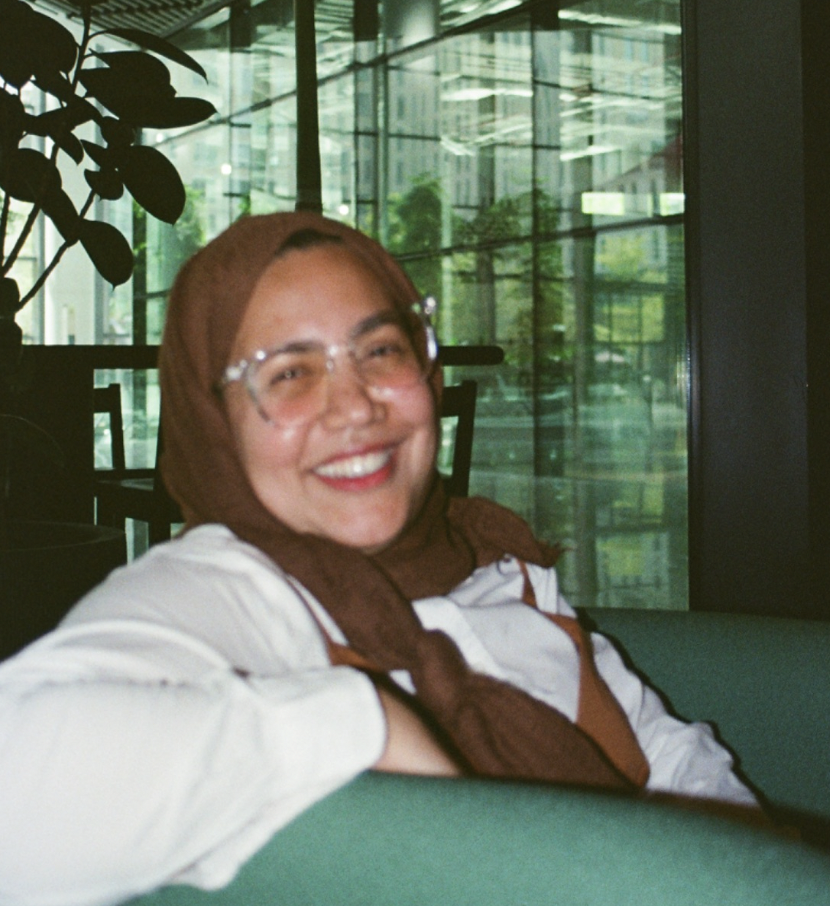
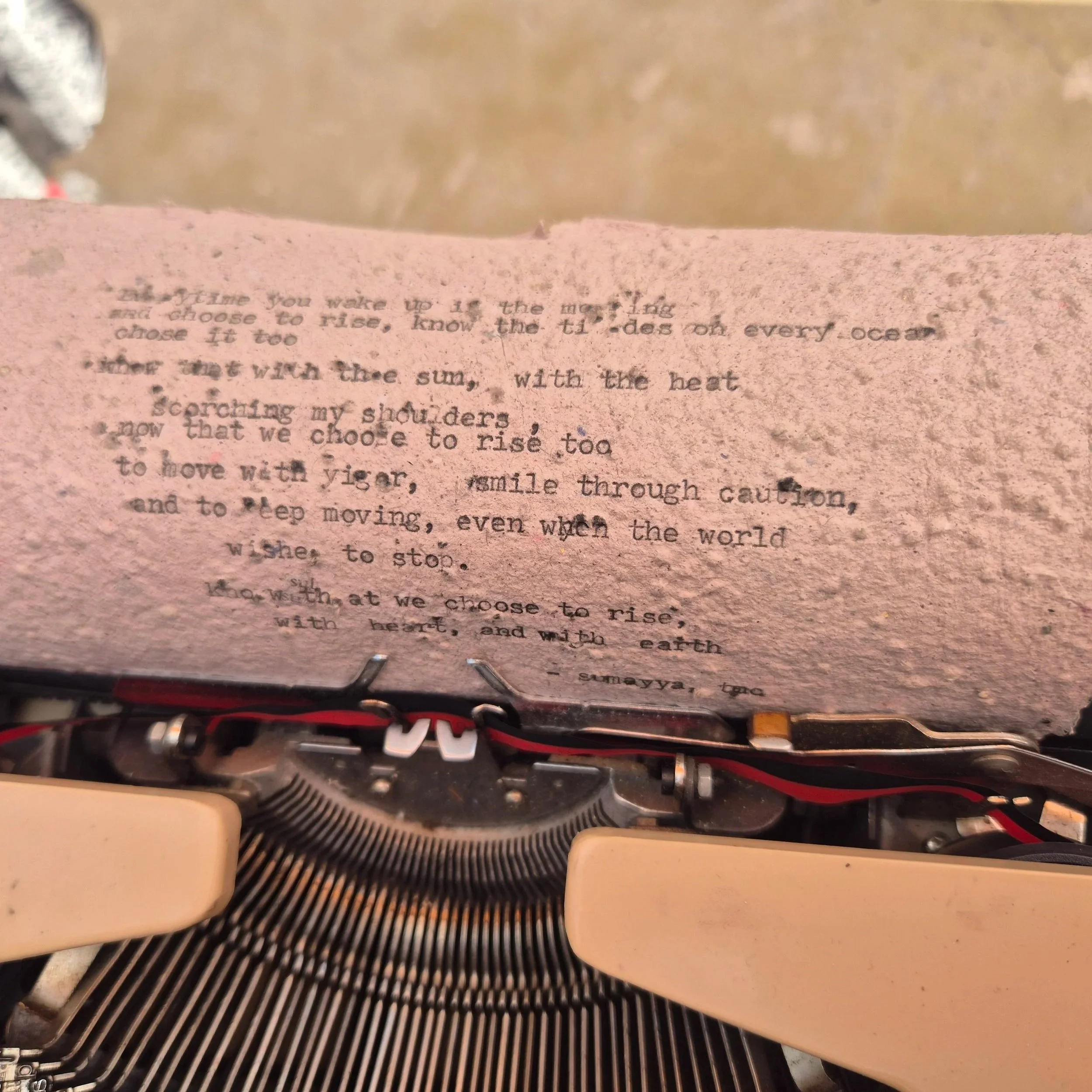
Sumayya Sideek (b.1996, Colombo) is a UAE-based creative with a background in Media Studies. She has experience spanning various industries within the field of communications for organisations globally. Her work focuses primarily on documentation and storytelling in the narratives of impact-driven projects surrounding community, art, and social advocacy. Sumayya also works with MENASA-based designers and artists in their communications and archival processes. In the past, she has also performed as a spoken-word poet in the UAE.
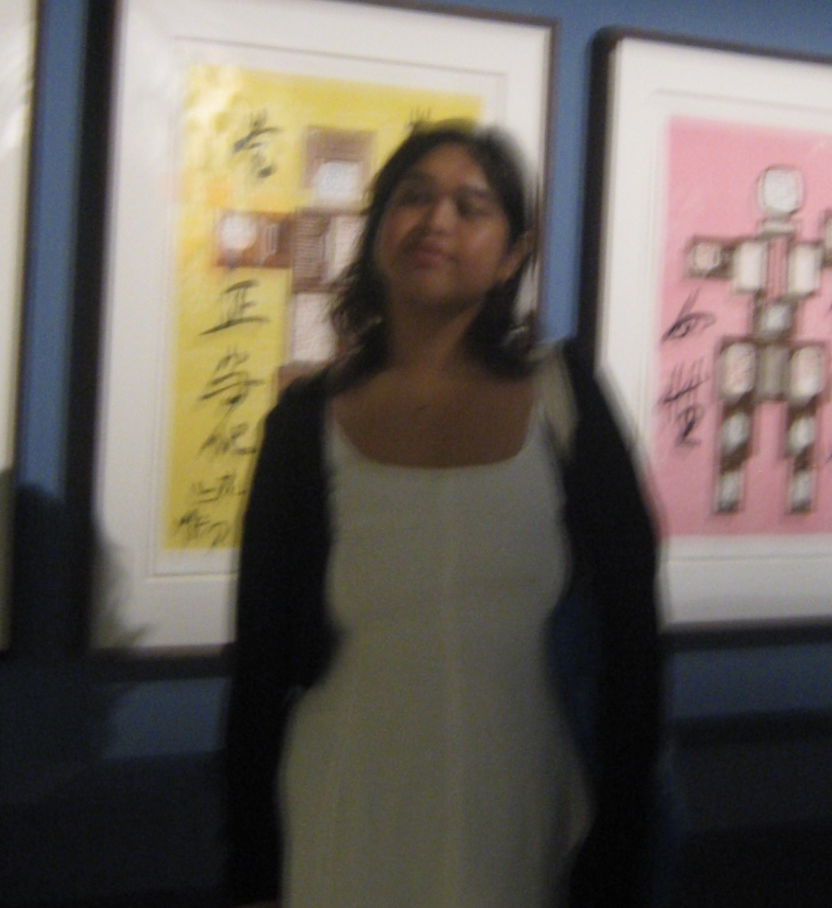
-Zoe Cusi (b. 1997, Abu Dhabi) is a Filipina interdisciplinary artist living and working in Abu Dhabi. Her artistic practice explores the idea of connection - what it means to build, lose, and form something inherently and deeply human;
Though most may argue that the definition of ‘connection’ is broad or vague, Zoe believes that is where its beauty lies. It has the ability to shape-shift, mould, and adapt to a world of narratives and perspectives, whether by force or choice. A storyteller by both trade and virtue, Zoe uses paint, poetry, paper, clay, photography, and oral history to tell stories of her lived experiences.
Zoe is a recipient of the Salama bint Hamdan Emerging Artist Fellowship (2025) and holds a Bachelor of Communications in Public Relations and Journalism.
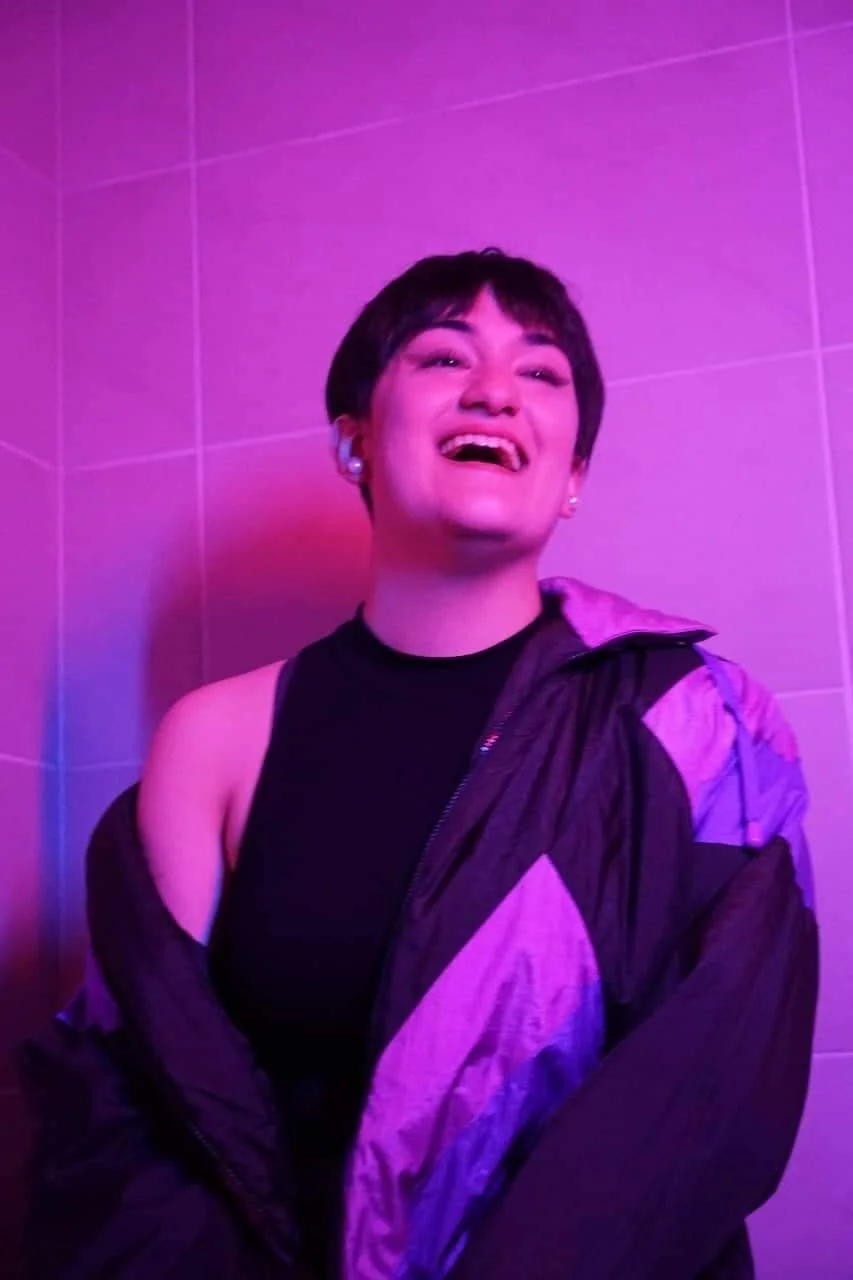
-Nada Almosa (b. 1999, Sharjah) is a Palestinian artist and creative writer, based between Abu Dhabi & Sharjah. Her practice navigates memory, identity-making, and play through mixed media, photography, and creative writing. Her works draw inspiration from her Palestinian heritage as well as the desire to preserve memory and chronicle stories of diaspora.
She is a graduate of Literature & Creative Writing from New York University Abu Dhabi (2021). Nada is currently a Teaching Artist fellow at Manarat Al Saadiyat (2025/26). has participated in the VICE residency by Exit 11 Performing Arts Company (2022), a mentorship program with Nujoom Al Ghanem (2023), and the Spectrum: Photographers in Residence program at Manarat Al Saadiyat (2024). She has published works in Wasafiri Magazine, Corniche Comic Anthology, Mizna, & Strange Horizons.
-
The mystic festival 2025
At the Grassroots Village, Hatta
-
How it all began
Zoe was on the hunt for a specific type of paper, and I was coming across more slow crafts on social media, including paper-making. We separately were expressing our desire for more to Sumayya, who suggested: what if?
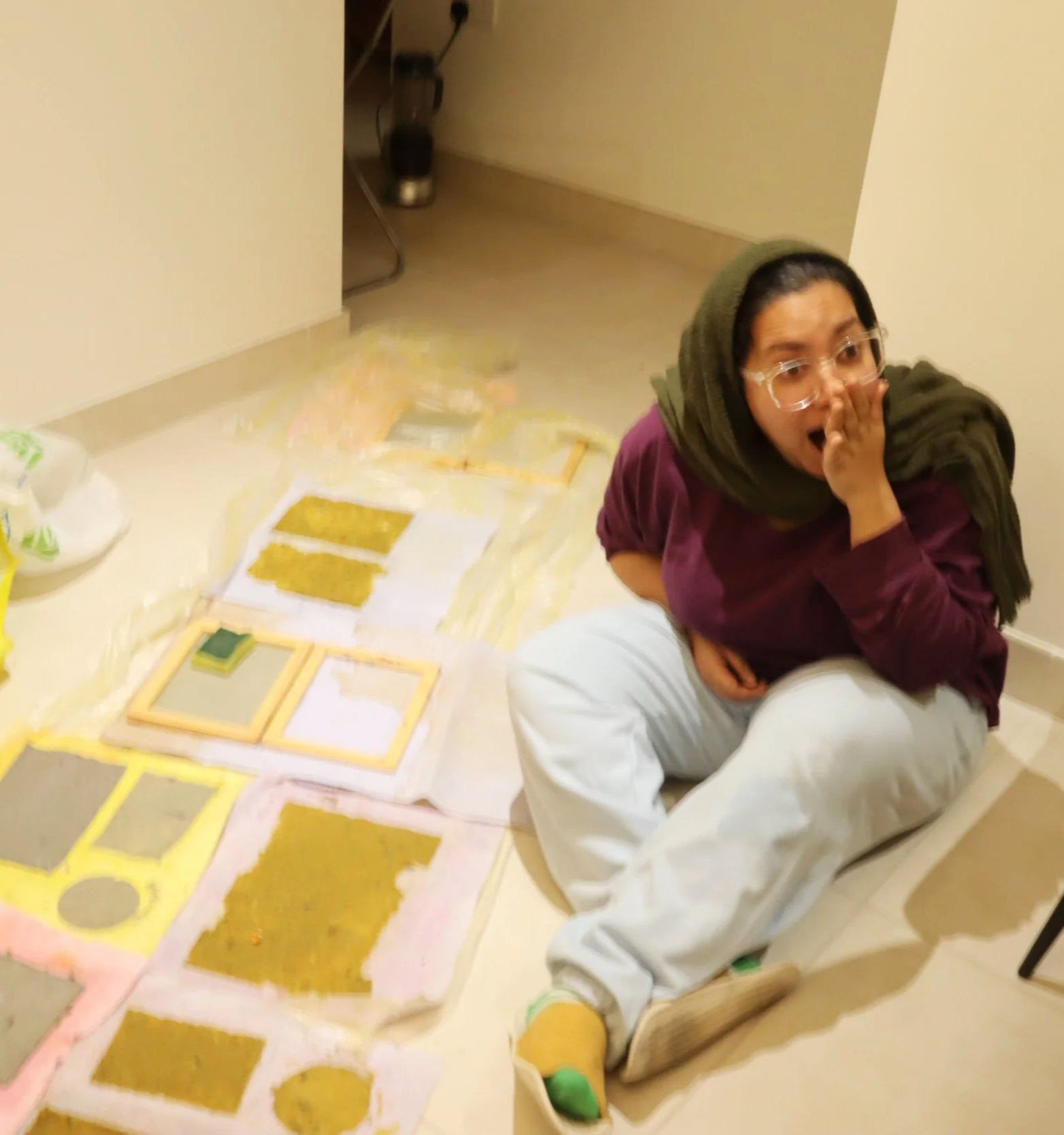
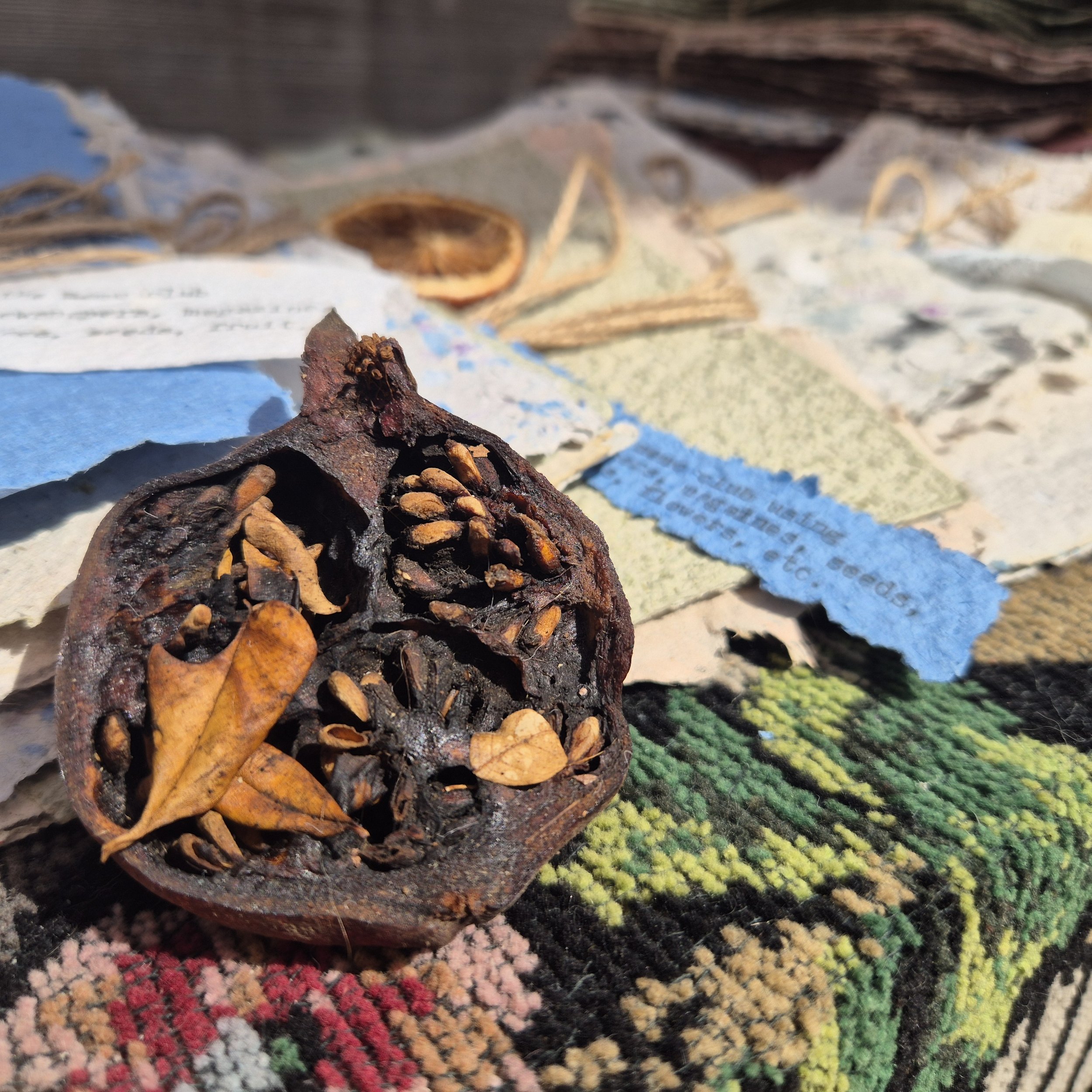
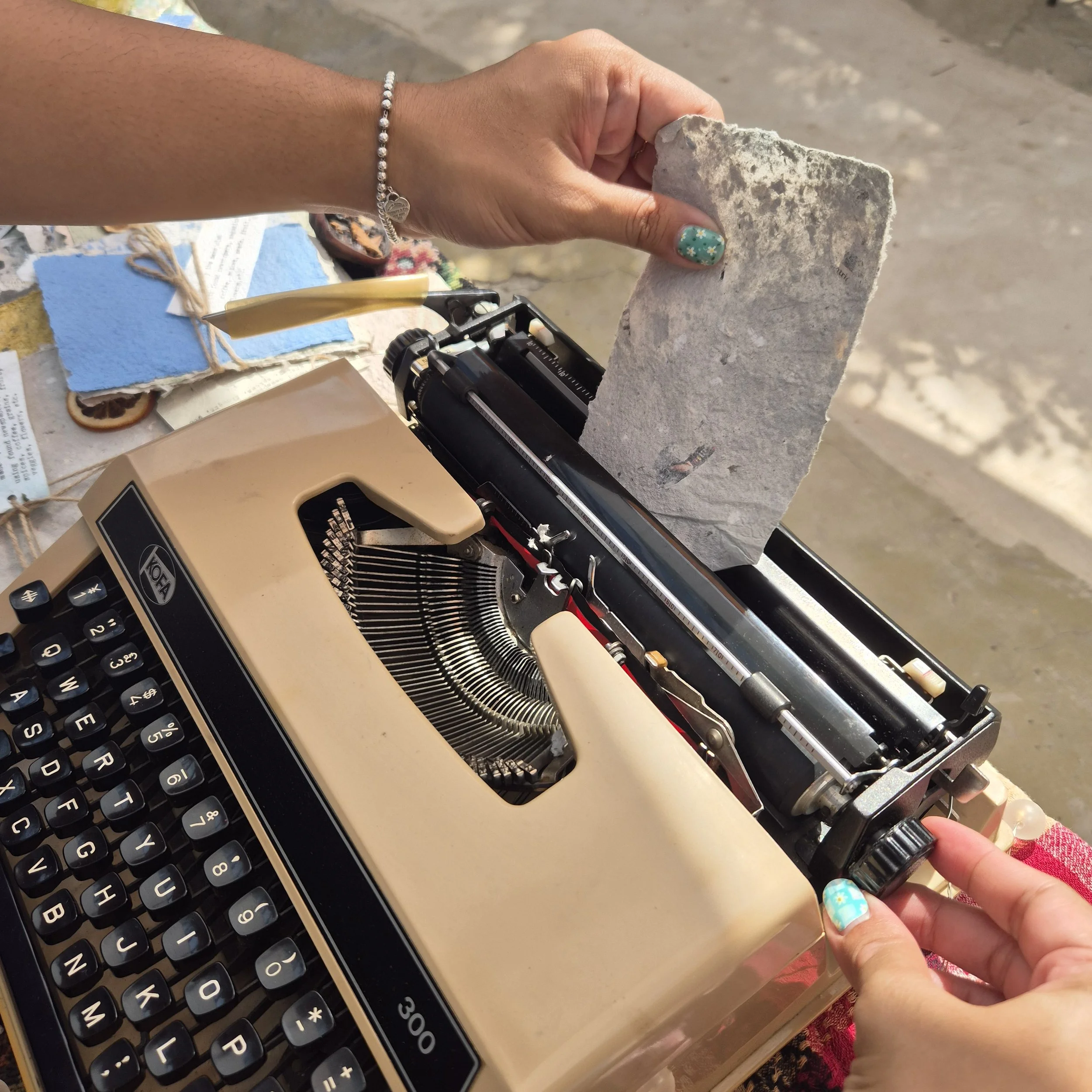
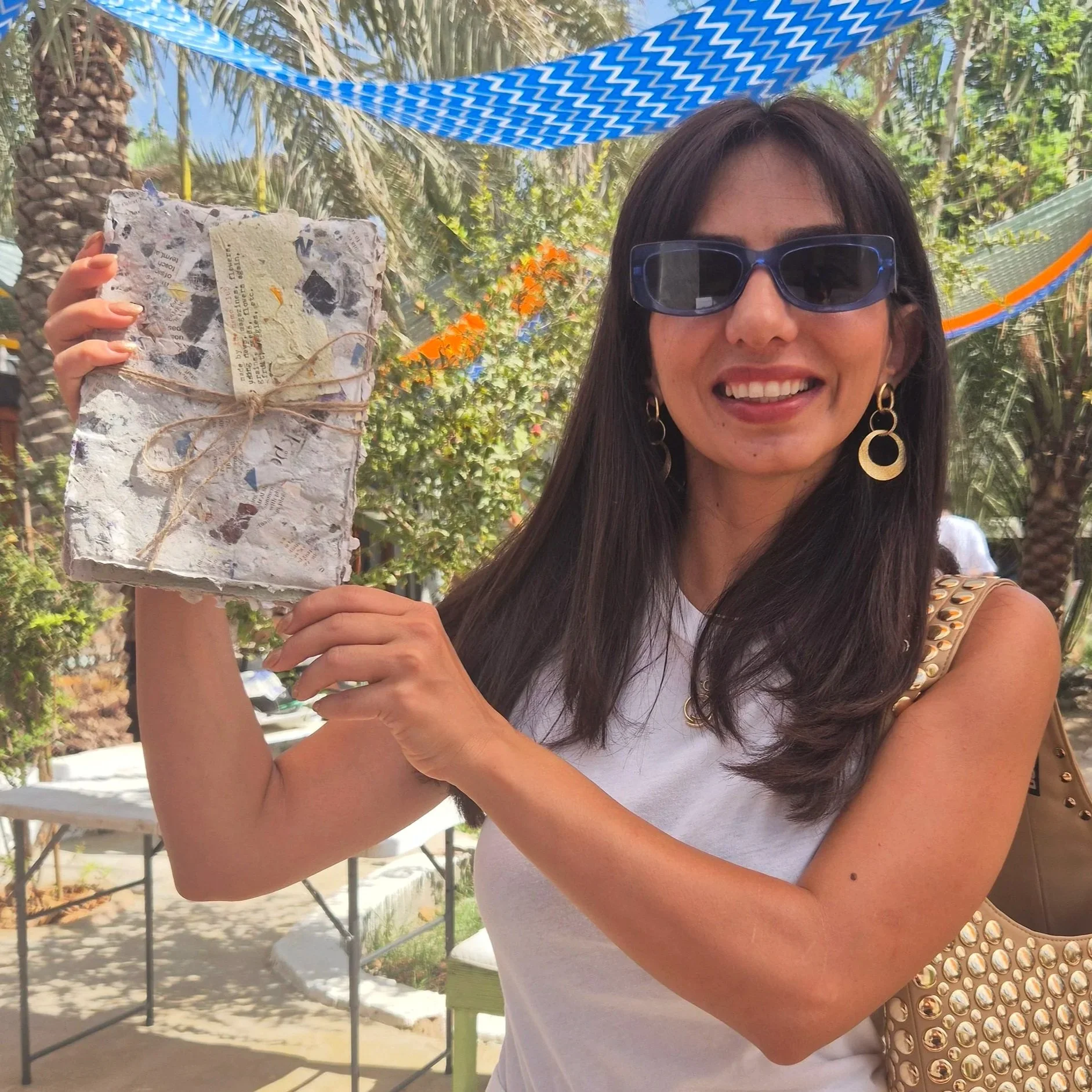
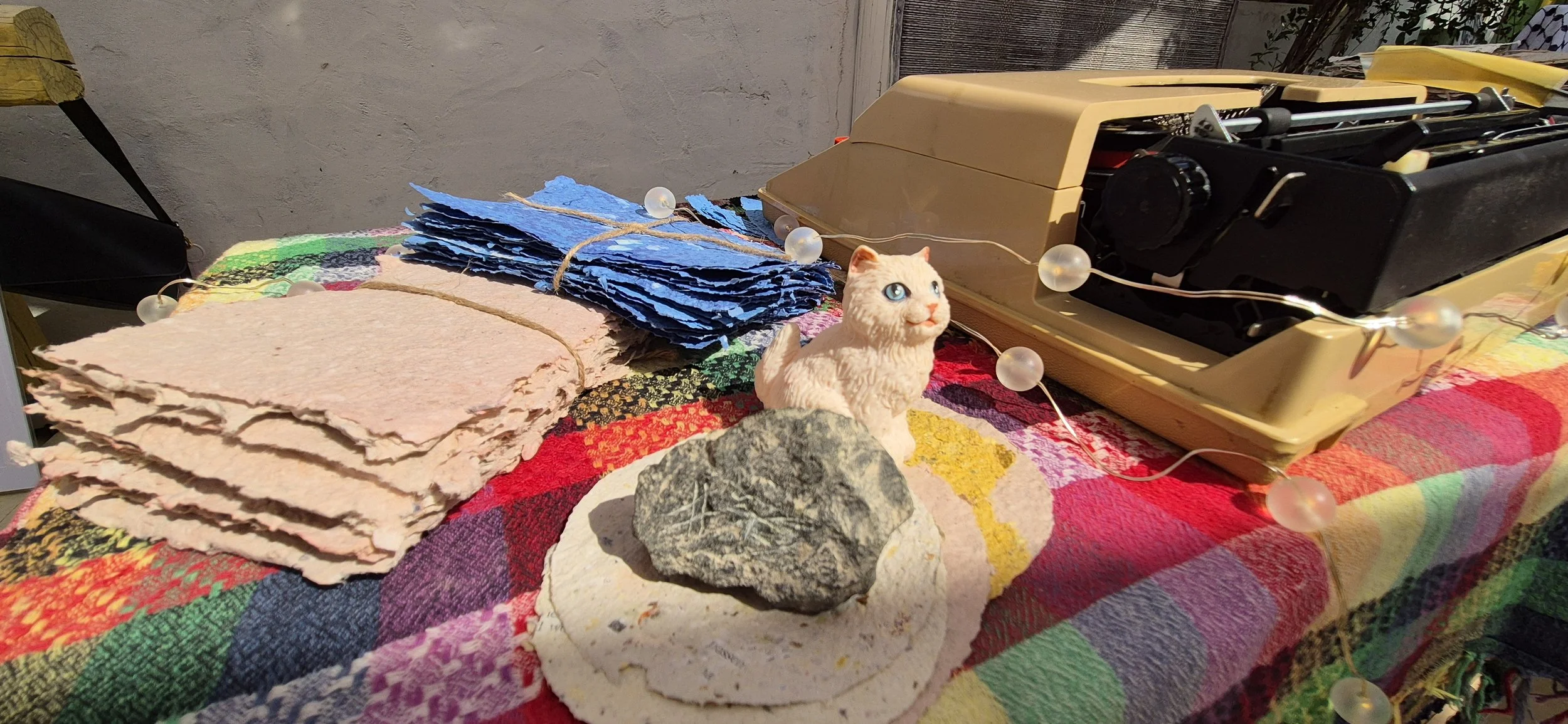
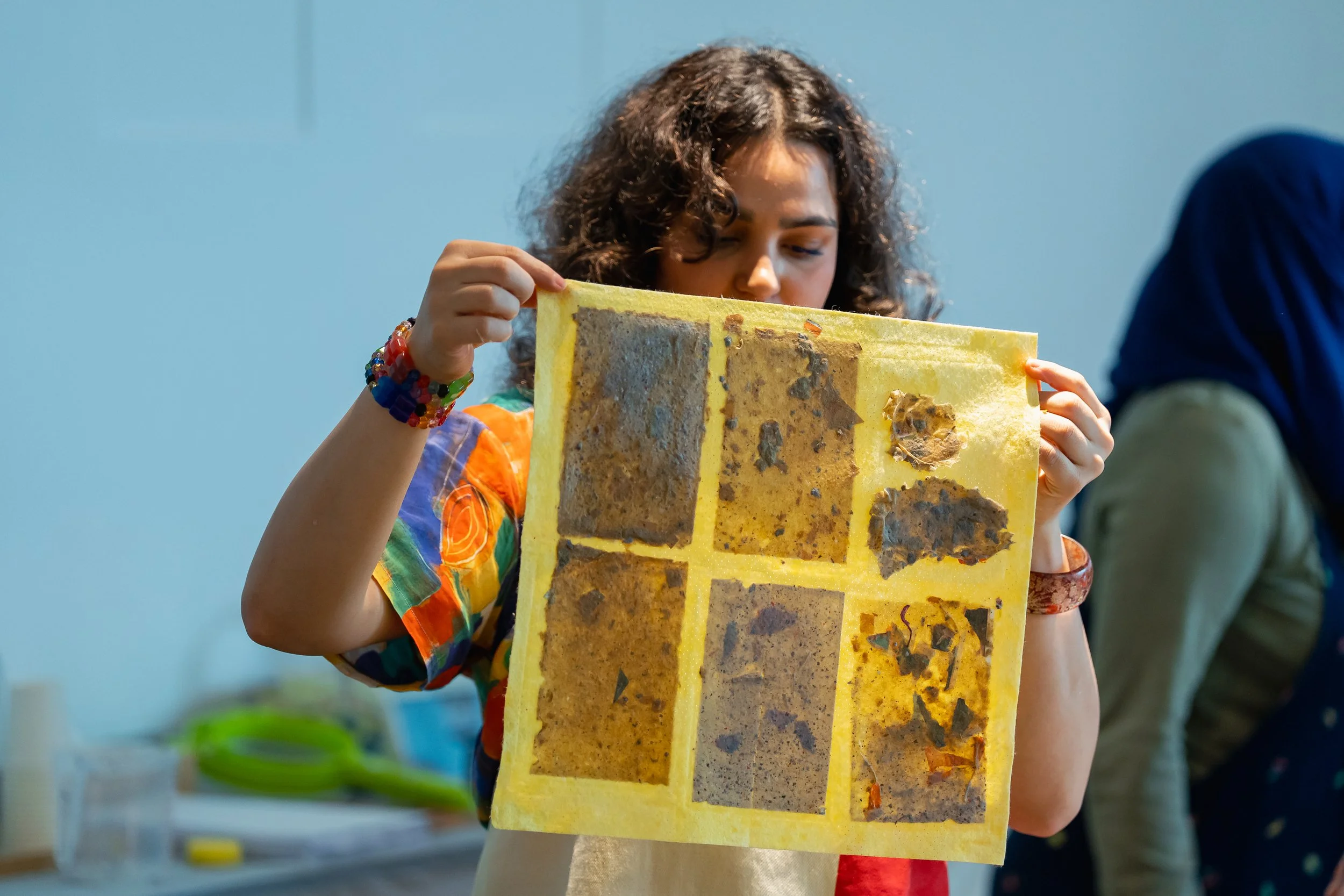
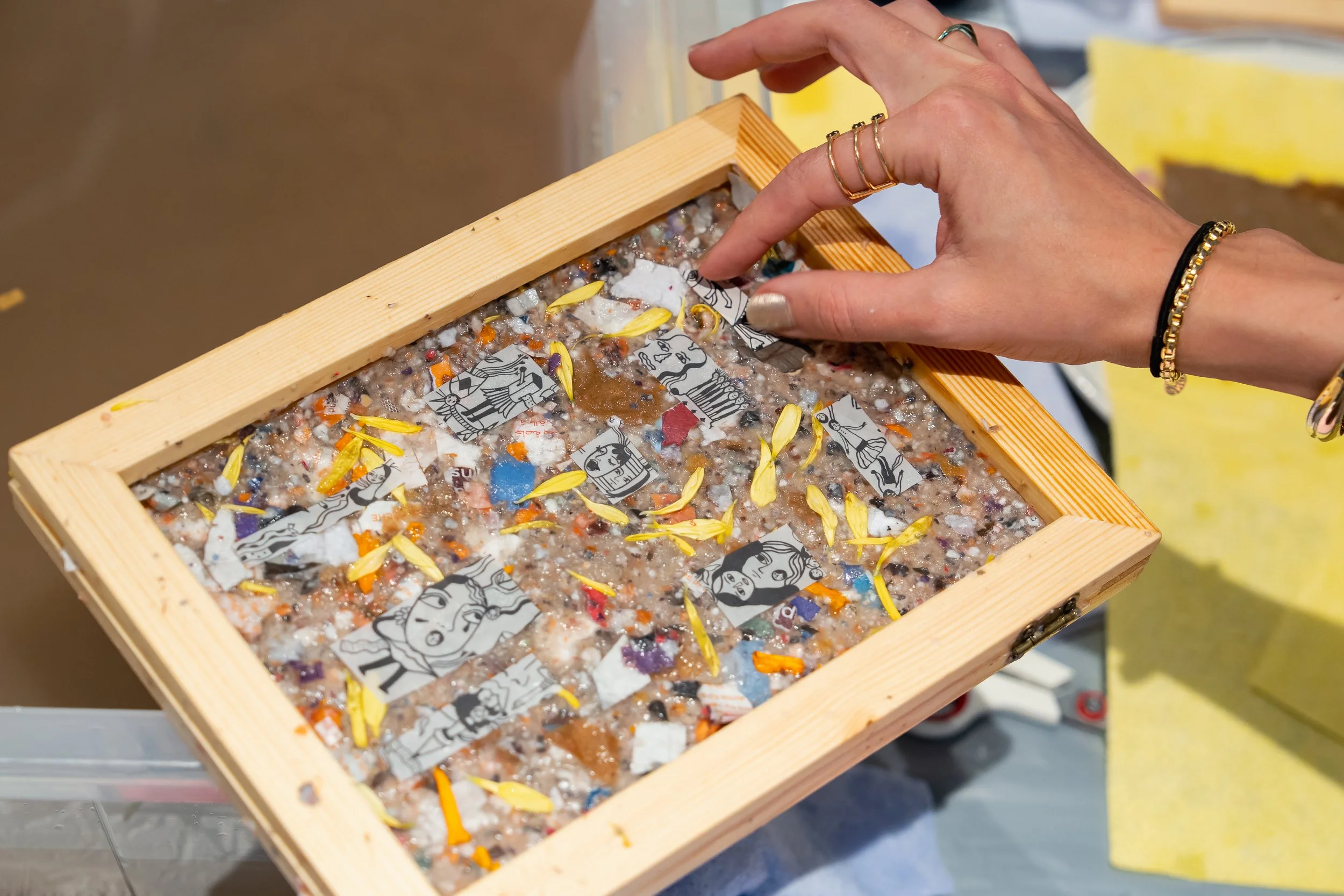
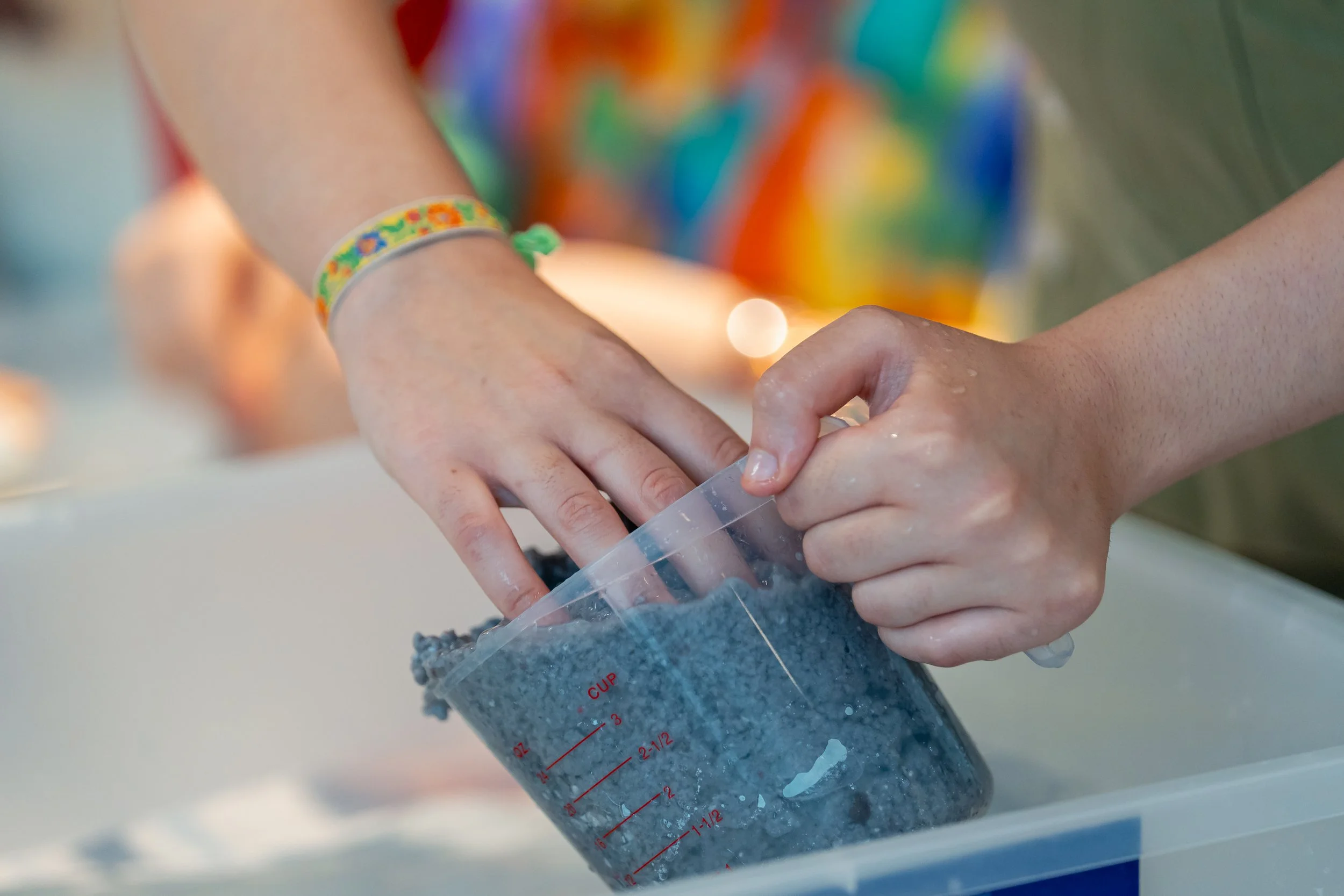
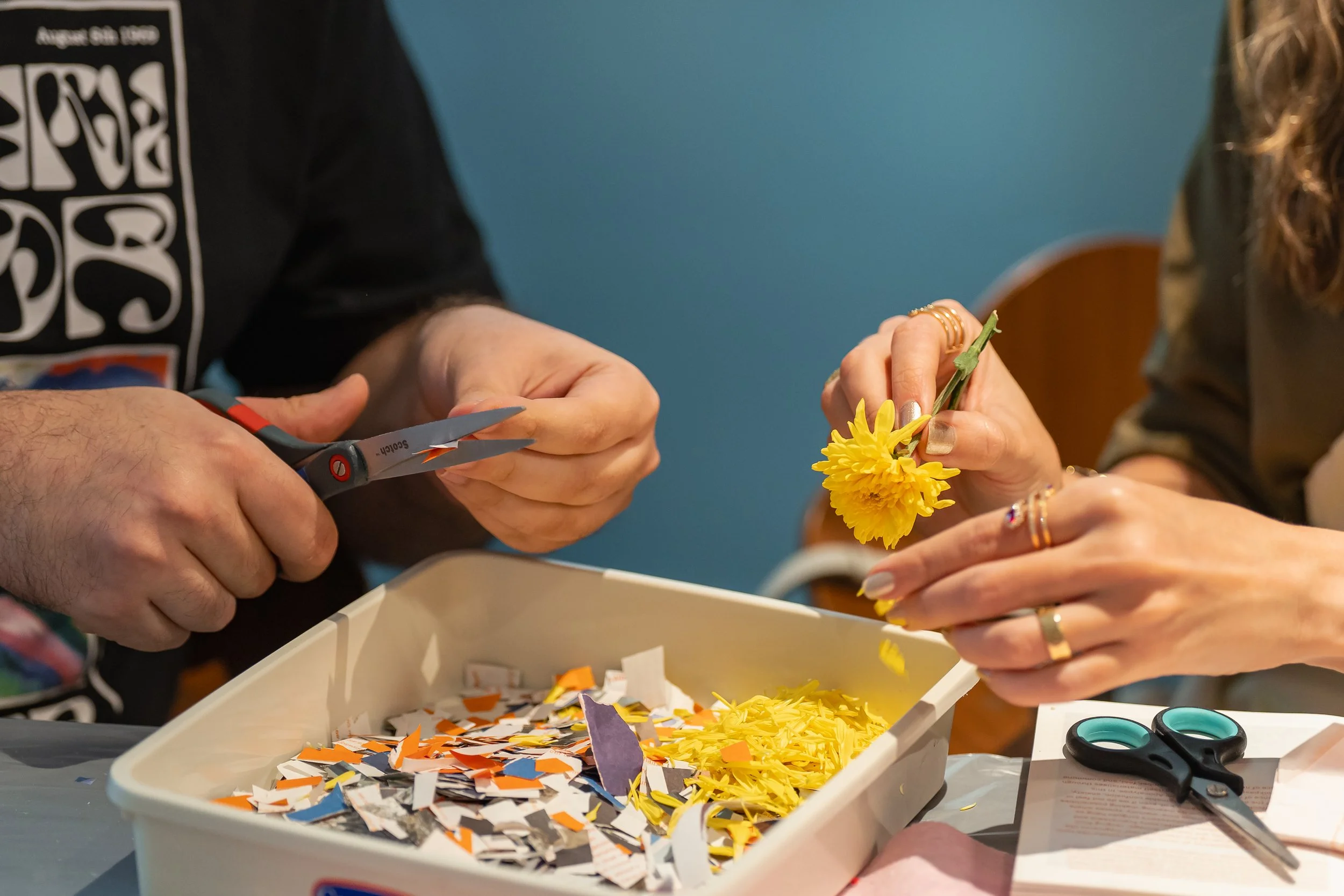
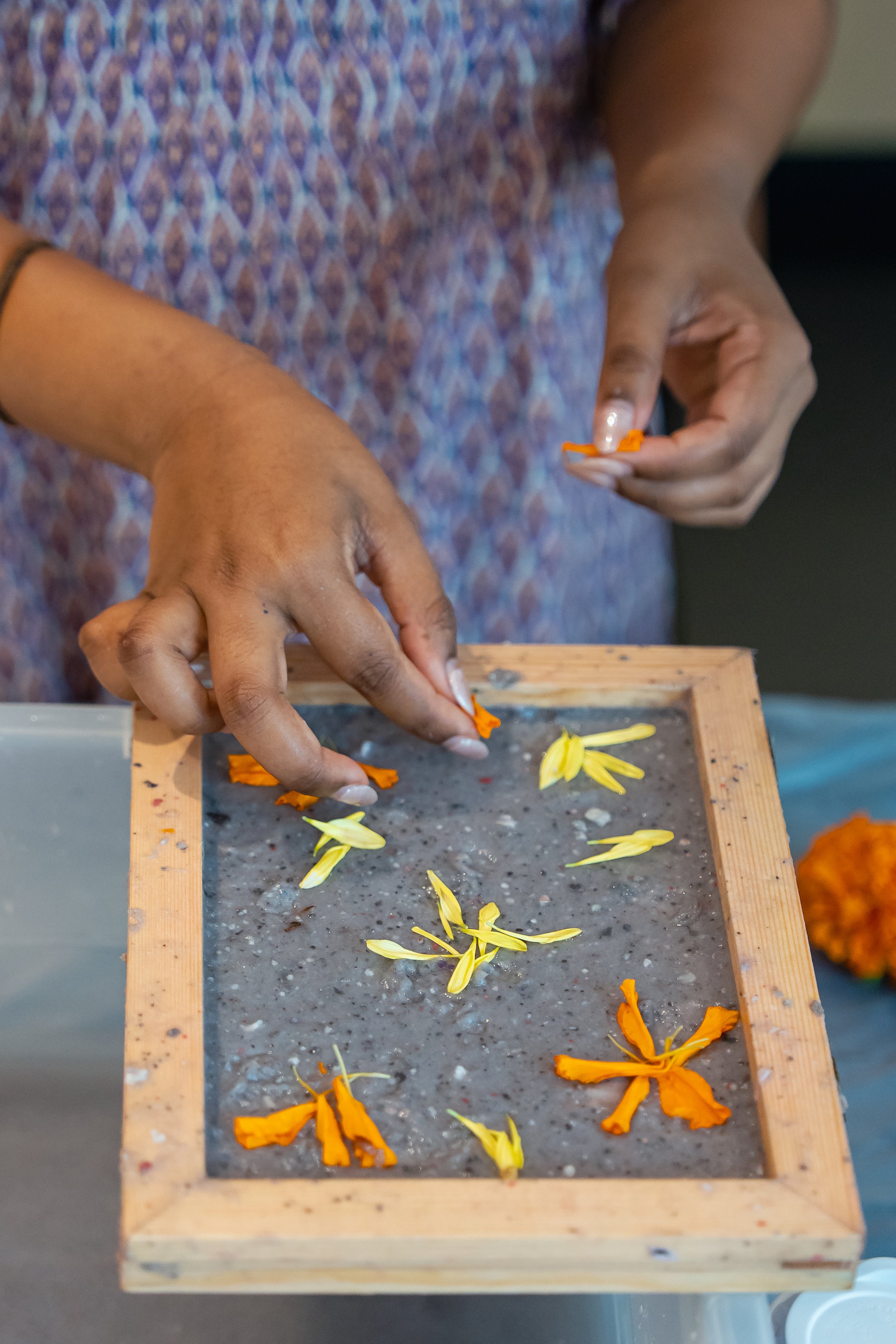
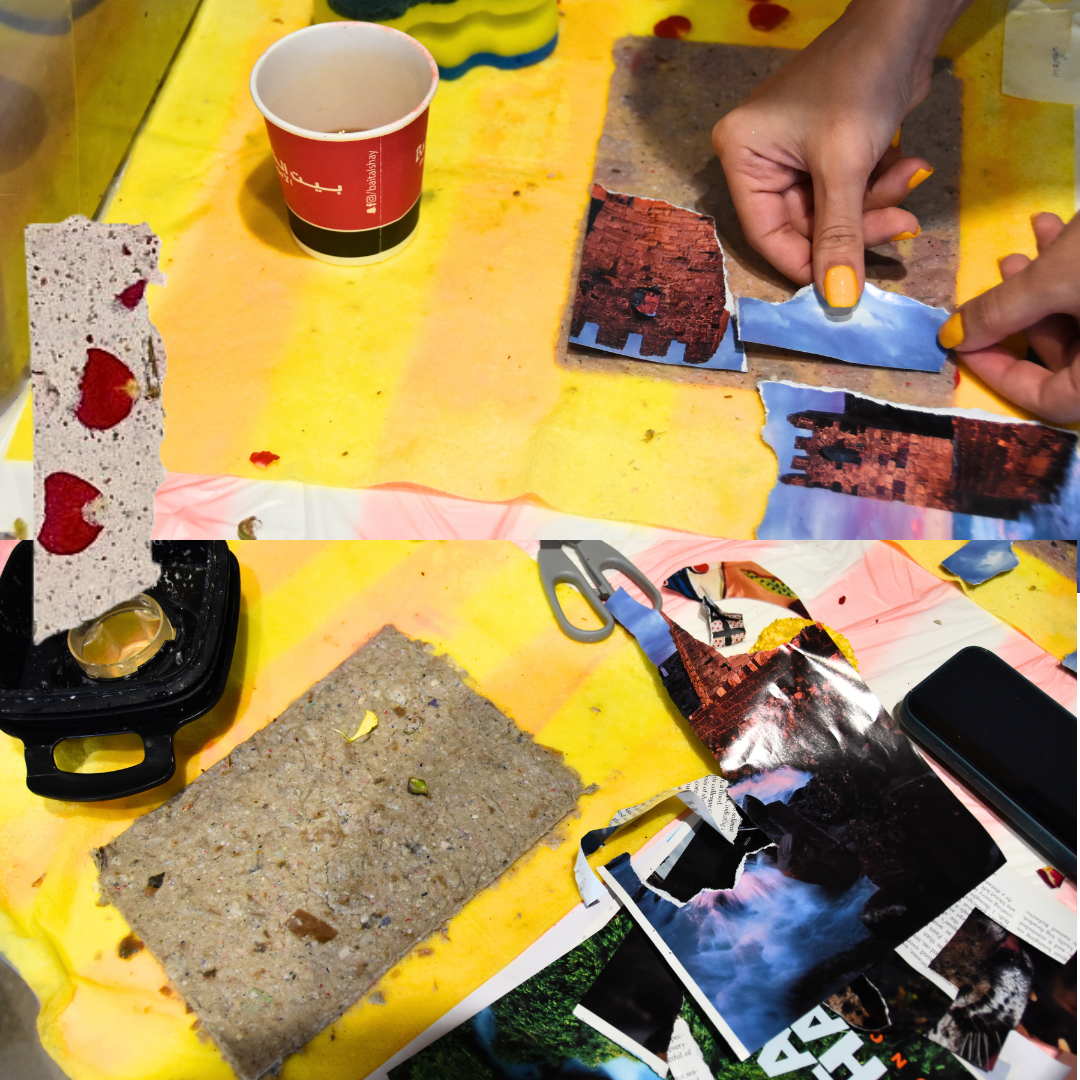
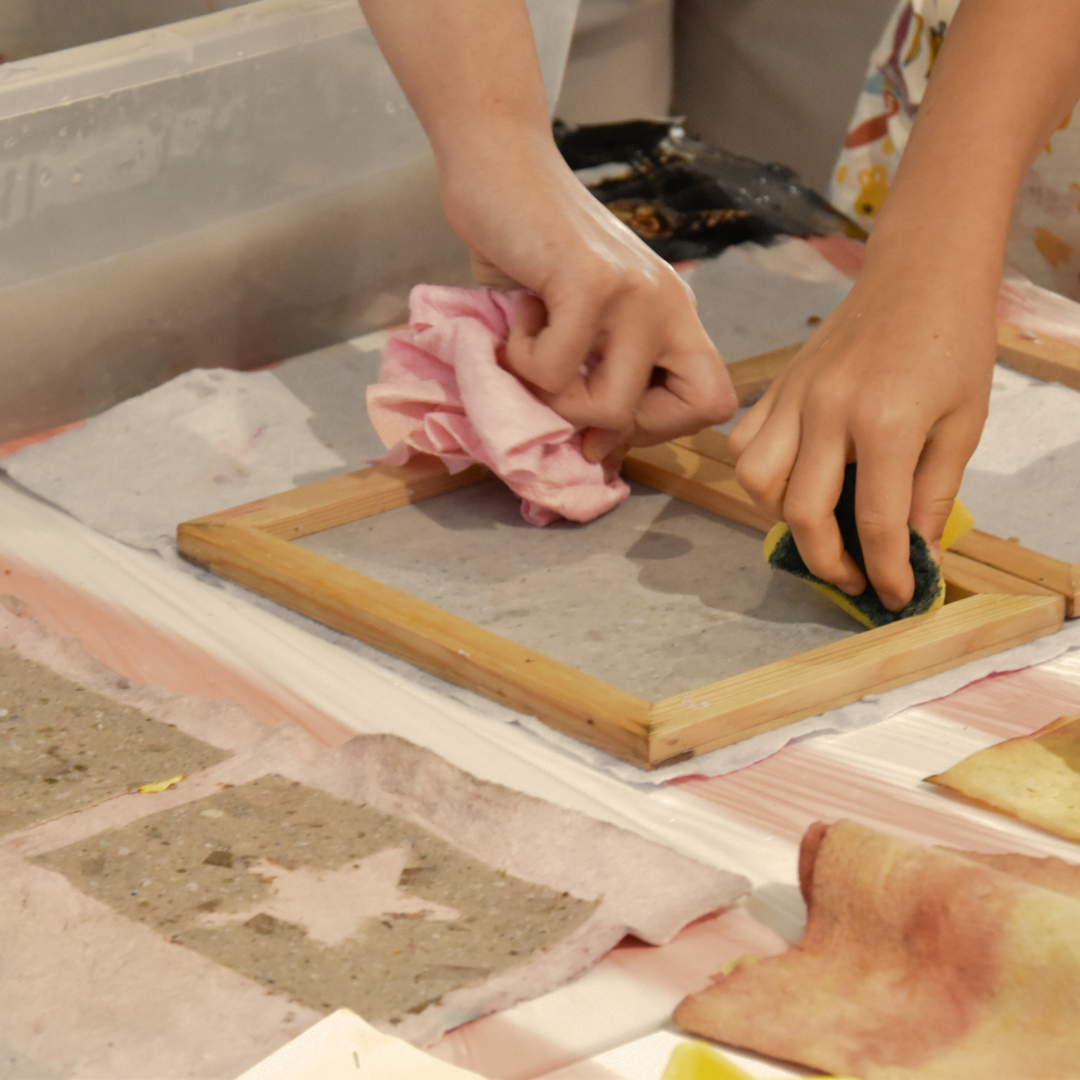
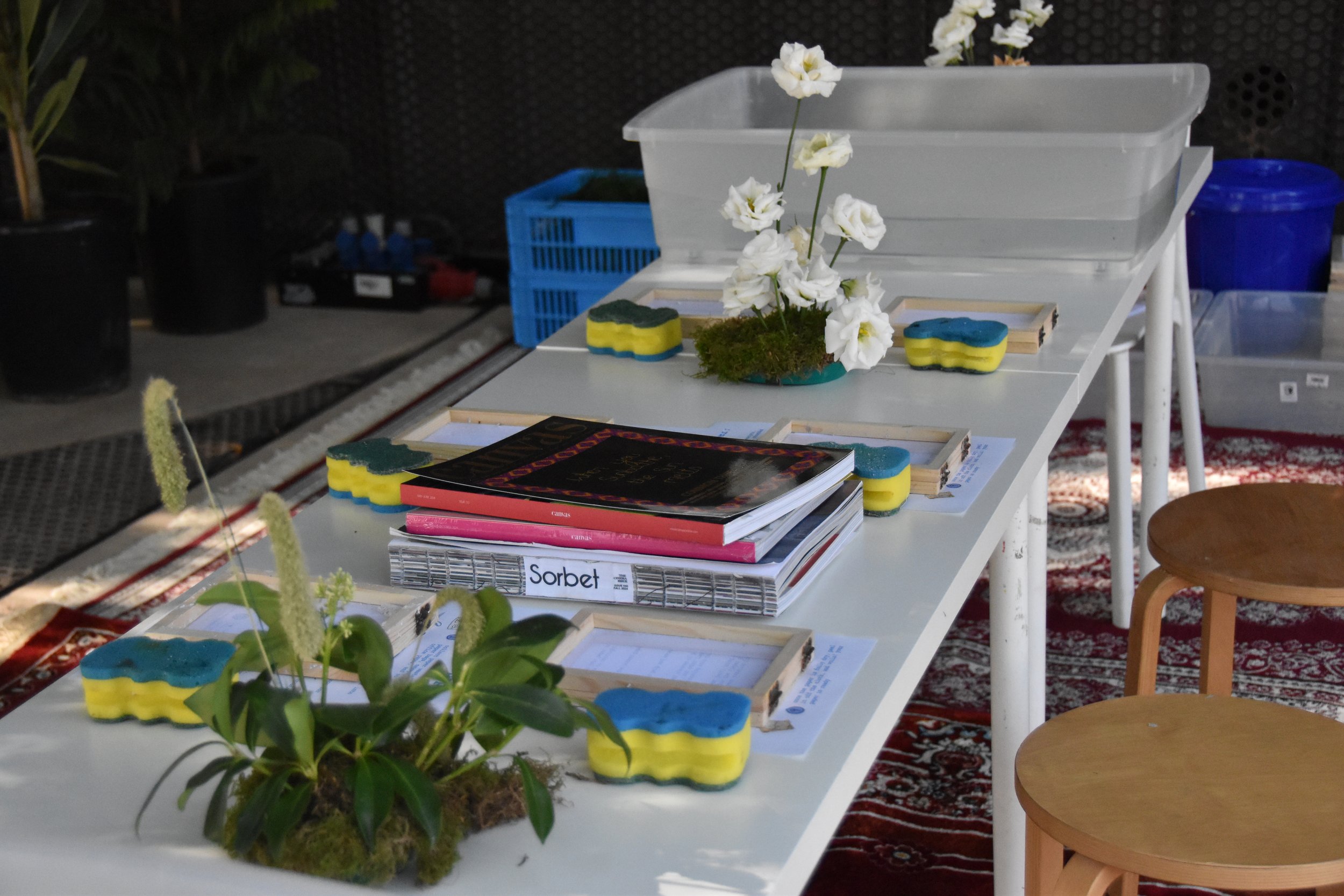
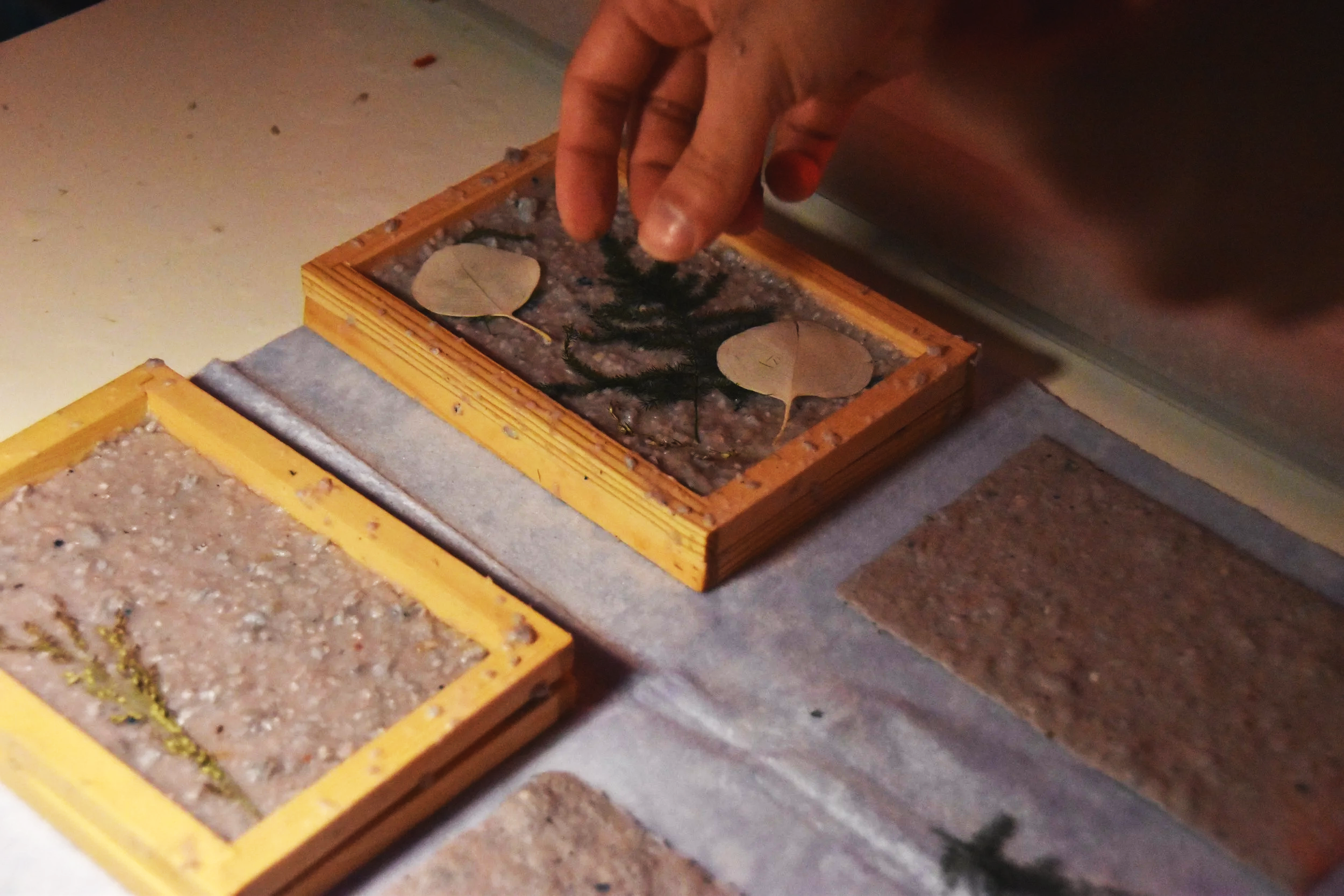
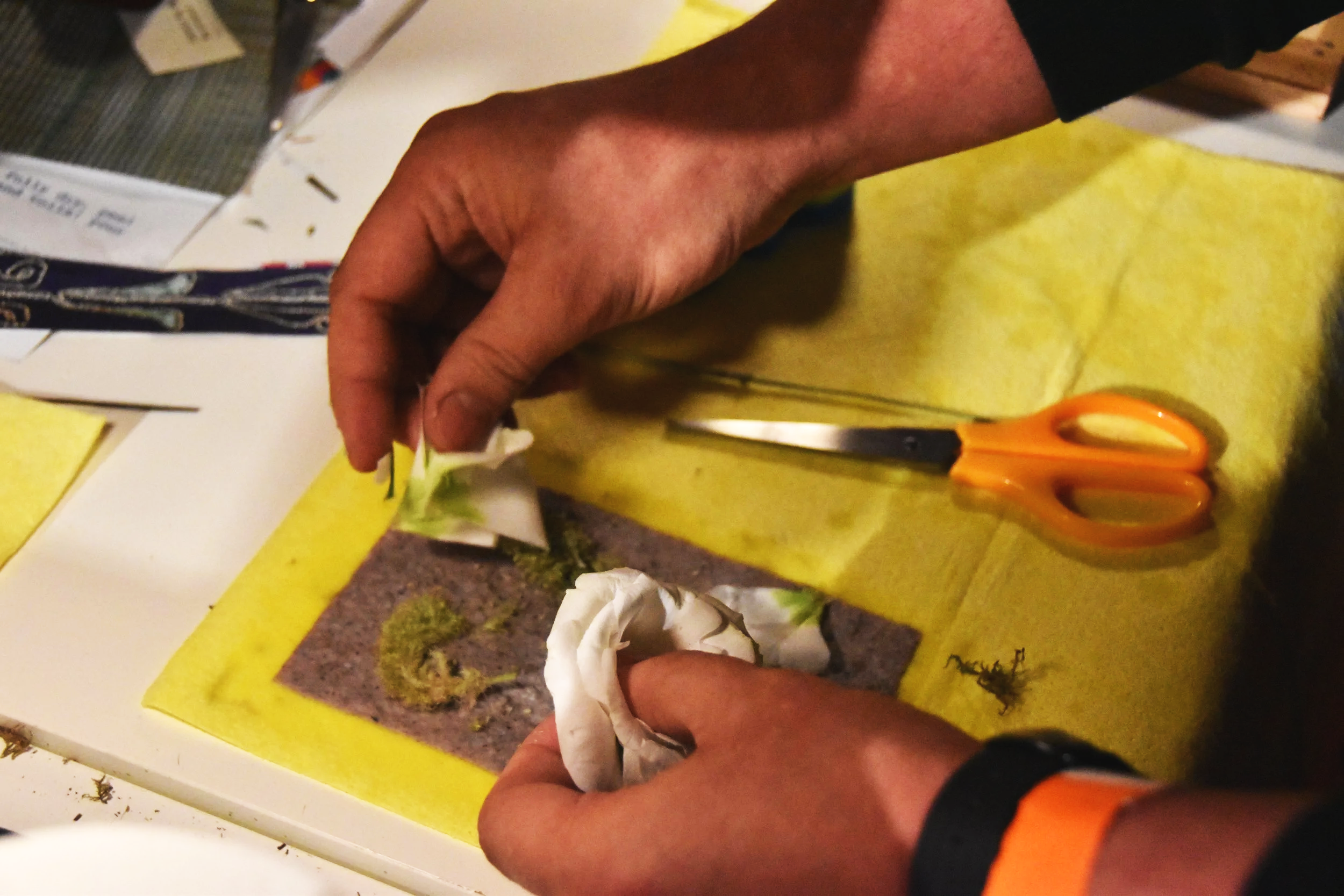
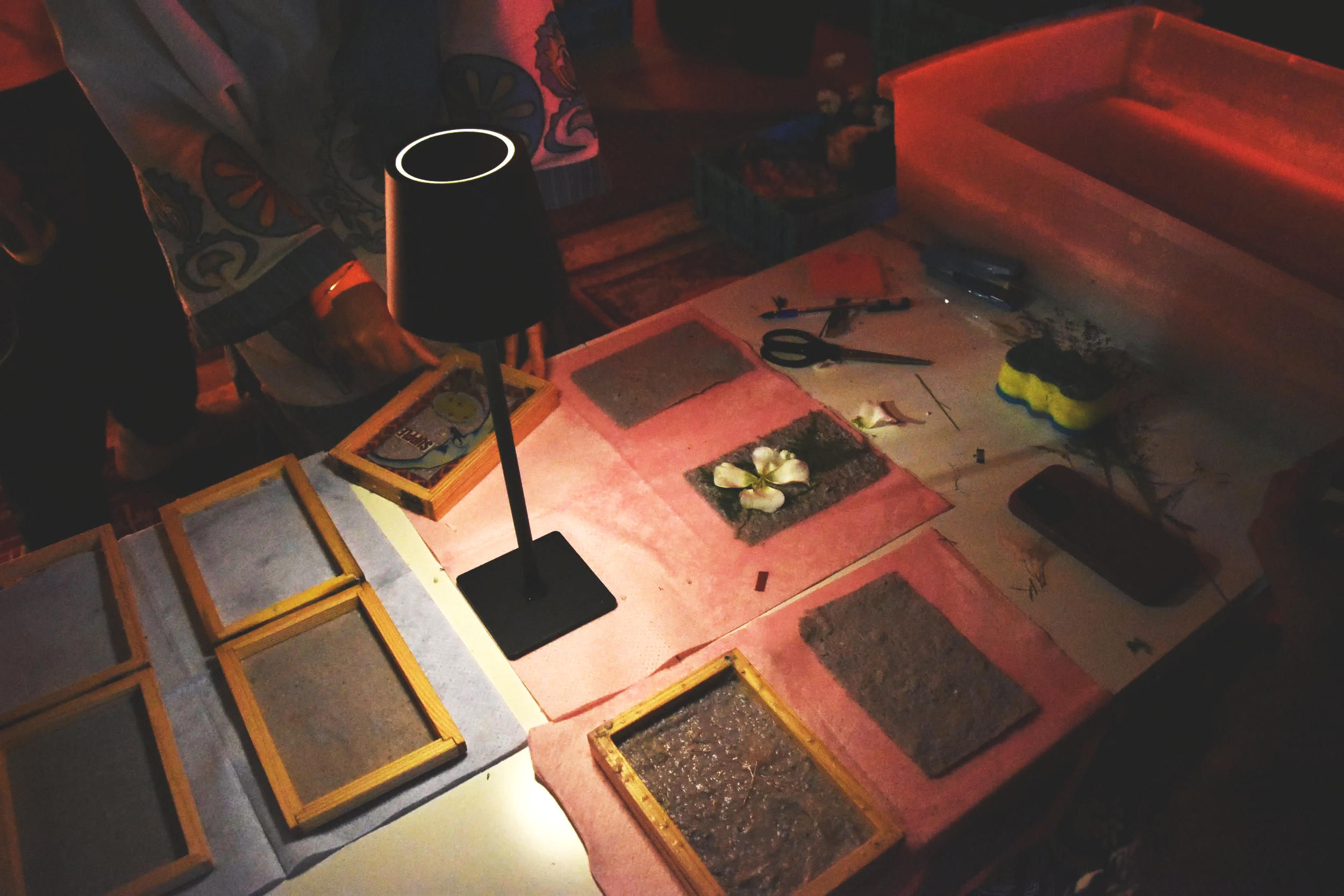
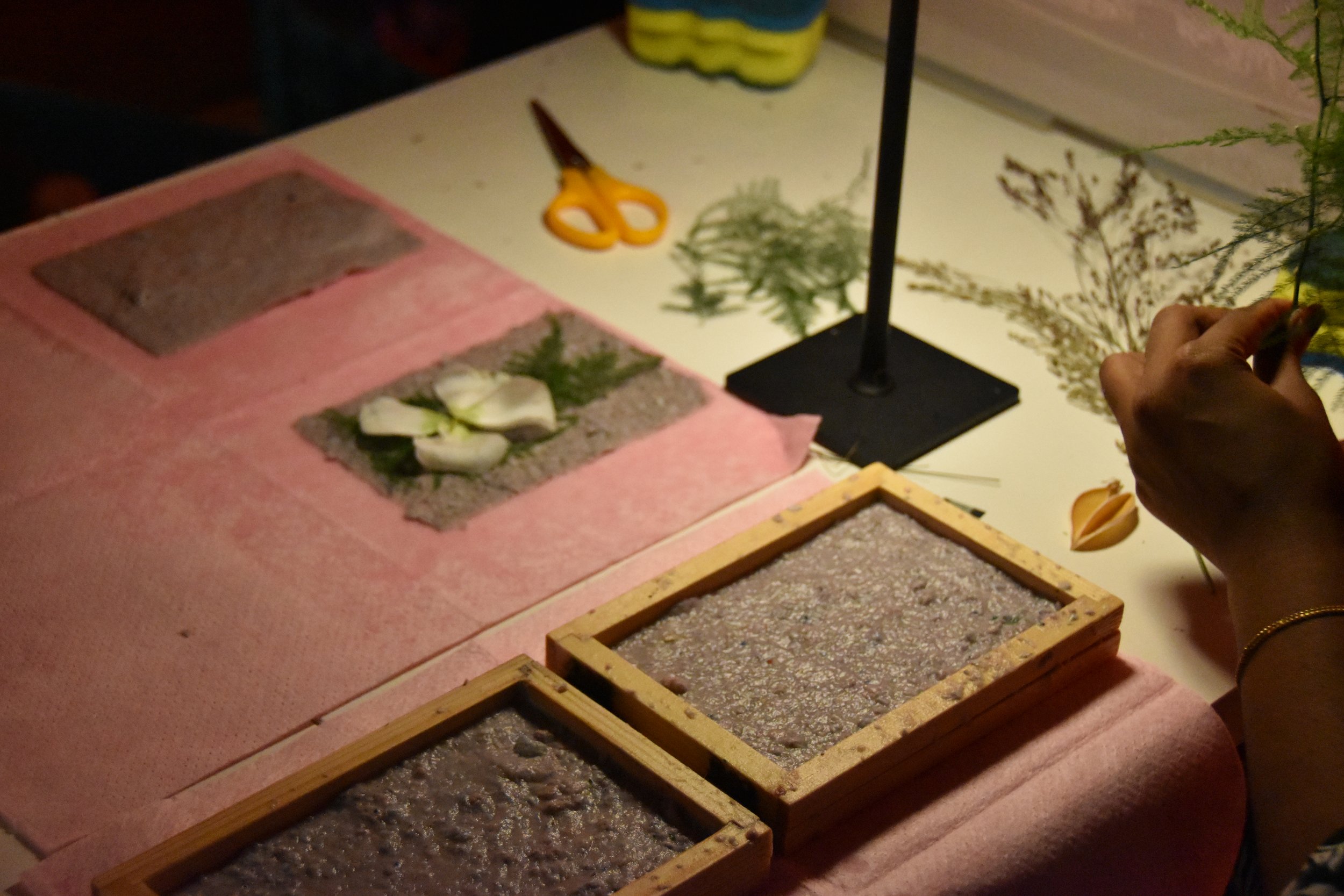
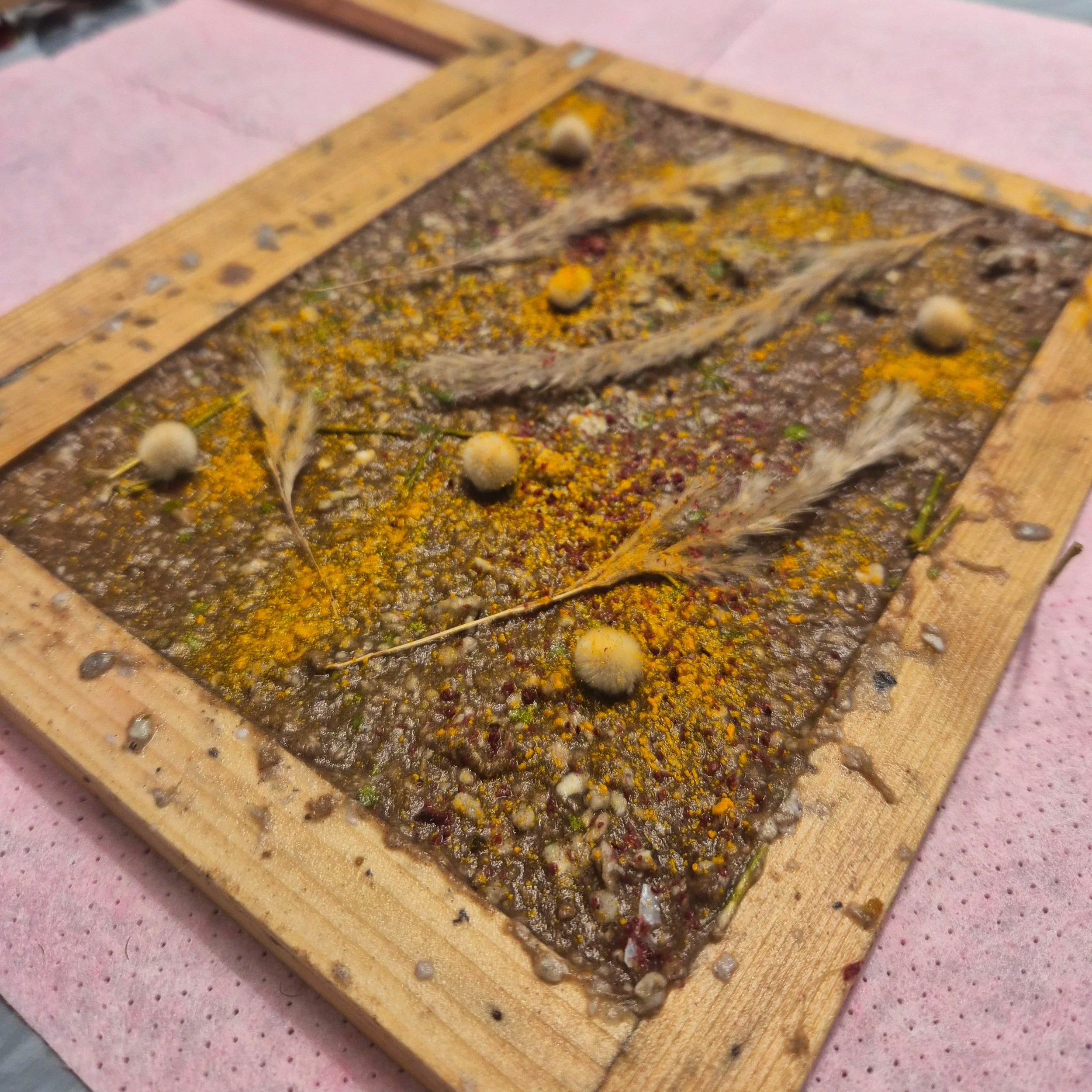
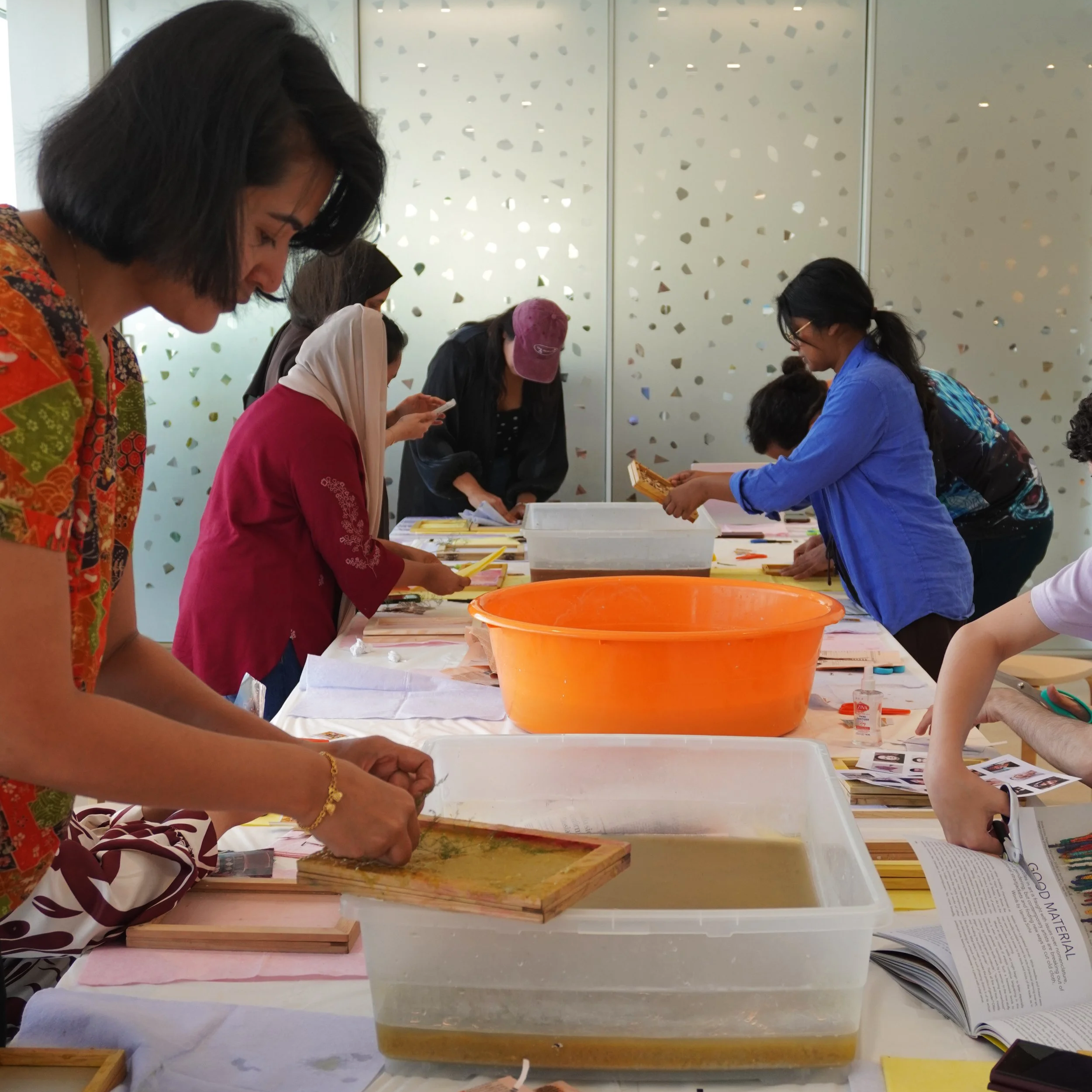
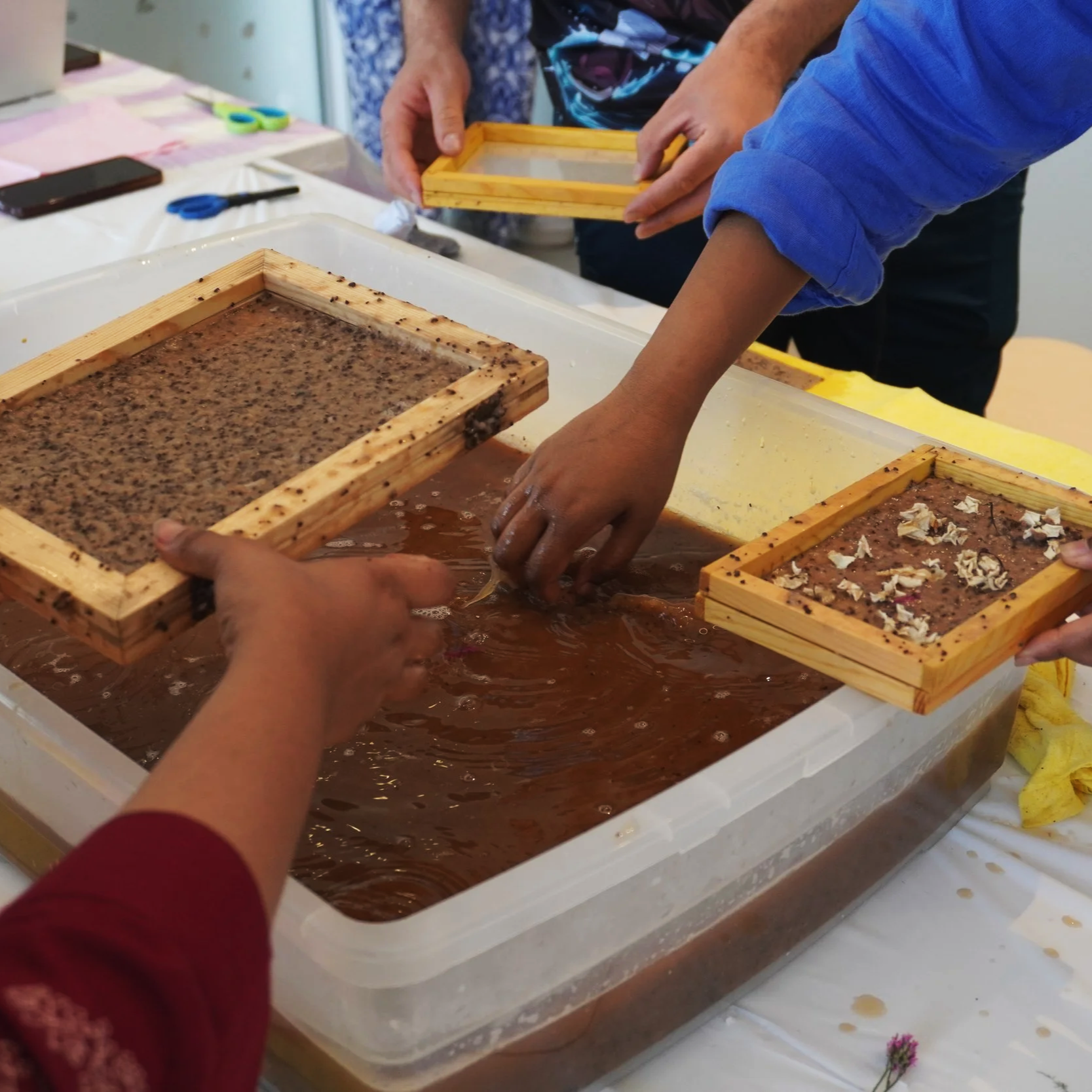
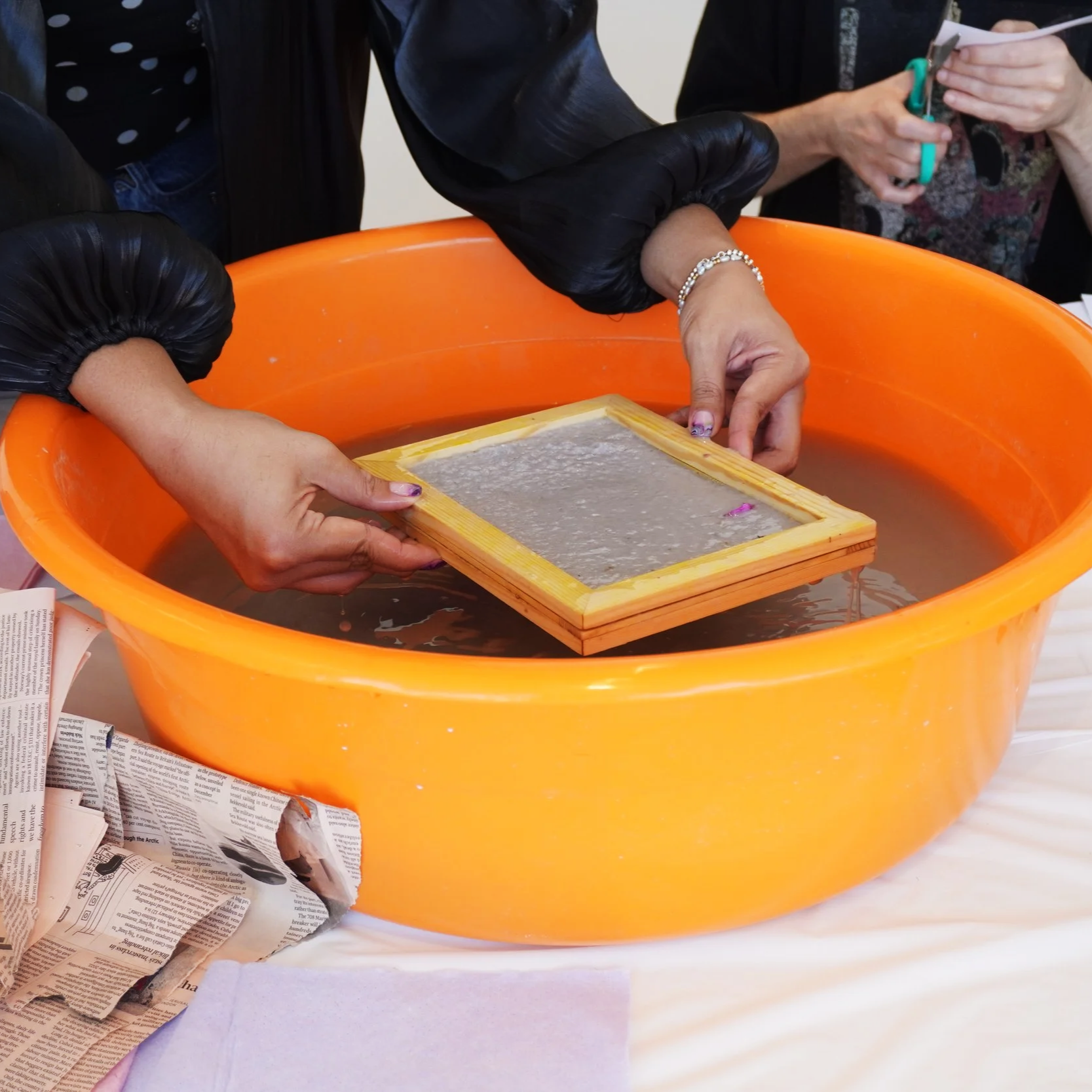
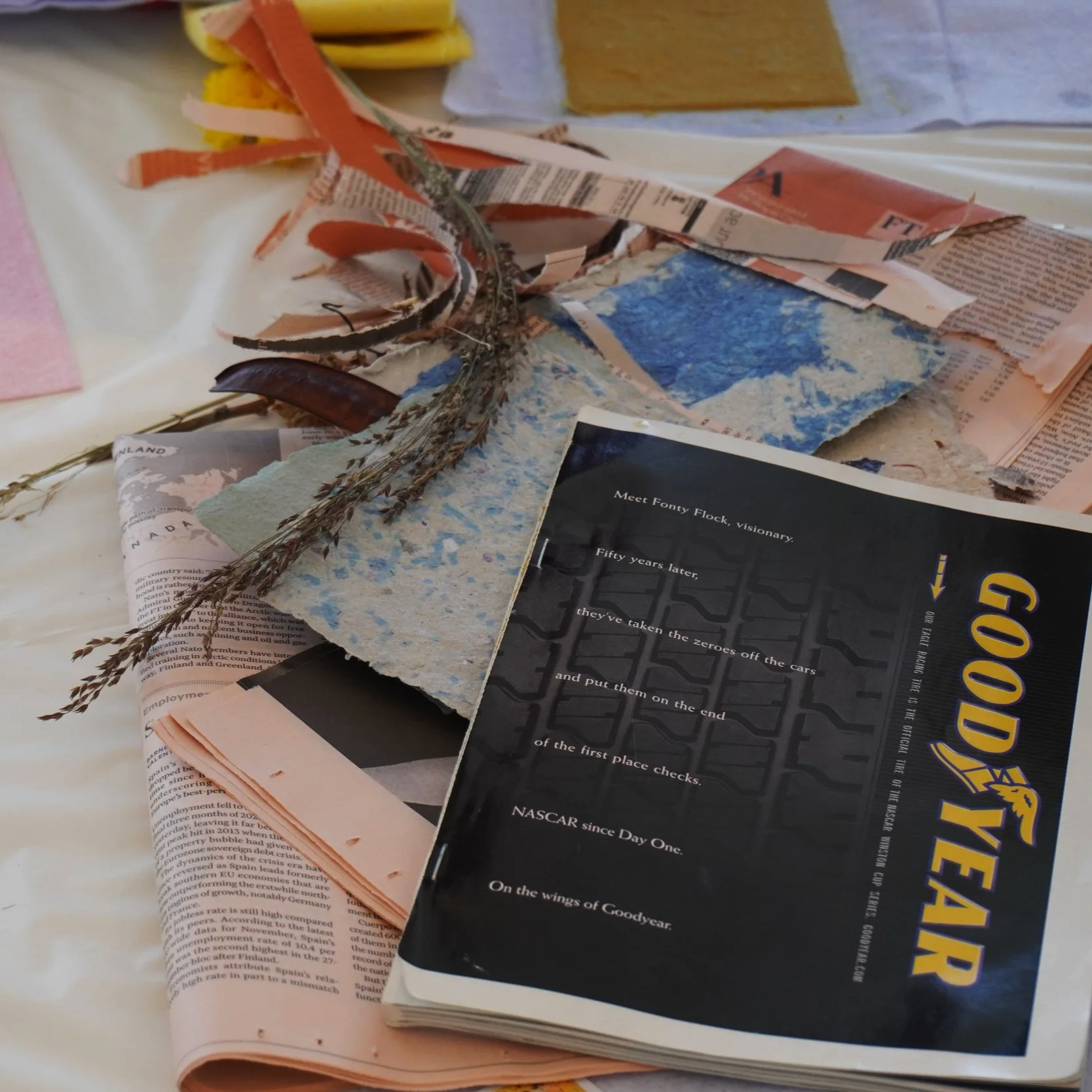
The seed was planted in April 2025, when we all met on Sumayya’s living room floor, cutting up old newspapers, soaking them in buckets, blending them in a sacrificial blender that was no longer food-safe, and creating new sheets of paper, mixing in spices and a variety of ingredients.
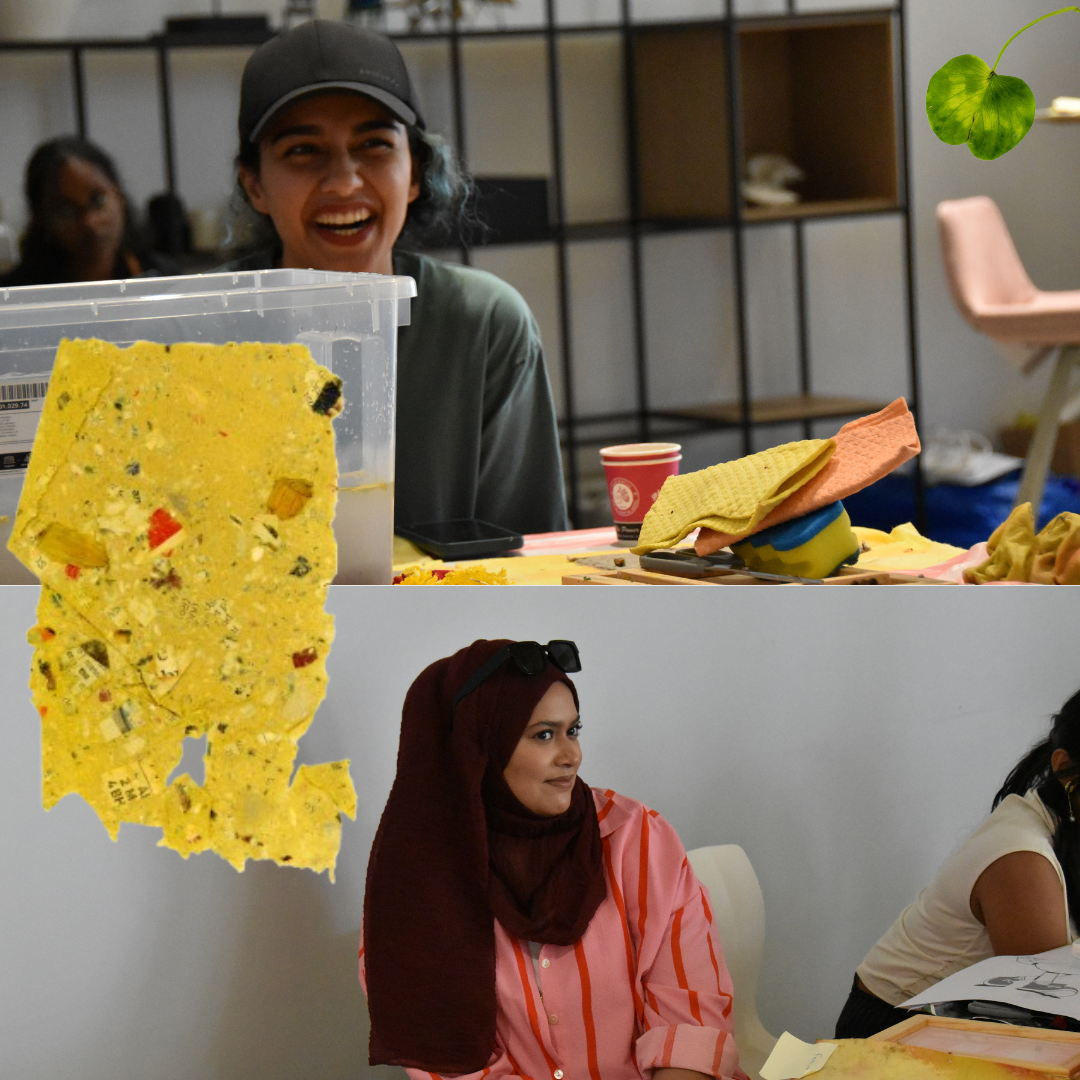
This quickly became a weekly ritual that continued to grow in community. Plastic sufra on the floor, bare-footed shenanigans, home-cooked meals, and hours of papermaking brought us together.
Our newfound rituals inspired us to share with others the joys of one another’s company, collective memories, and tactility.
-
the memo club
market participation
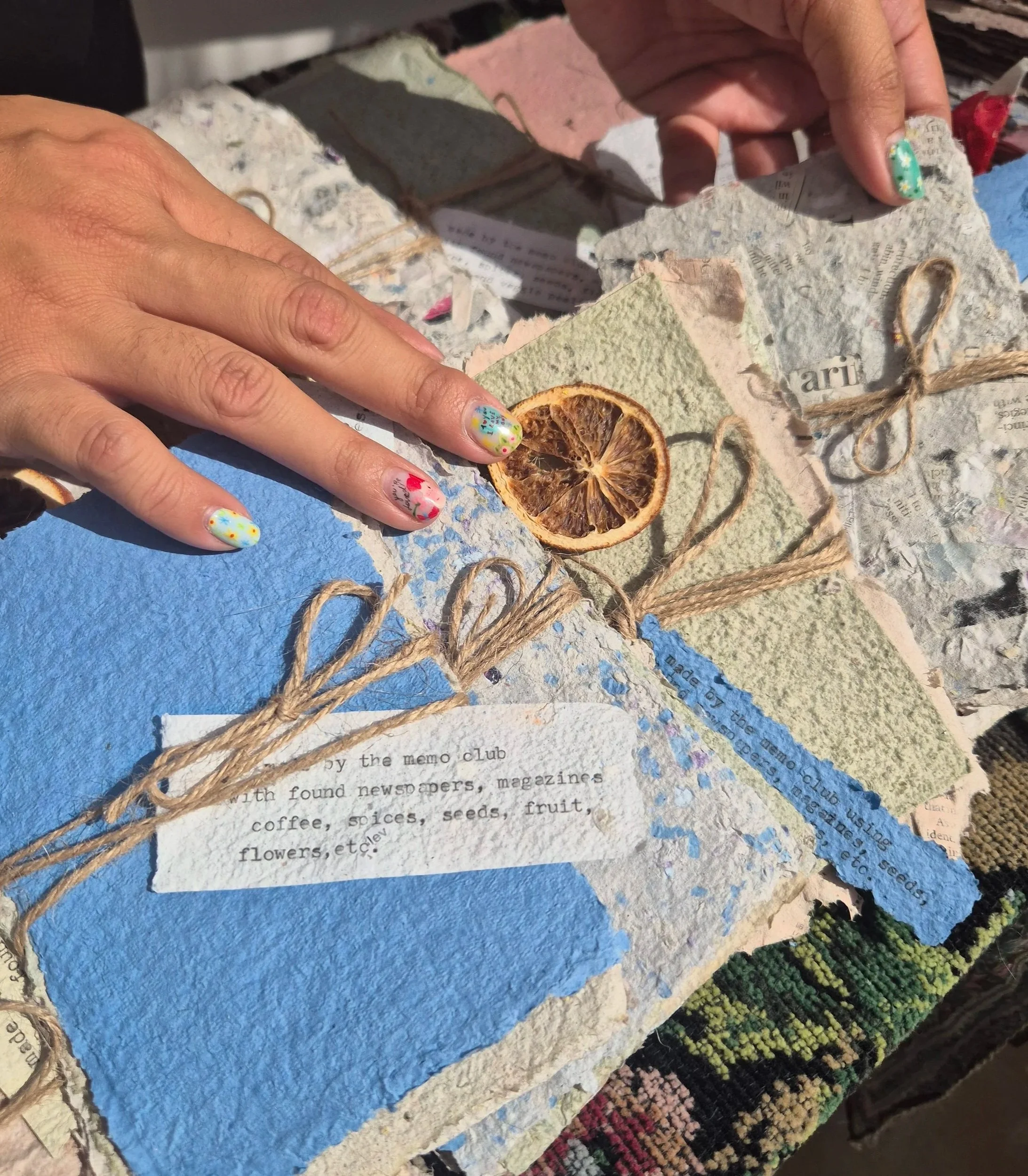
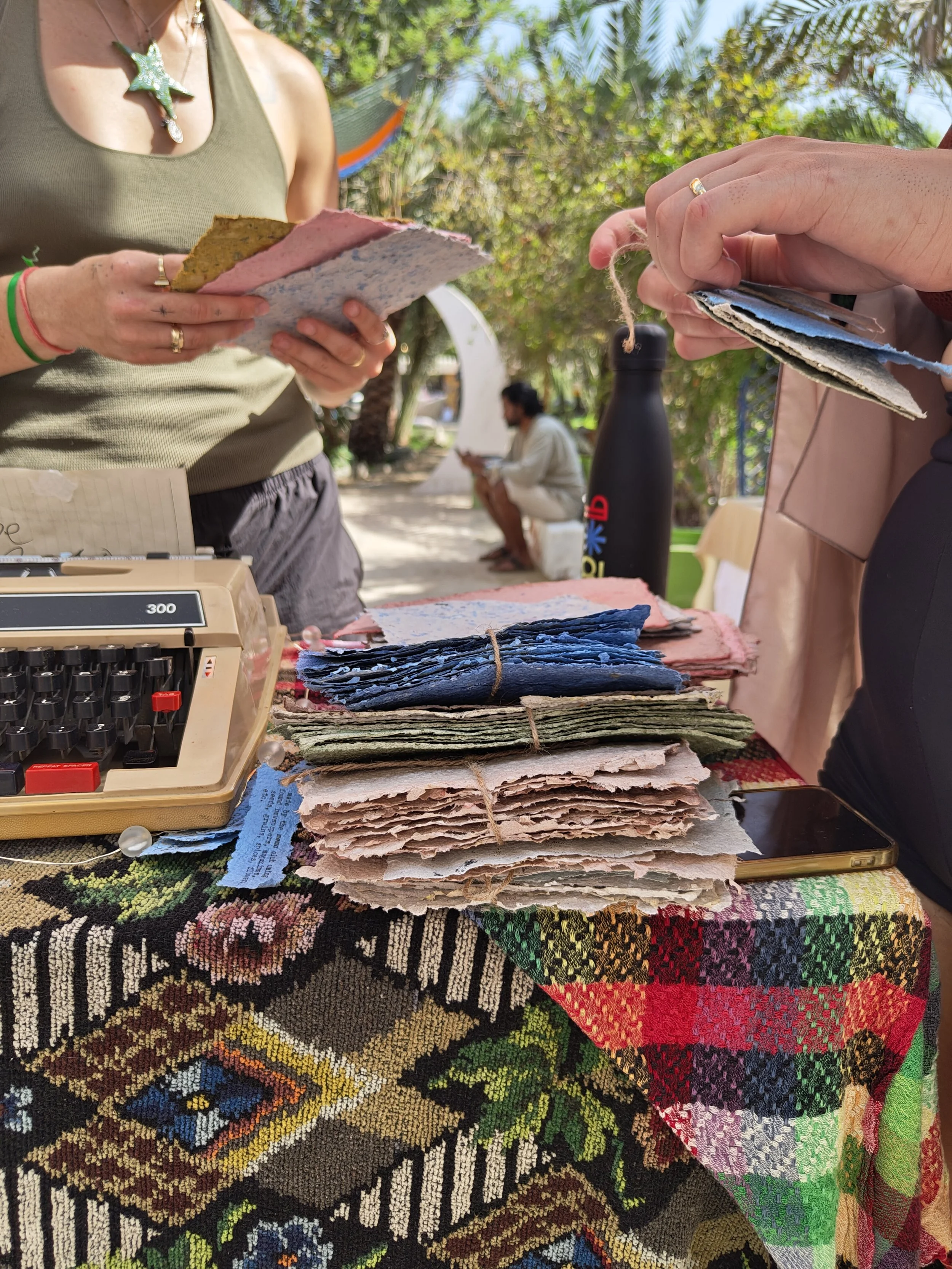
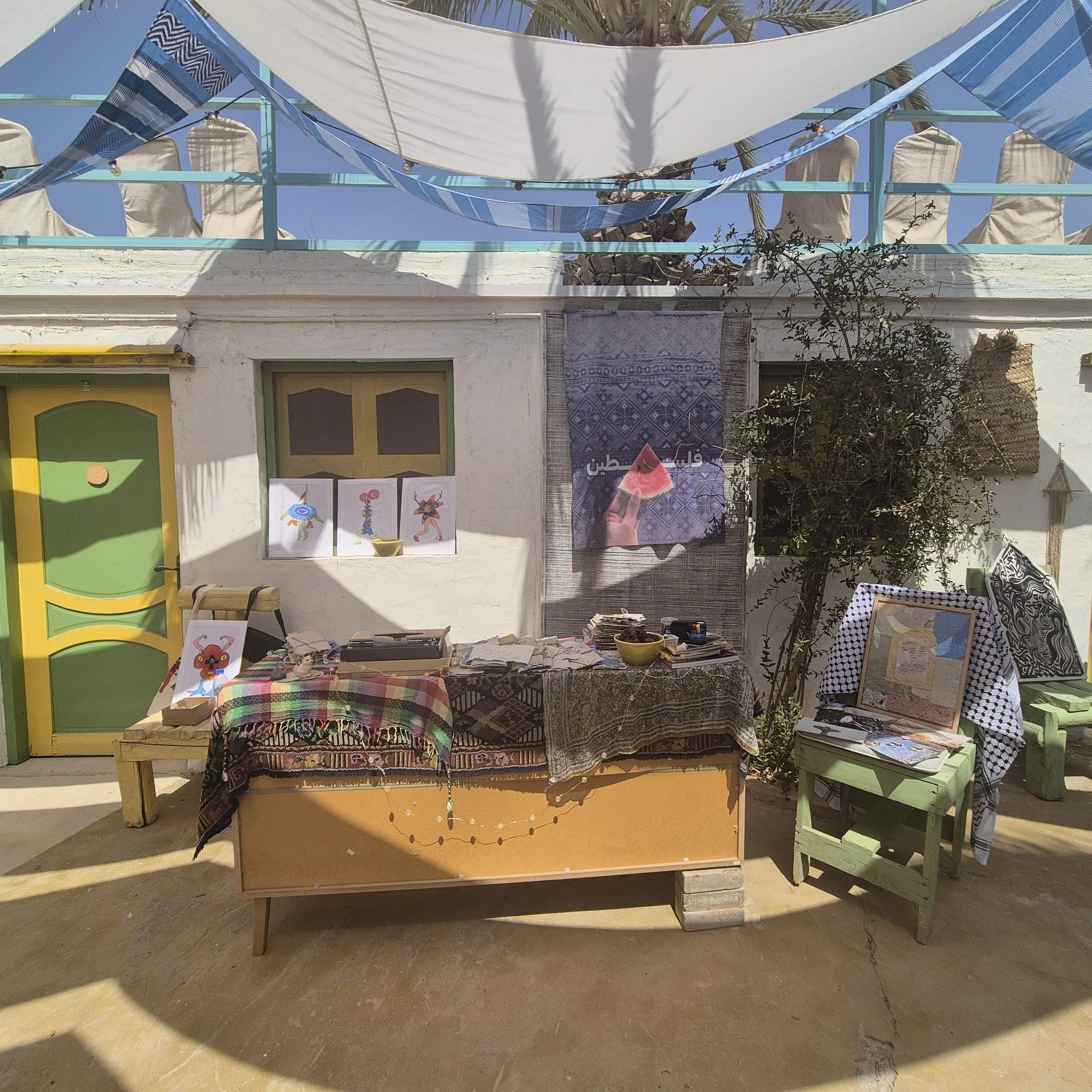
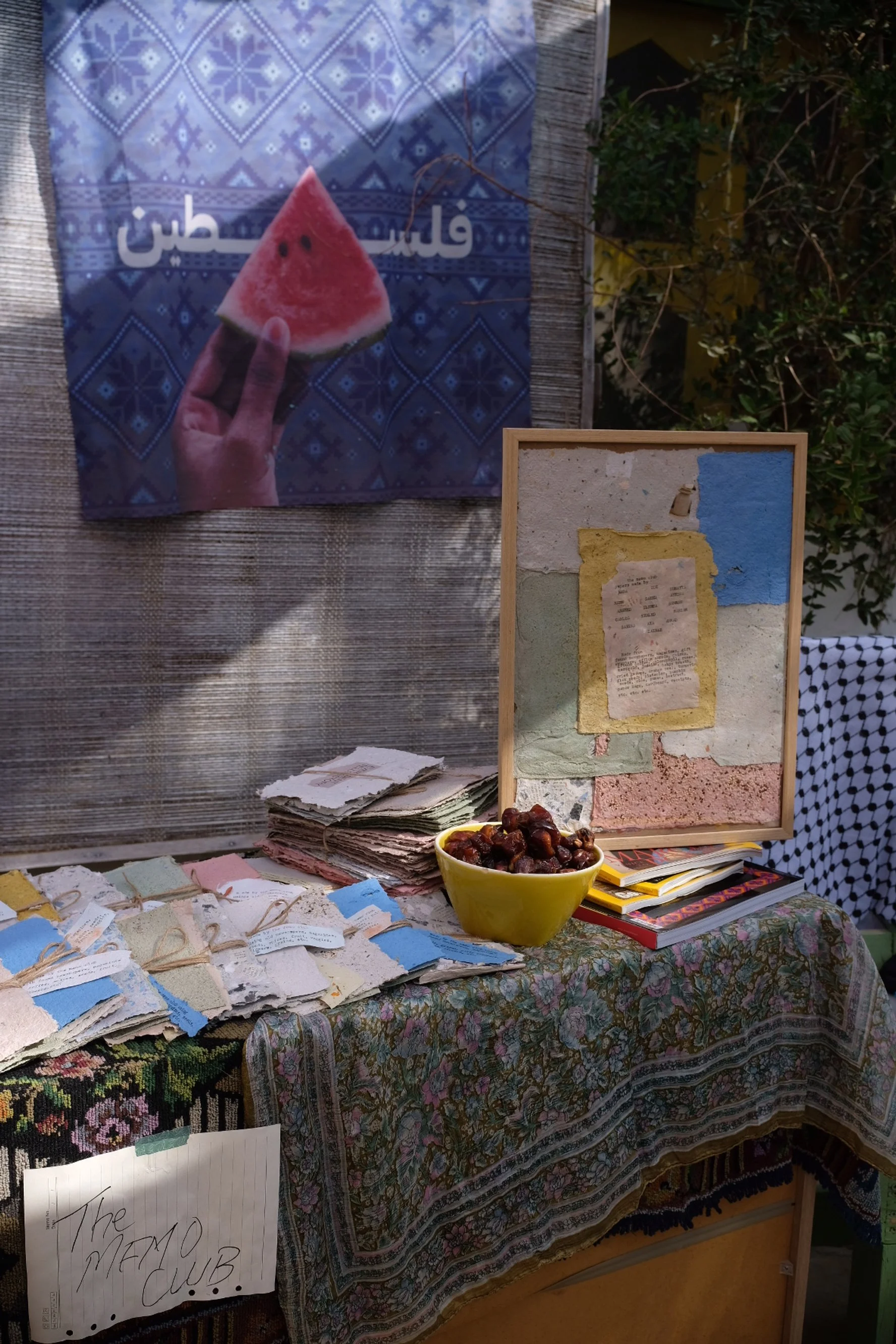
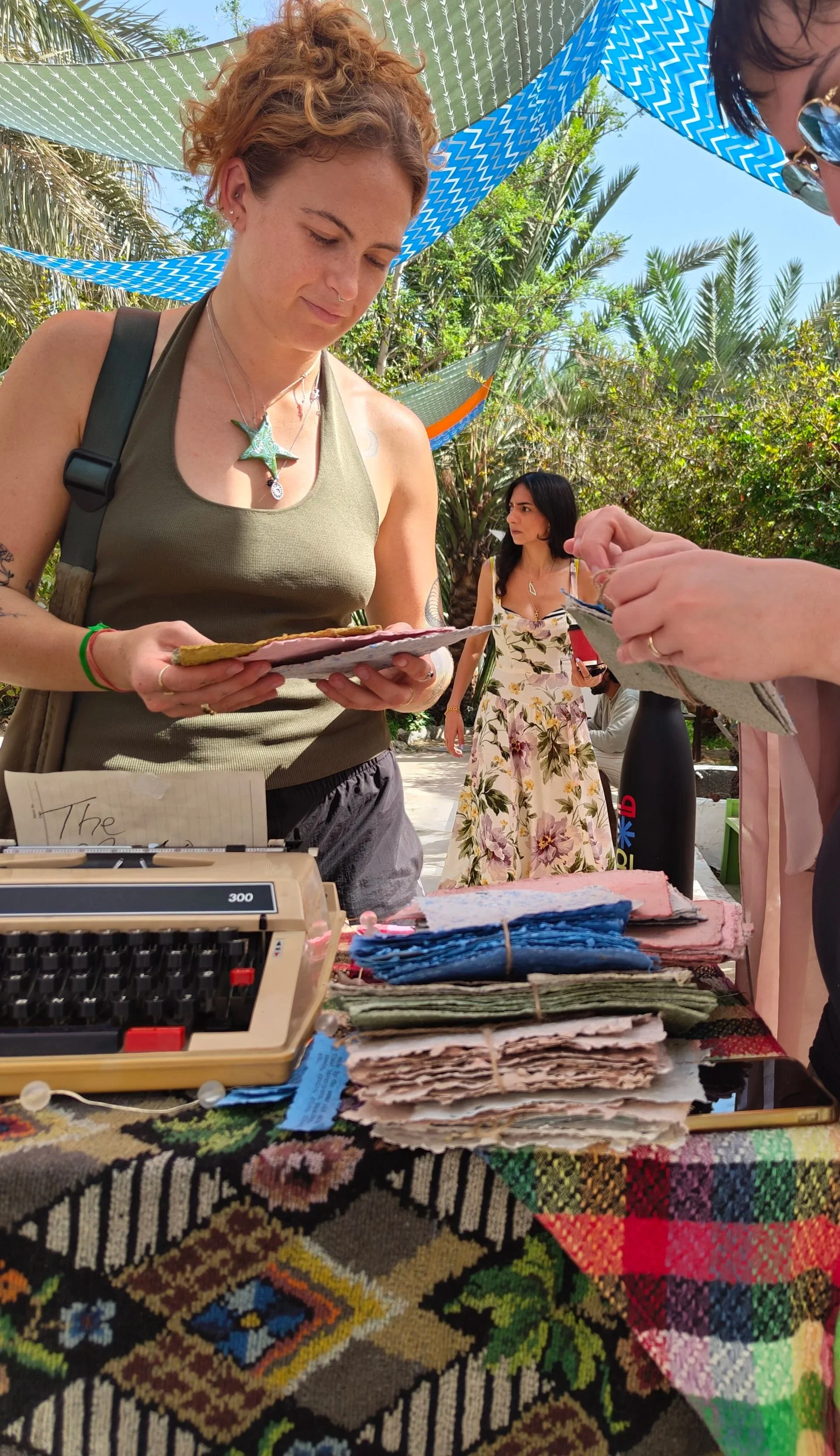
● The Mystic Festival @ The Grassroots Village, Oct 2025
● Souqbawa x The Mamar Lab @ The Mamar Lab, Nov 2025
● BAMBAM! @ Focal Point Art Book Fair, Jan 2026
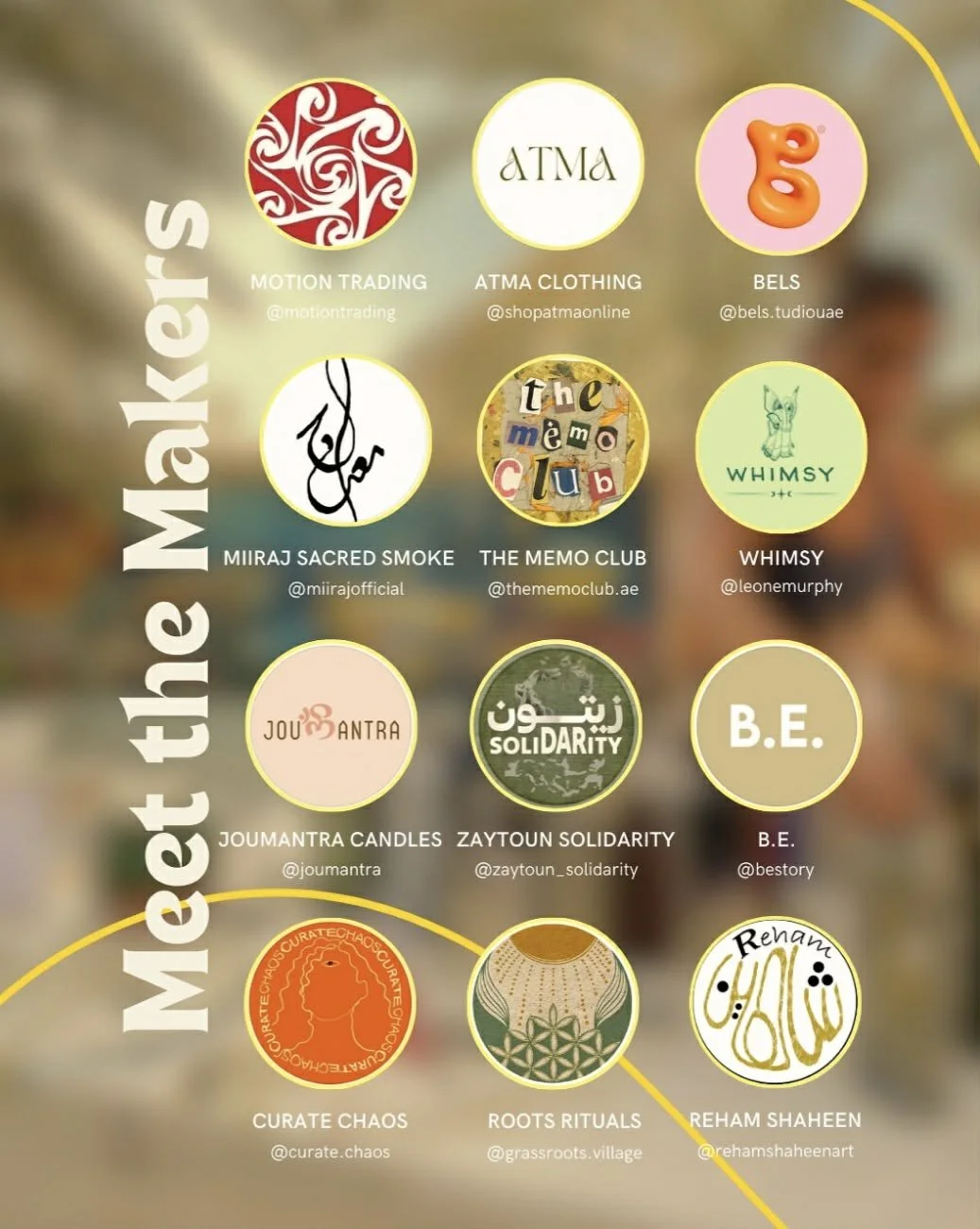
The Mystic Festival
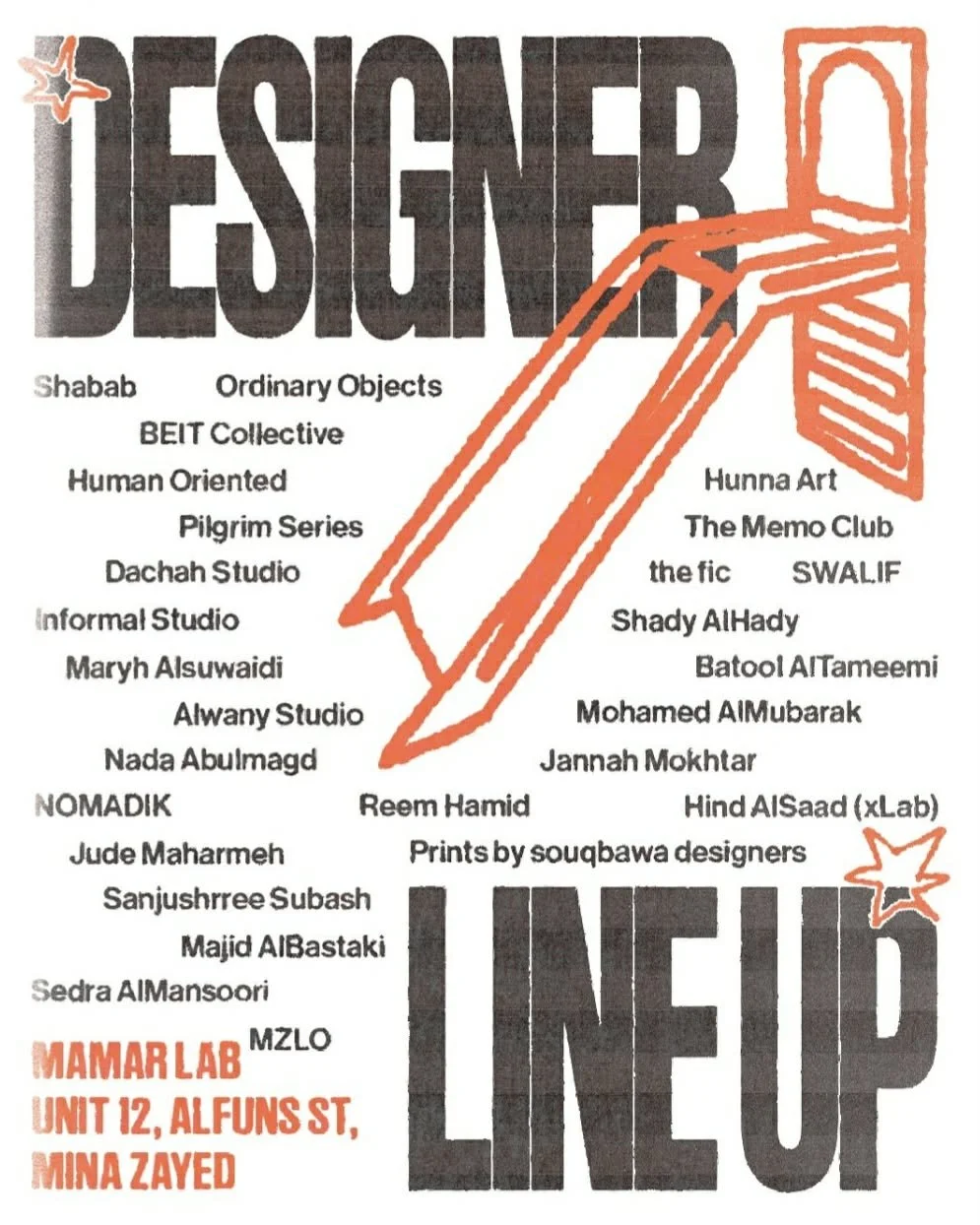
Souqbawa x The Mamar Lab
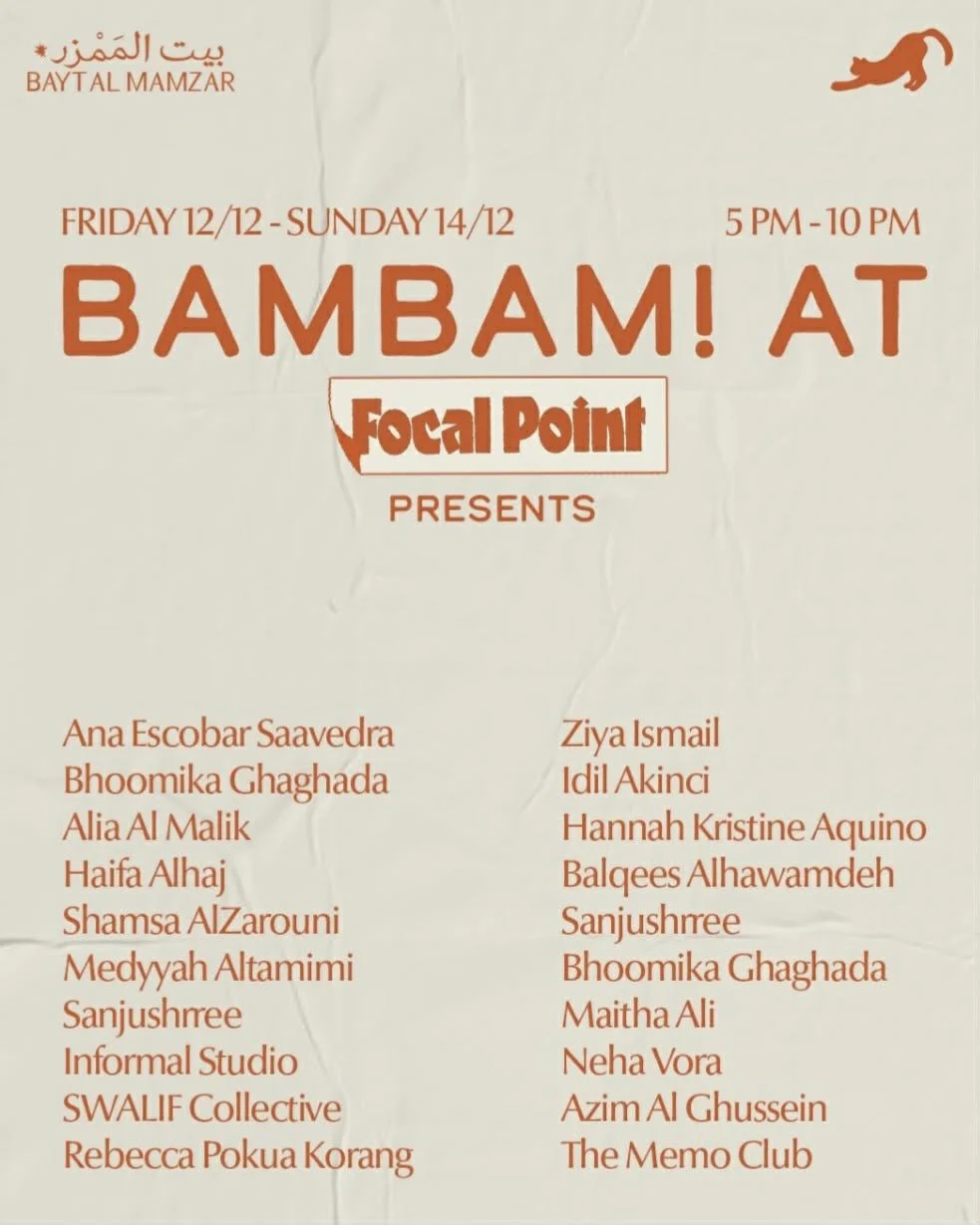
BAMBAM! publishing
-
TMC Programming
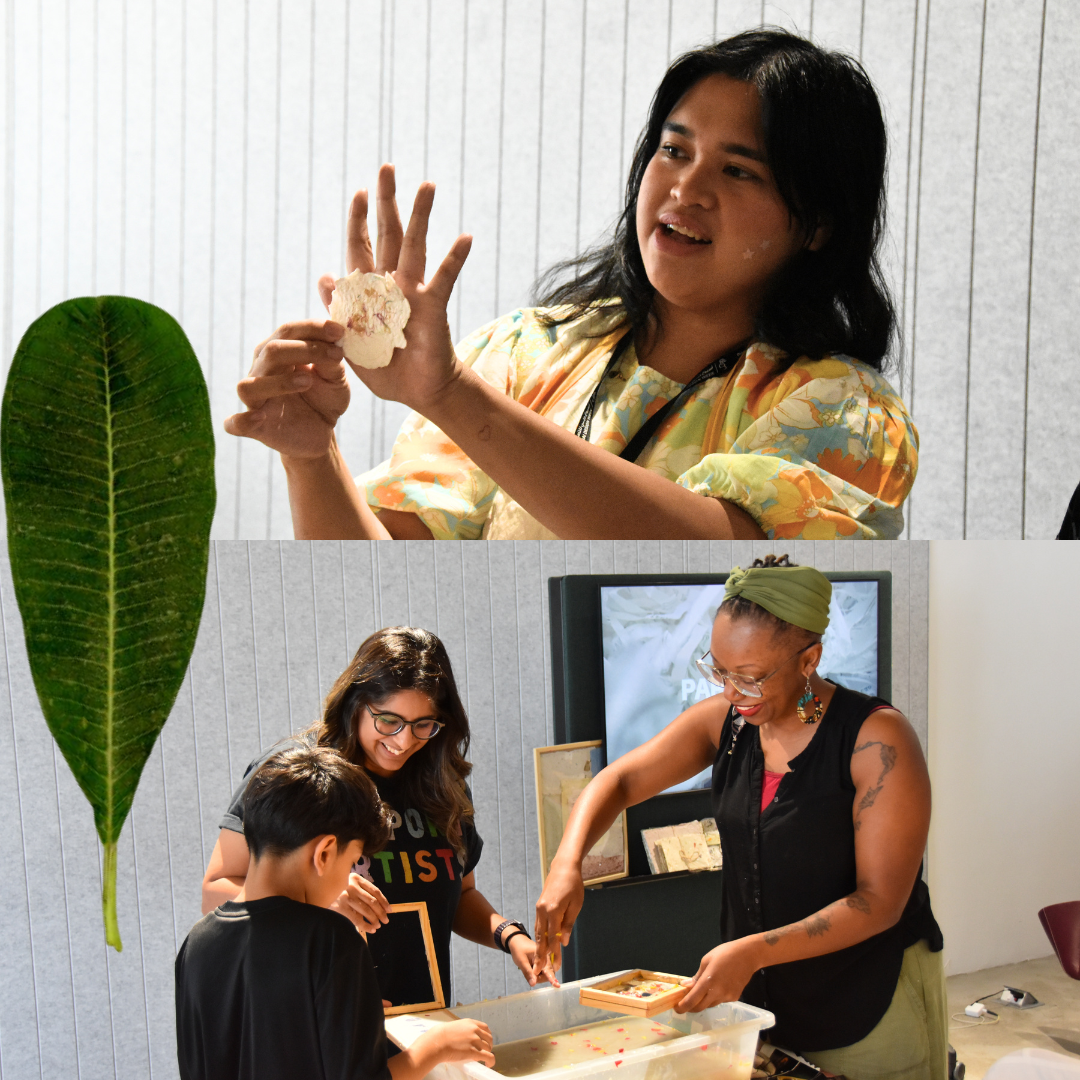
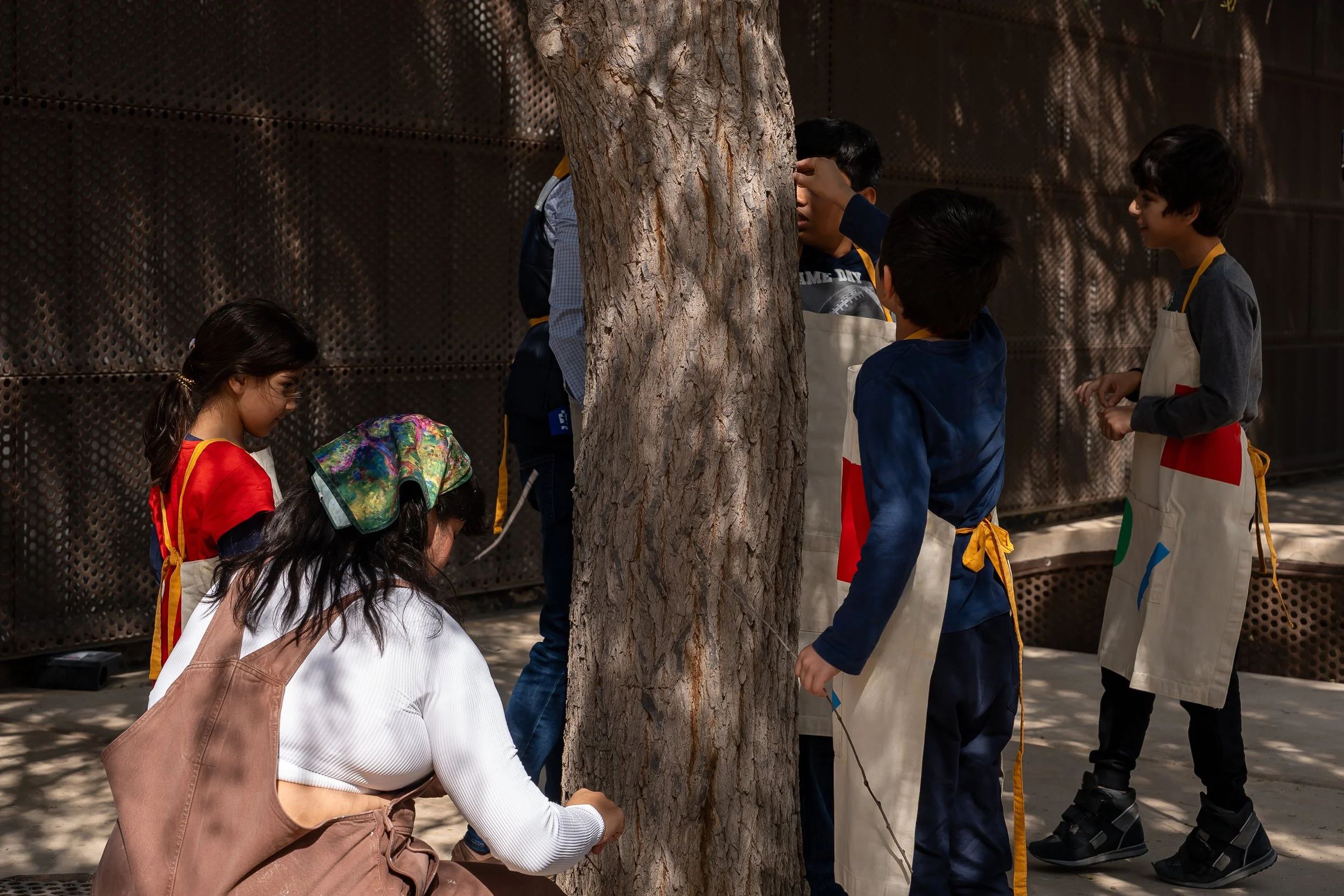
● Paper! Paper! Find out about it @ 421 Arts Campus, Oct 2025
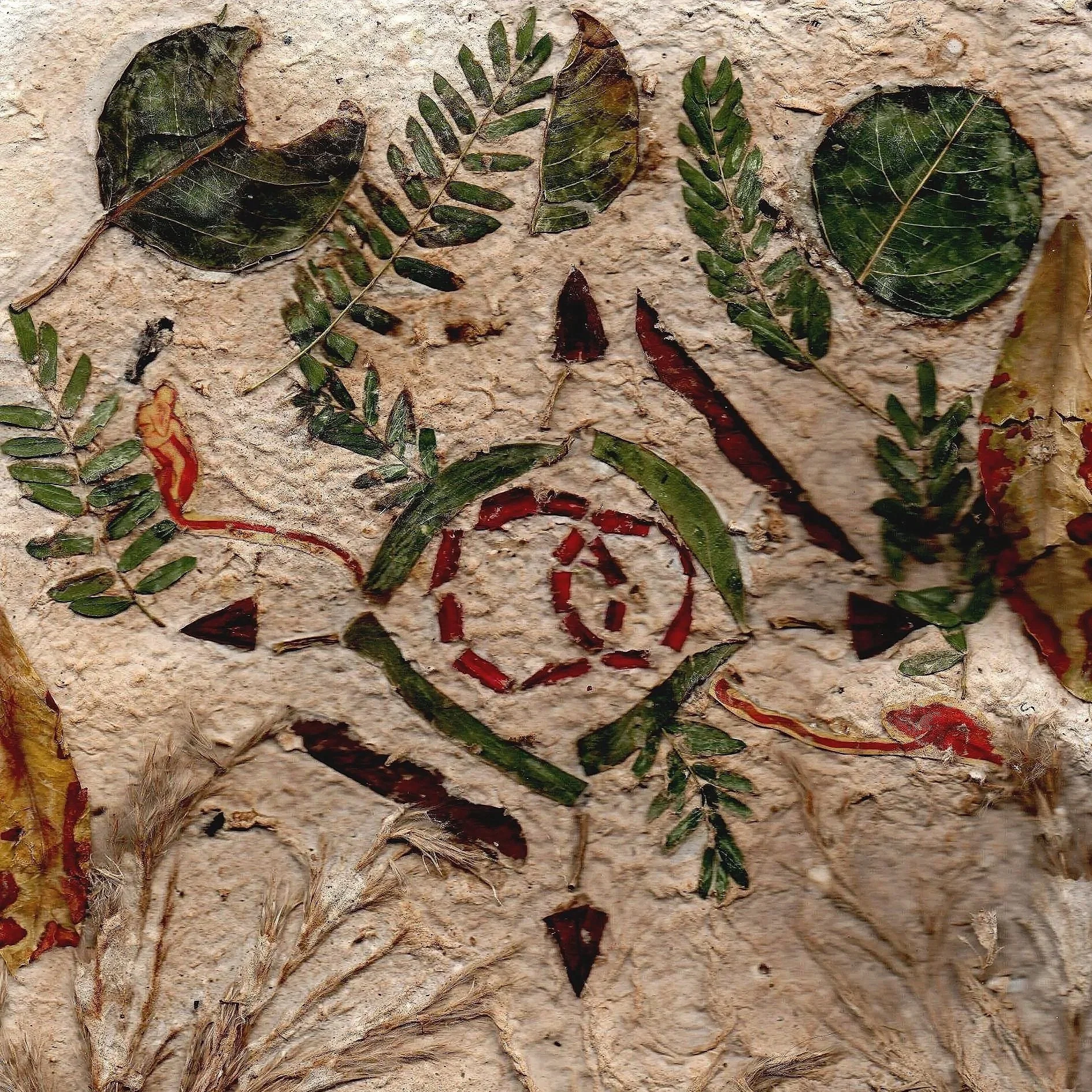
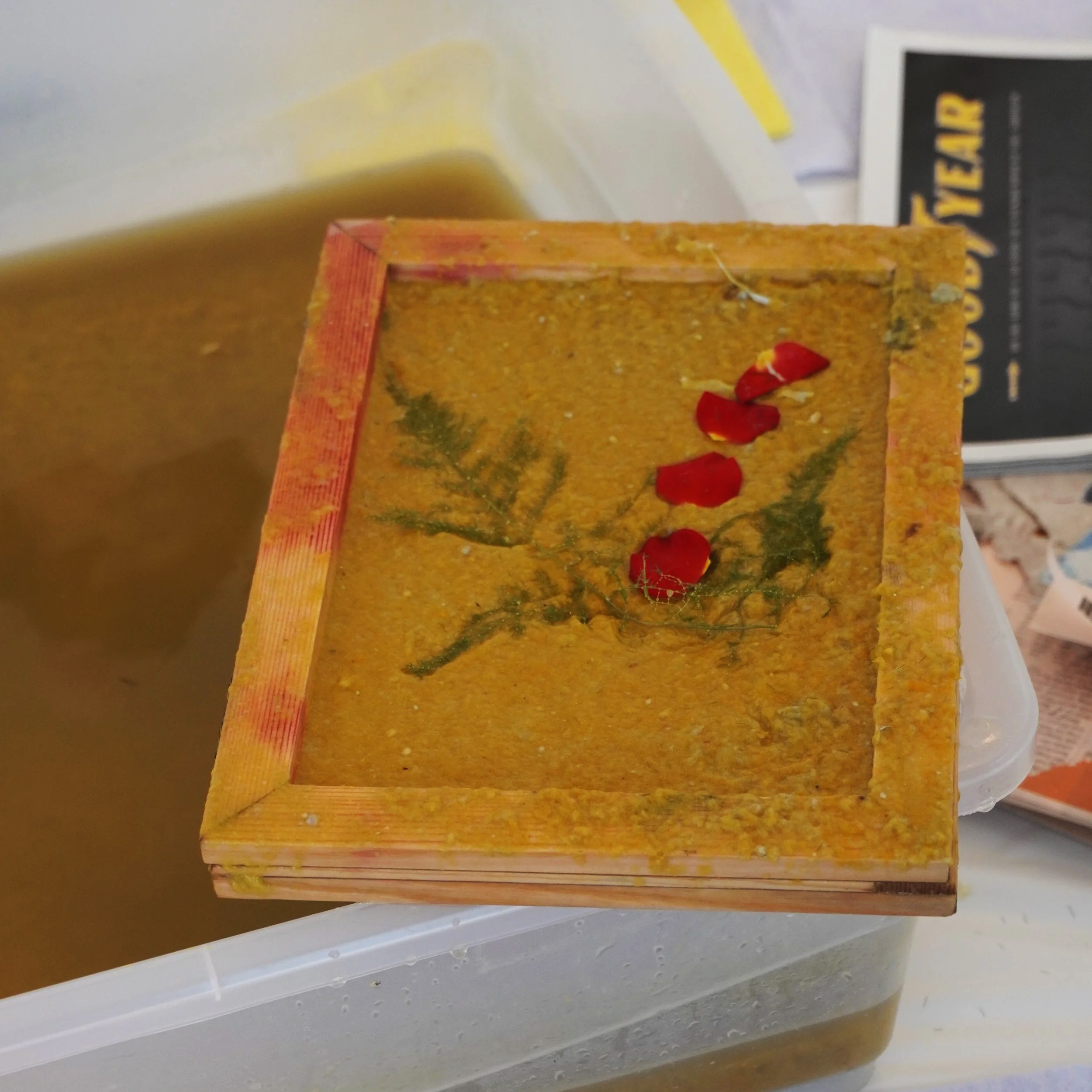
● Petals, Pulp & Papermaking @ Dubai Design Week, Nov 2025
● Papermaking with the memo club at Block Barty @ 421 Arts Campus, Nov 2025
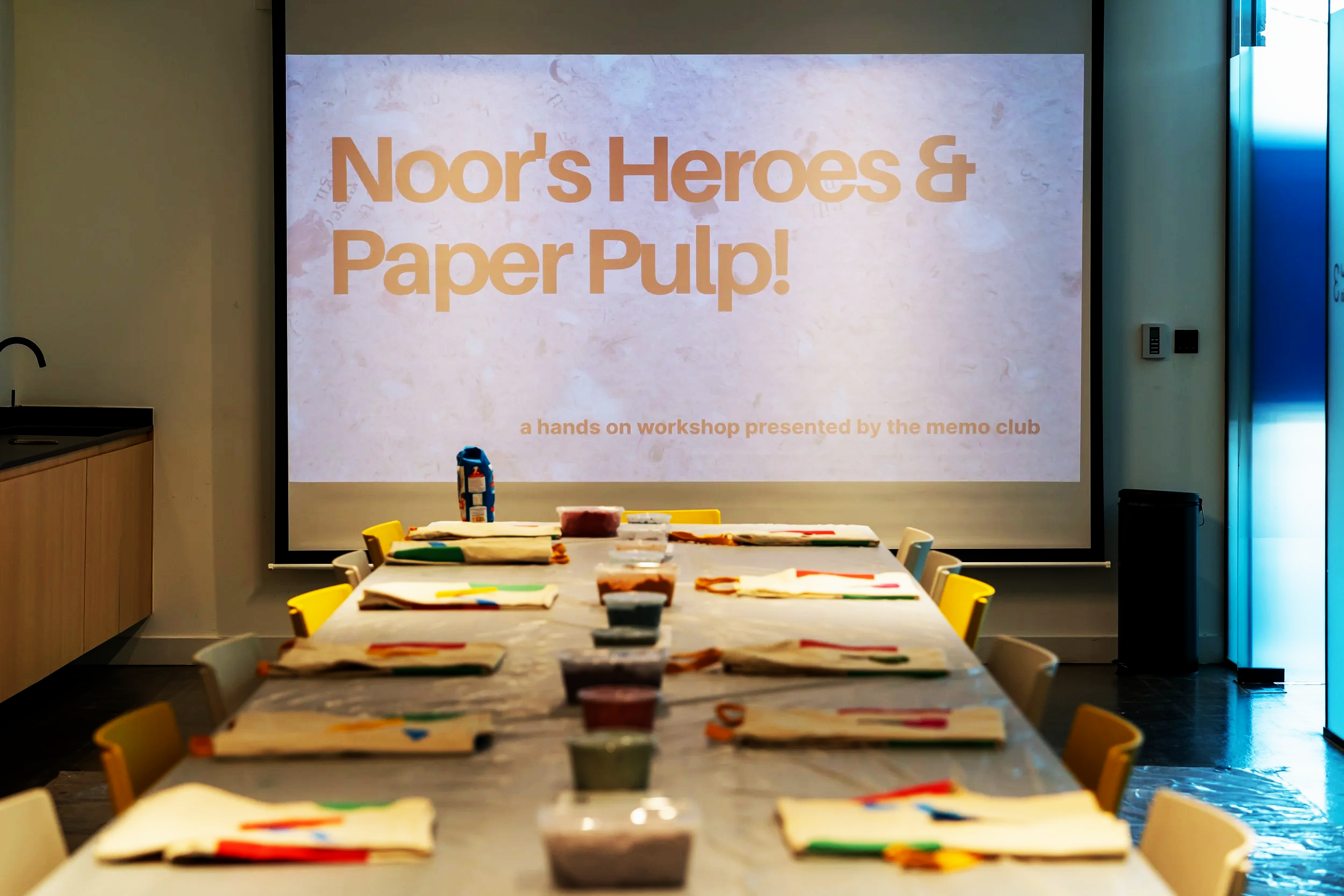
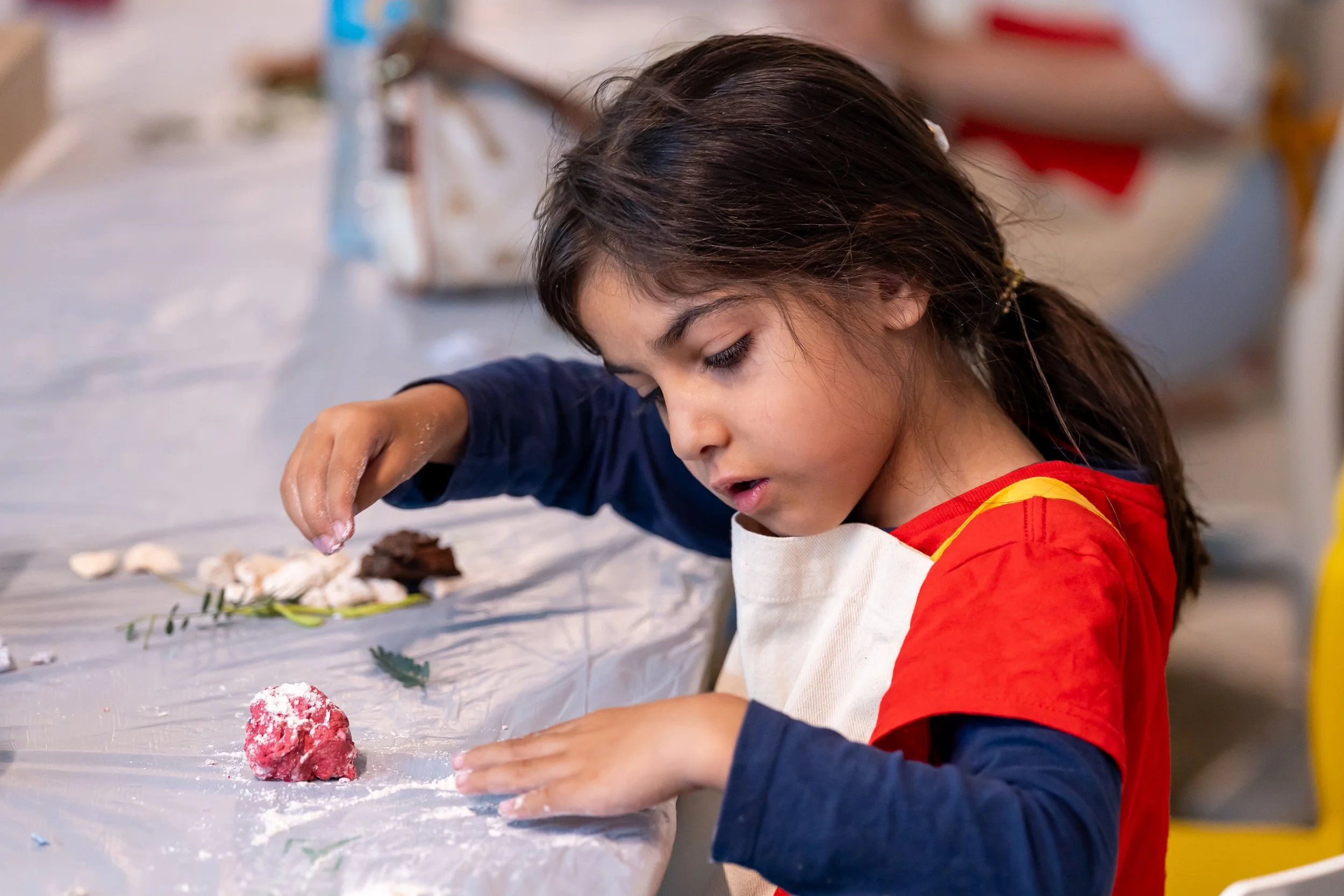
● Noor’s Heroes & Paper Pulp! @ 421 Arts Campus, Jan 2026
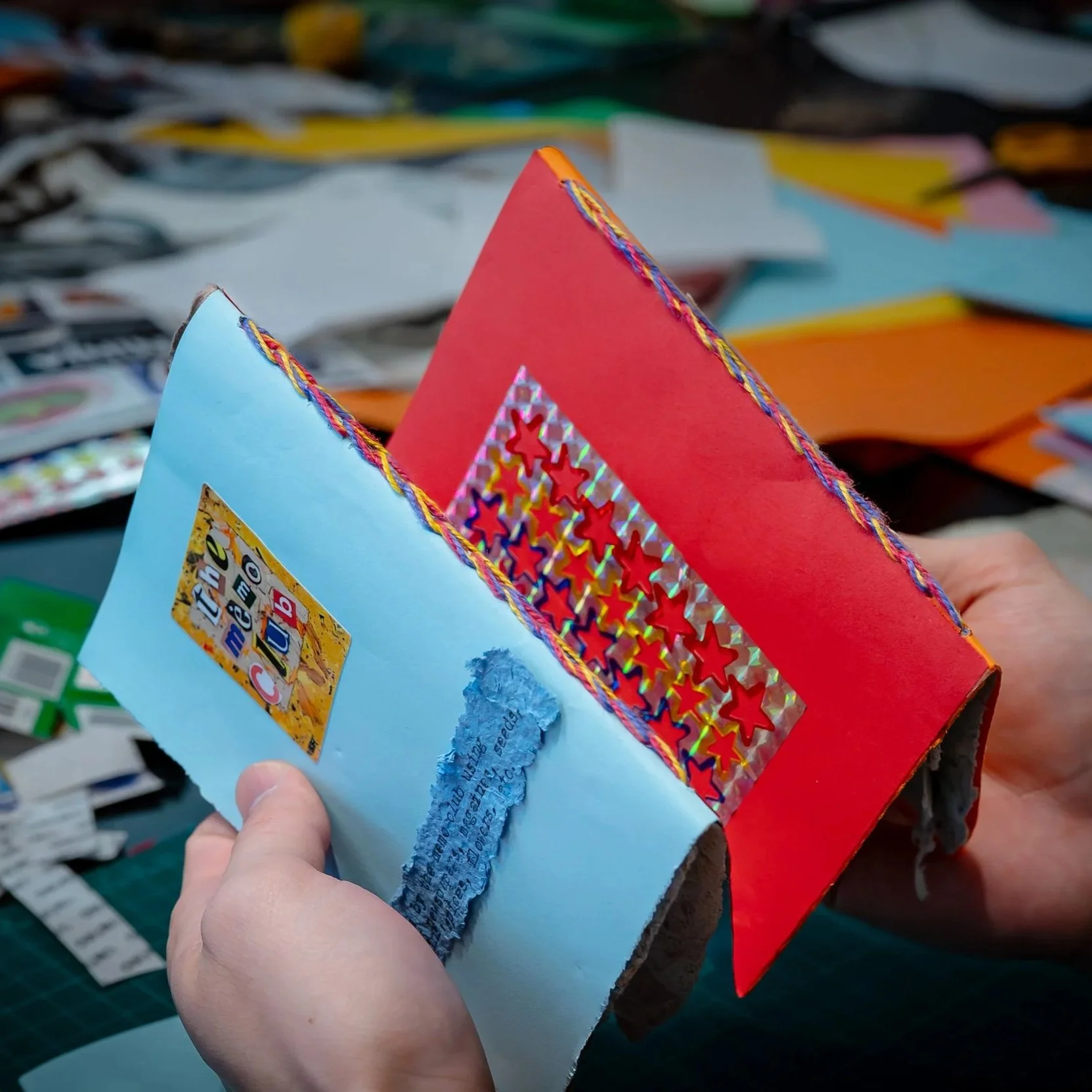
● You Got The Memo?! with the memo club & Ayesha Fernandes @ 421 Arts Campus, Jan 2026
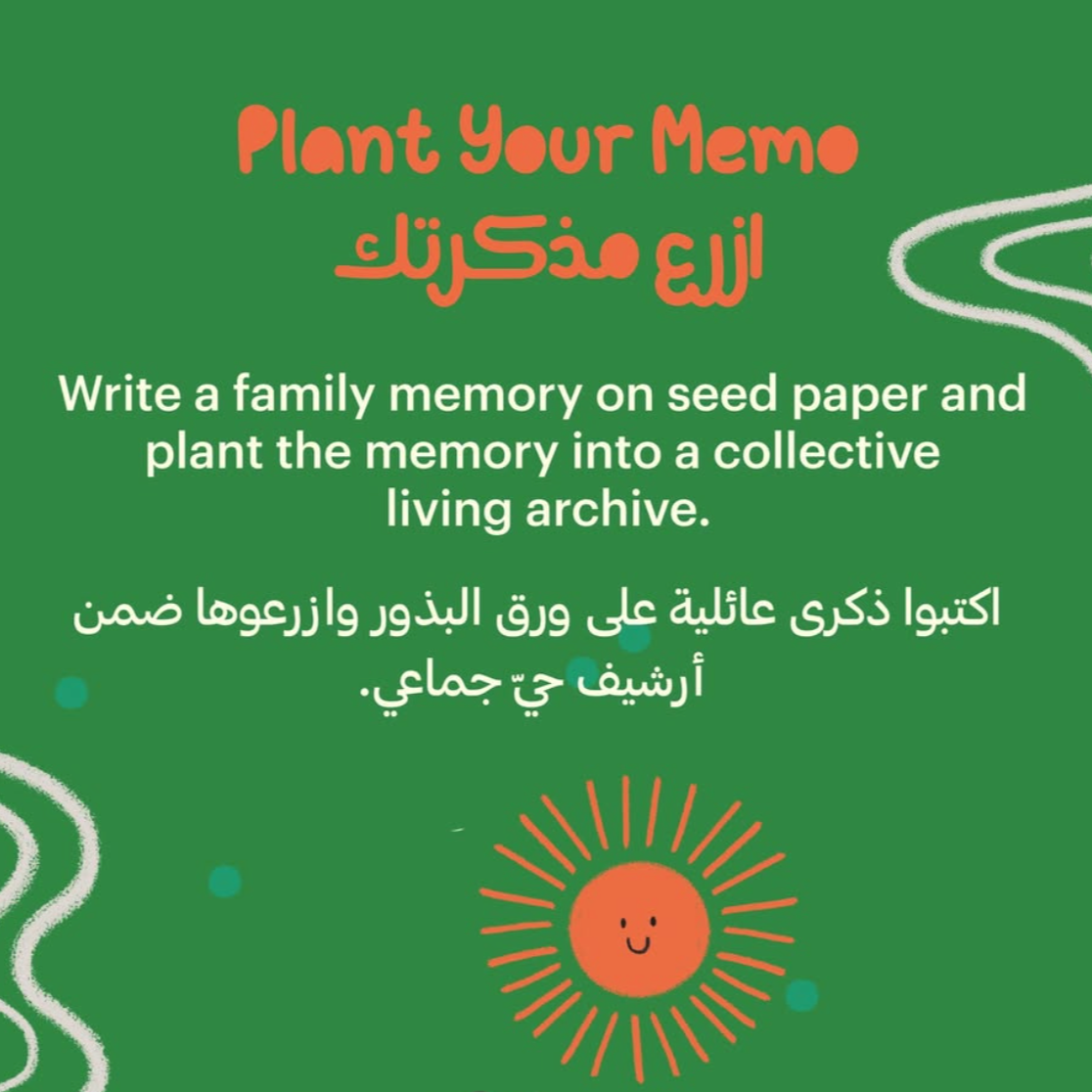
● Plant Your Memo, a collective living archive @ 421 Arts Campus, Feb 2026
● A Slow Papermaking Sunday with the memo club @ Bassam Freiha Art Foundation, Feb 2026




-
TMC’s Ethos
In a world where everything is becoming faster, sleeker, and more digital, there’s a growing appetite for the opposite, slow, tactile, imperfect, and tangible things.
The rise of movements like “slow craft” and “analog revival” (seen through zines, ceramics, and DIY printmaking) is proof that many seek grounding experiences. According to recent reports from The Art Newspaper and Hyperallergic, younger generations, especially millennials and Gen Z, are showing renewed interest in hand-based practices as a form of resistance to screen fatigue and burnout.
And that’s where the tactile art of making and creation comes in - paper, with all its crinkles, textures, and imperfections, is suddenly more than just a material, it’s a medium for reflection, storytelling, and community.
Increasingly, and often without warning, ownership models are quickly fading, shifting to subscriptions and cloud-based models. All that we see, preserve, and keep, are carefully curated and controlled by algorithms and agendas outside of ourselves. It’s disorienting. But that relationship to things, tactile, personal, held, is what we’re trying to reclaim with the memo club.
And paper? It’s a way back in. A way to ground ourselves in something real and handmade, something that resists constant updates. Something that remembers us, just as we remember it, in that one unique moment of time.
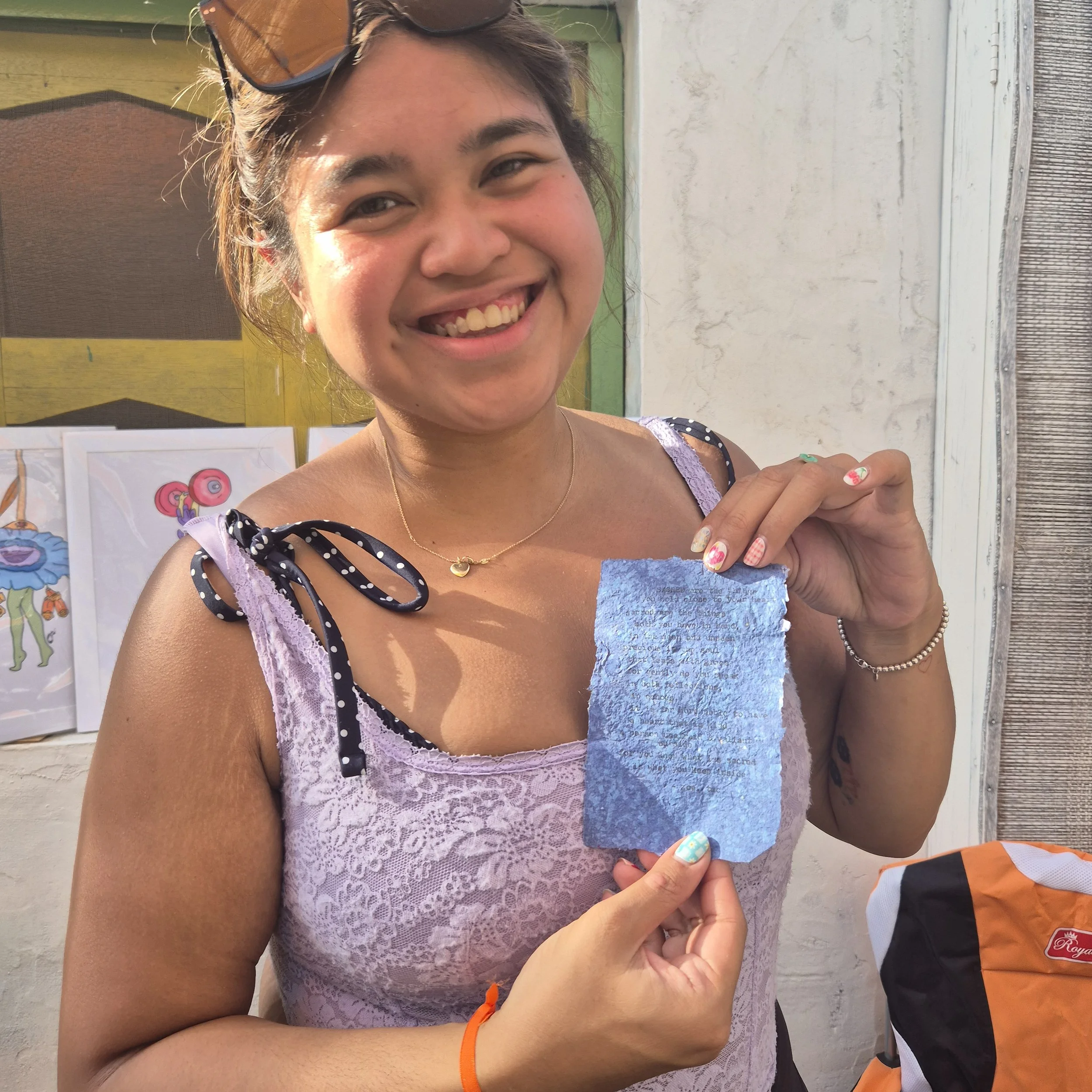
By offering a communal environment that prioritises shared experiences, learning, and creativity, the memo club sees participants reclaim time and memory in a tangible form, countering the transient nature of digital interactions through workshops, collaborative projects, and the simple act of making paper together. And if that’s enough, they’ll always be able to buy paper that’s been purposefully made for their letters, gifts, notes, thoughts, life.
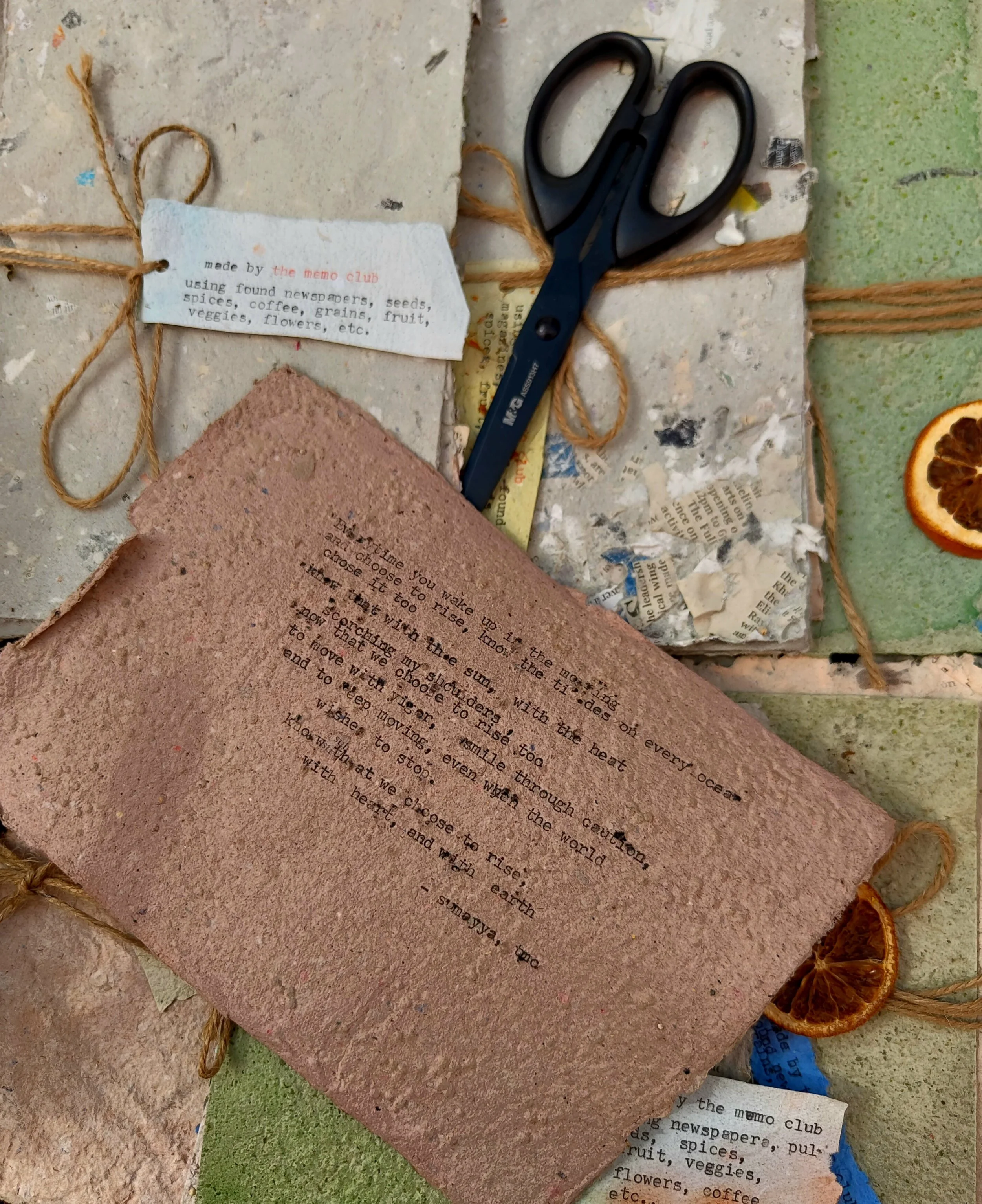
You may ask, why paper? Is this not counterintuitive to the progress that we have made? We are not going BACK to paper because we need it. Instead, we move forward with paper because we choose to.
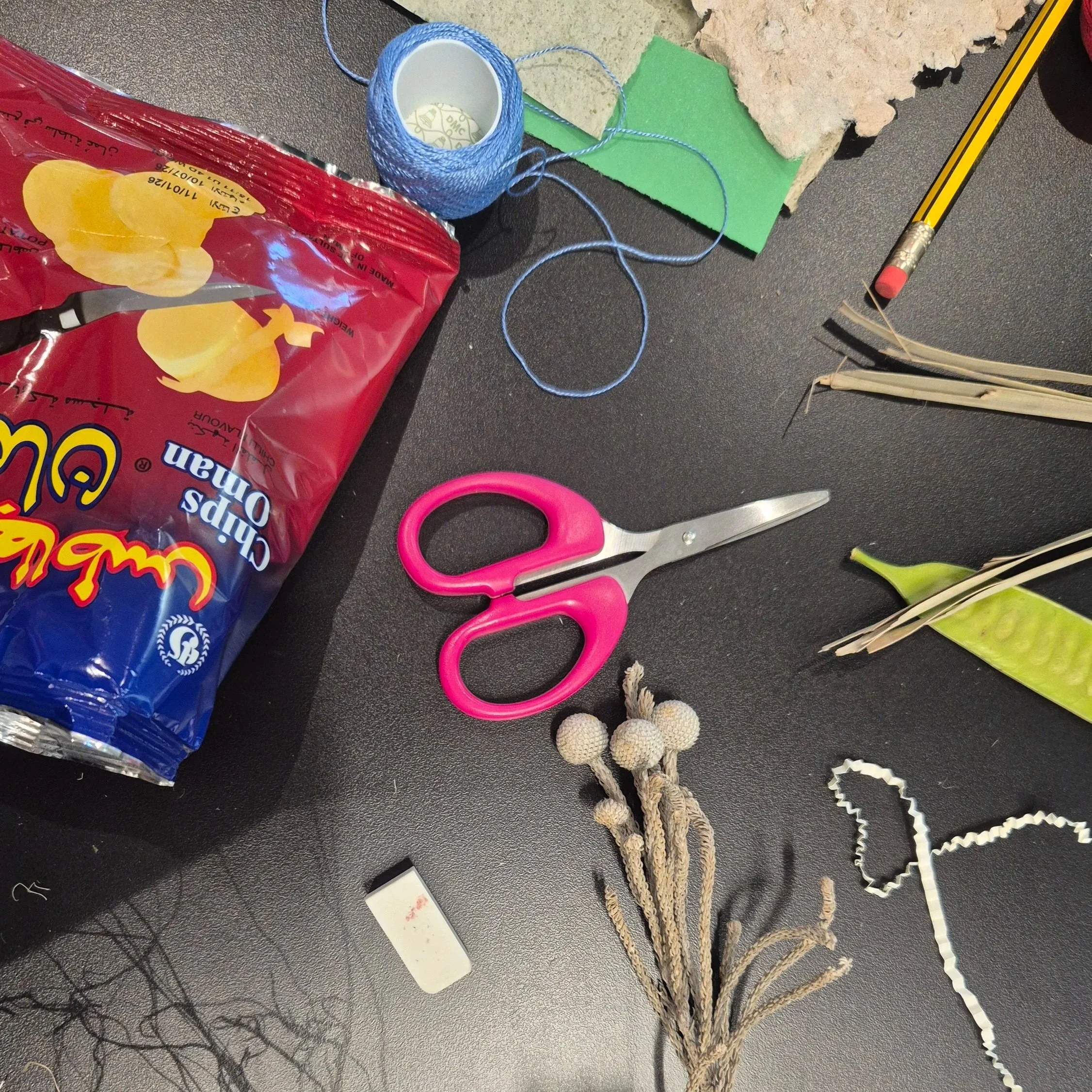
We are interested in what paper can become. In places like Sri Lanka, Nepal, and parts of India, handmade paper is a thriving industry rooted in sustainability and innovation. Paper is made from everything from banana fiber to earth, straw, and even elephant dung. It’s practical, eco-conscious, and deeply tied to local knowledge systems and community values. So, if paper can be made from the land, why not from our memories? Why not from the scraps of our daily lives, old journals, worn-out receipts, dried flowers, leftover textile threads, food wrappers, love letters?
With movements like Sharjah Architecture Triennial’s "The Beauty of Impermanence: An Architecture of Adaptability," curated by Tosin Oshinowo, the exhibition highlights how communities, especially in the Global South, have long embraced adaptability and resourcefulness in the face of scarcity. Projects showcased at the Triennial demonstrate how traditional practices and local materials can be reimagined to create sustainable and meaningful spaces, not just for utility but for living and growth.
Drawing inspiration from these ideas, the memo club seeks to reclaim the tangible and the personal. By engaging in practices like paper-making, we aim to create objects that carry stories, memories, and a sense of permanence. In a world where digital content is fleeting, these handcrafted items become anchors, reminders of our experiences, our communities, and our identities.
Paper, in this sense, isn’t a return, it’s a re-imagination of our memories. A medium not of necessity, but of resistance, creativity, and care. To pull away from the infinite scroll and ask: what do we want to keep? What deserves weight?
Images courtesy of various contributors, including the Frei photography, 421 Arts Campus, Bassam Freiha Art Foundation, the memo club co-founders, friends, and collaborators